
A Living Legacy Through Community Design
5 min read: Design concepts by Delaney Kelly explore new ways to honor an influential Nashville artist while creating a more welcoming, active, and accessible neighborhood park.
In Nashville's Edgehill neighborhood, the William Edmondson Homesite Park and Gardens is more than a neighborhood green space. It is a place of artistic legacy, community resilience, and neighborhood stewardship.
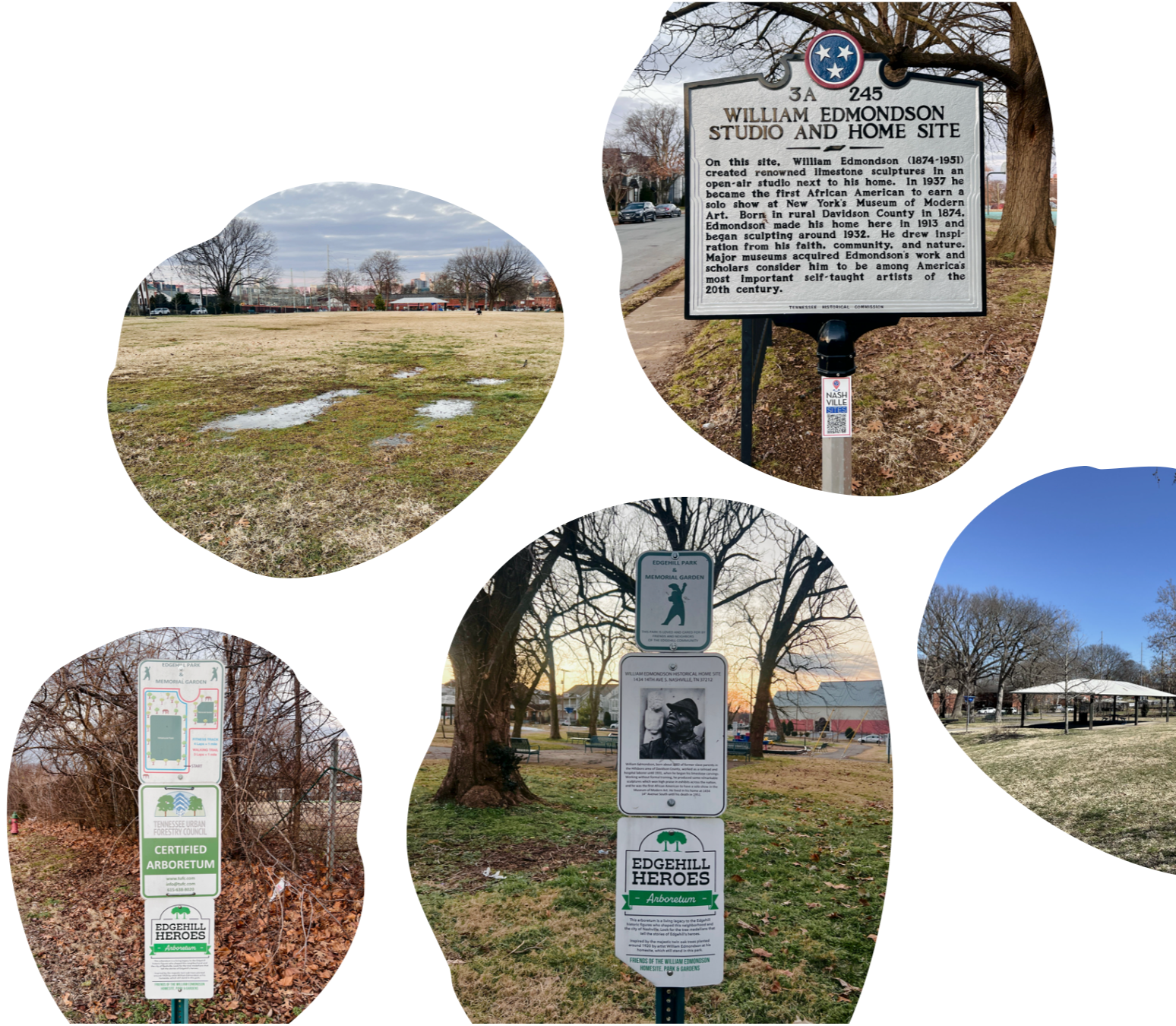
William Edmondson (1874–1951) was a self-taught sculptor whose limestone works earned national recognition. In 1937, he became the first African American artist to have a solo exhibition at the Museum of Modern Art (MoMA) in New York City. Edmondson lived and worked on this site, creating sculptures in an open-air studio next to his home.
Although Edmondson's home was demolished during Urban Renewal in the 1950s, the community has continued working to preserve the significance of the property. In the 1990s, the Organized Neighbors of Edgehill established a community garden and park on the grounds. Metro funding helped formalize the park and establish amenities, including walking trails, a playground, and picnic pavilions.
In 2018, when the city announced plans to sell the property for private development, neighbors organized to protect it. The Friends of the Edmondson Homesite formed to preserve, protect, enhance, and activate the park and gardens as a living legacy. Their continued advocacy and stewardship have helped shape a vision for a public space that celebrates Edmondson's contributions while serving the needs of today's community.
The Civic Design Center has worked alongside community partners on planning and design concepts for the homesite, including the Higher Vision Master Plan. Building on this history, a new set of design ideas by Delaney Kelly explores how relatively targeted improvements could strengthen the park's identity, improve everyday experiences, and create more opportunities for community gathering.
Designing Around History and Place
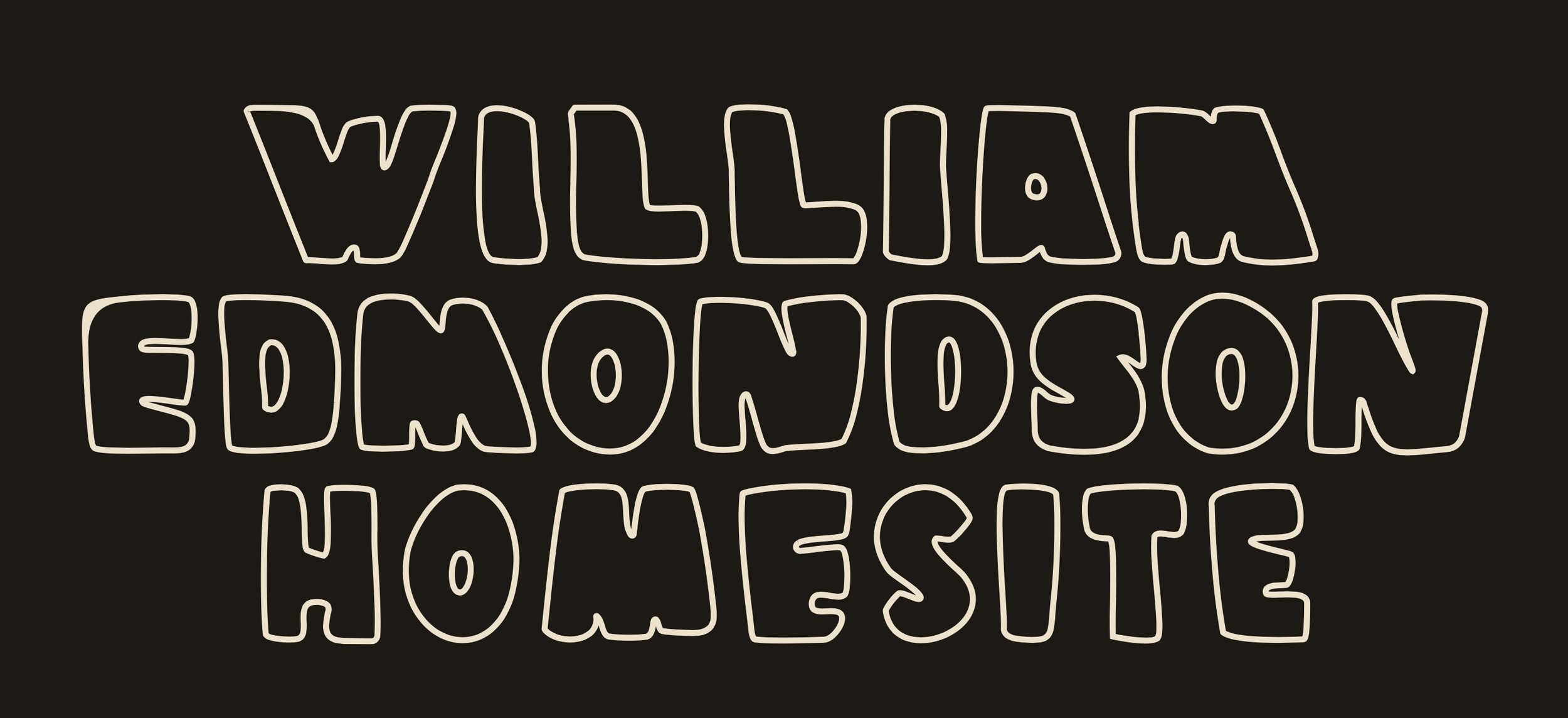
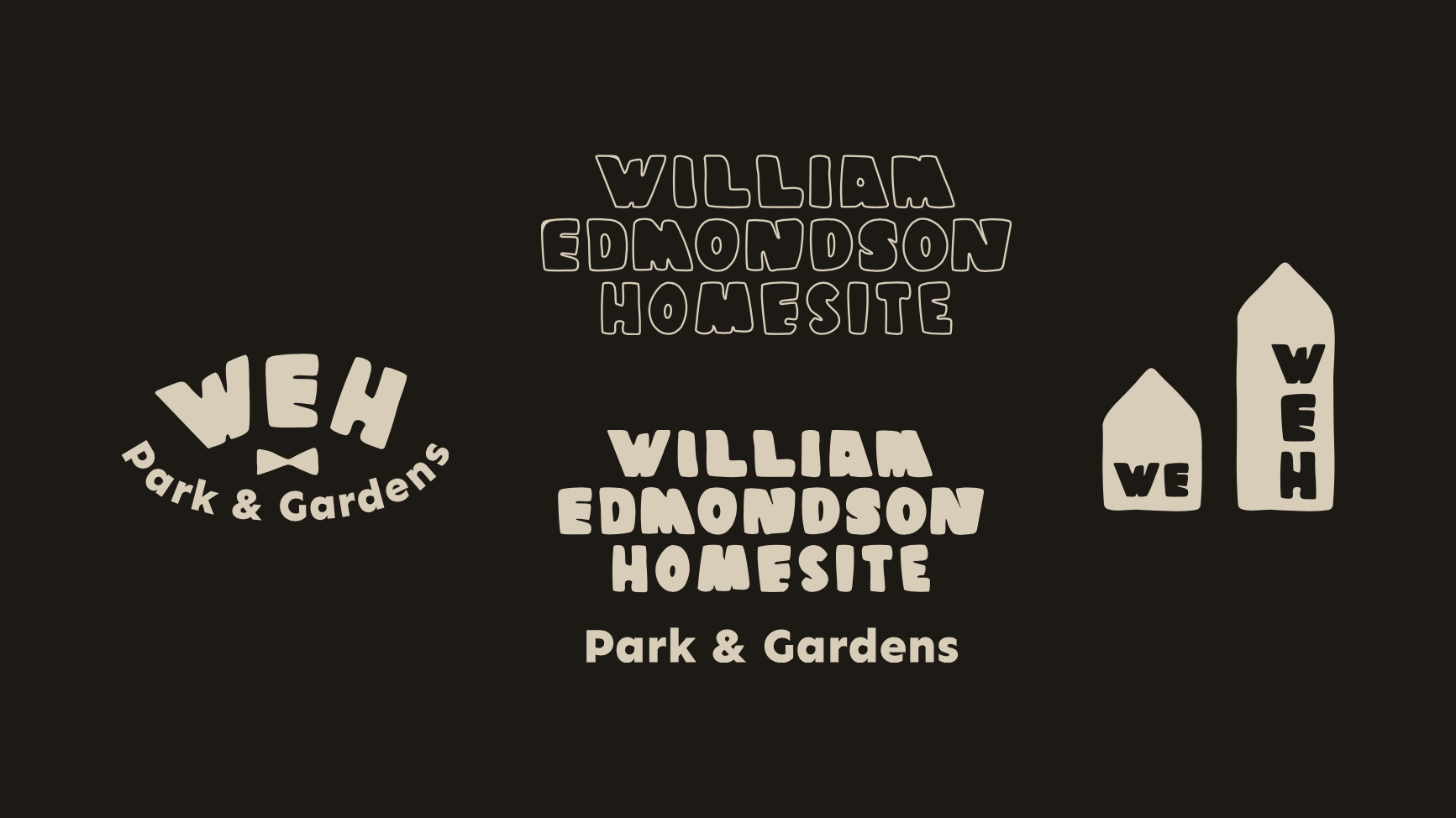
The first priority is making William Edmondson's legacy more visible throughout the park. Kelly proposes a cohesive identity and signage system inspired by Edmondson's sculptural forms and carved lettering. The proposed logo draws on the word "home" in homesite, connecting the park's identity to the place where Edmondson lived and created his work.
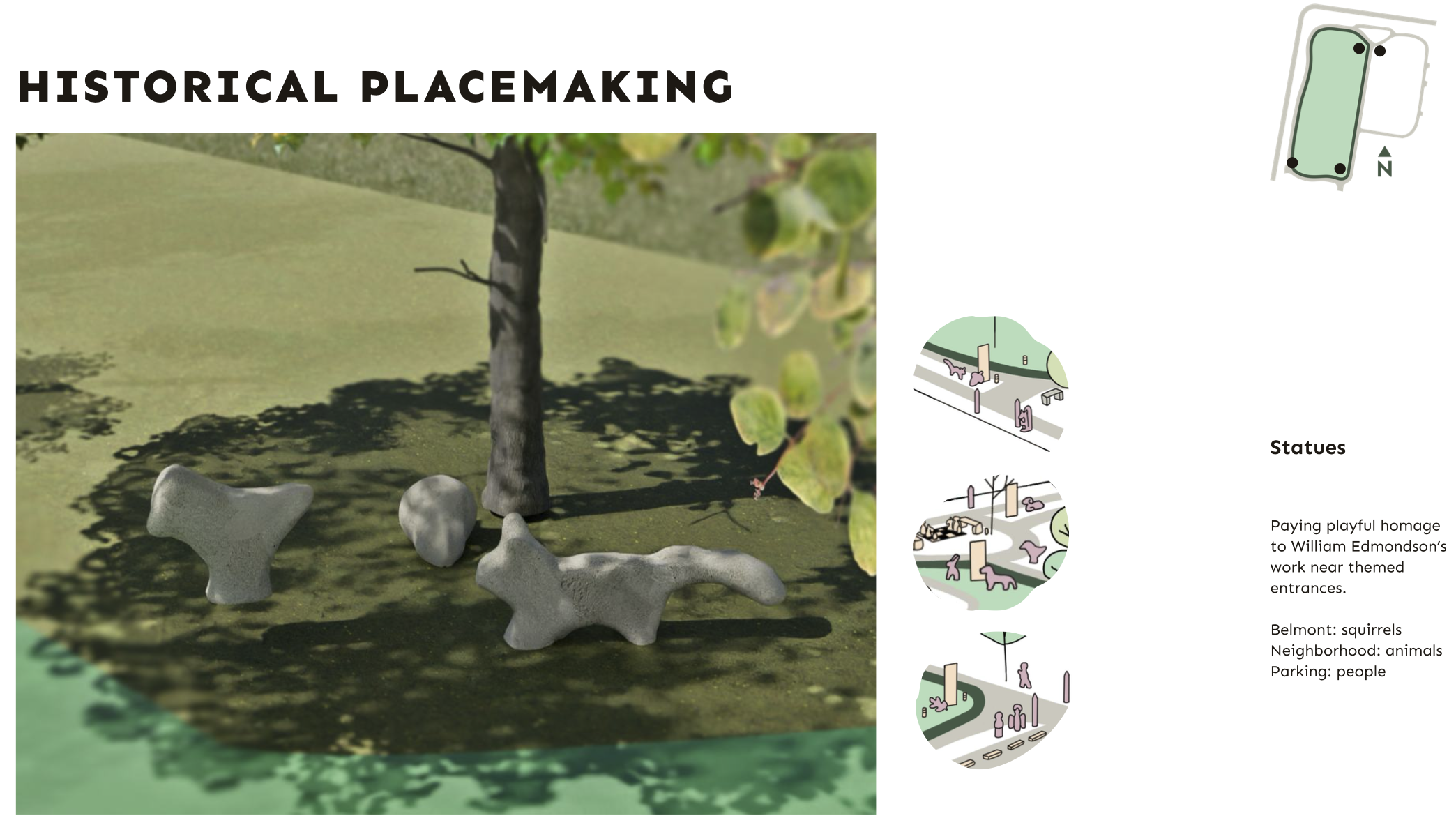
Welcoming entrances would help establish a stronger sense of arrival. Rather than a series of small gates, the concept consolidates entrances into more prominent openings, incorporating sculptures and wayfinding elements that introduce visitors to the park and its history.
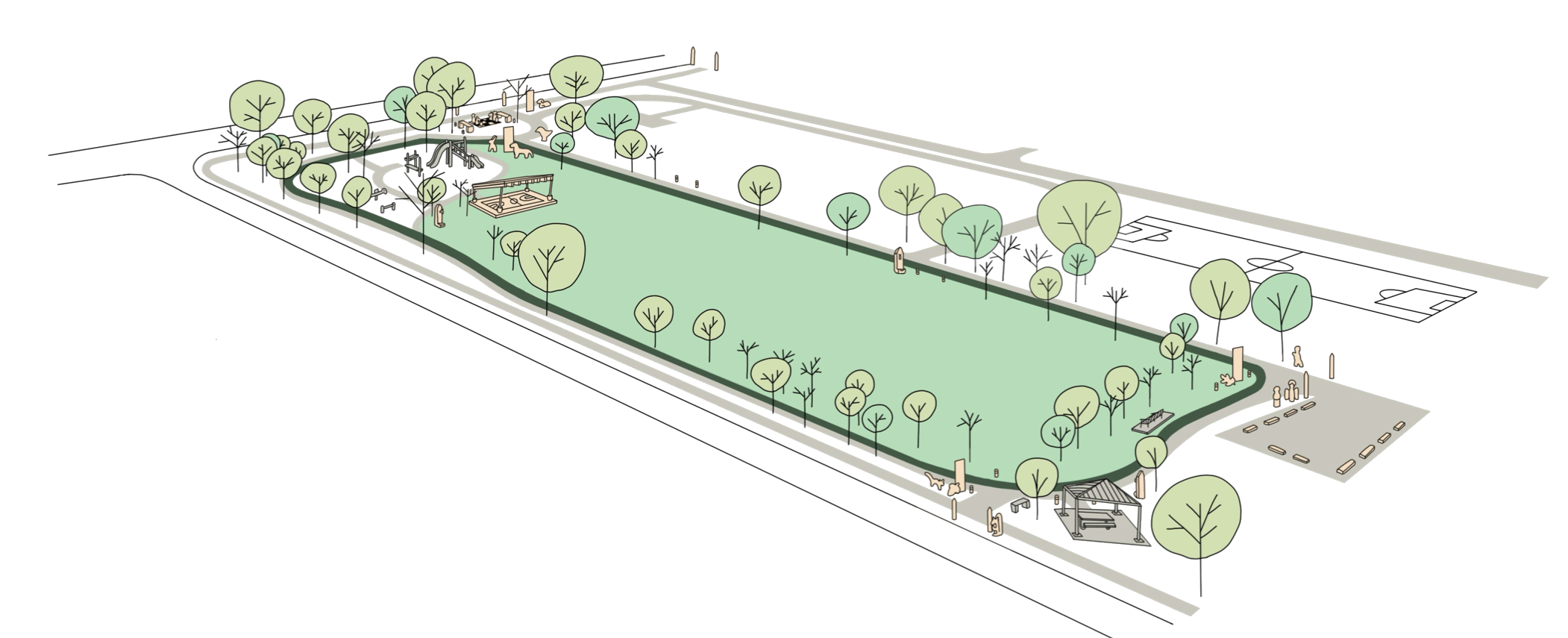
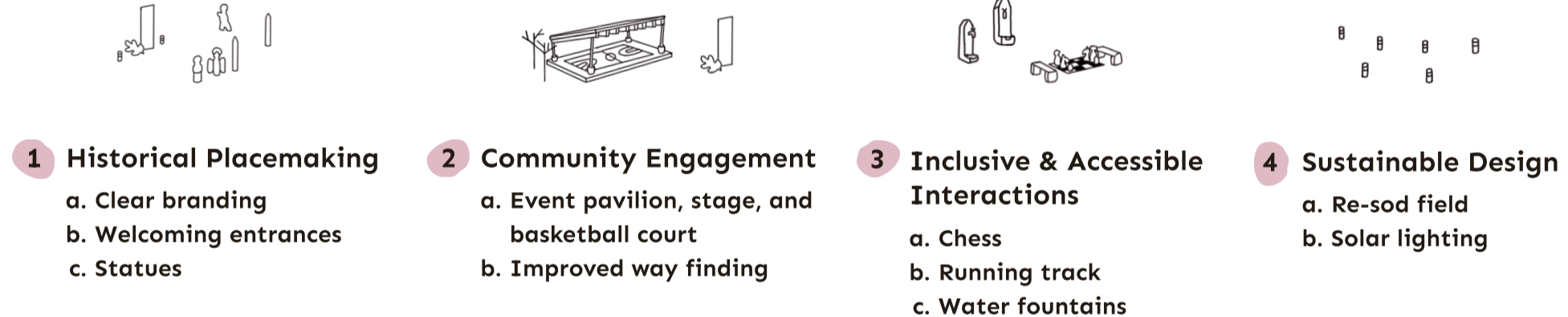
A series of playful sculptural pieces would further connect the landscape to Edmondson's artistic practice. Inspired by his carved stone animals and figures, the proposed sculptures would be placed near themed entrances, including squirrels near the Belmont neighborhood entrance, animals near the neighborhood entrance, and people near the parking entrance. These elements offer a way to interpret Edmondson's influence through public art without turning the entire park into a traditional memorial.
Creating More Opportunities for Community Gathering
The park already serves a wide range of users, from families with young children to neighborhood teenagers, recreational sports groups, and dog owners. Community events, informal gatherings, and youth activities are an important part of its identity.
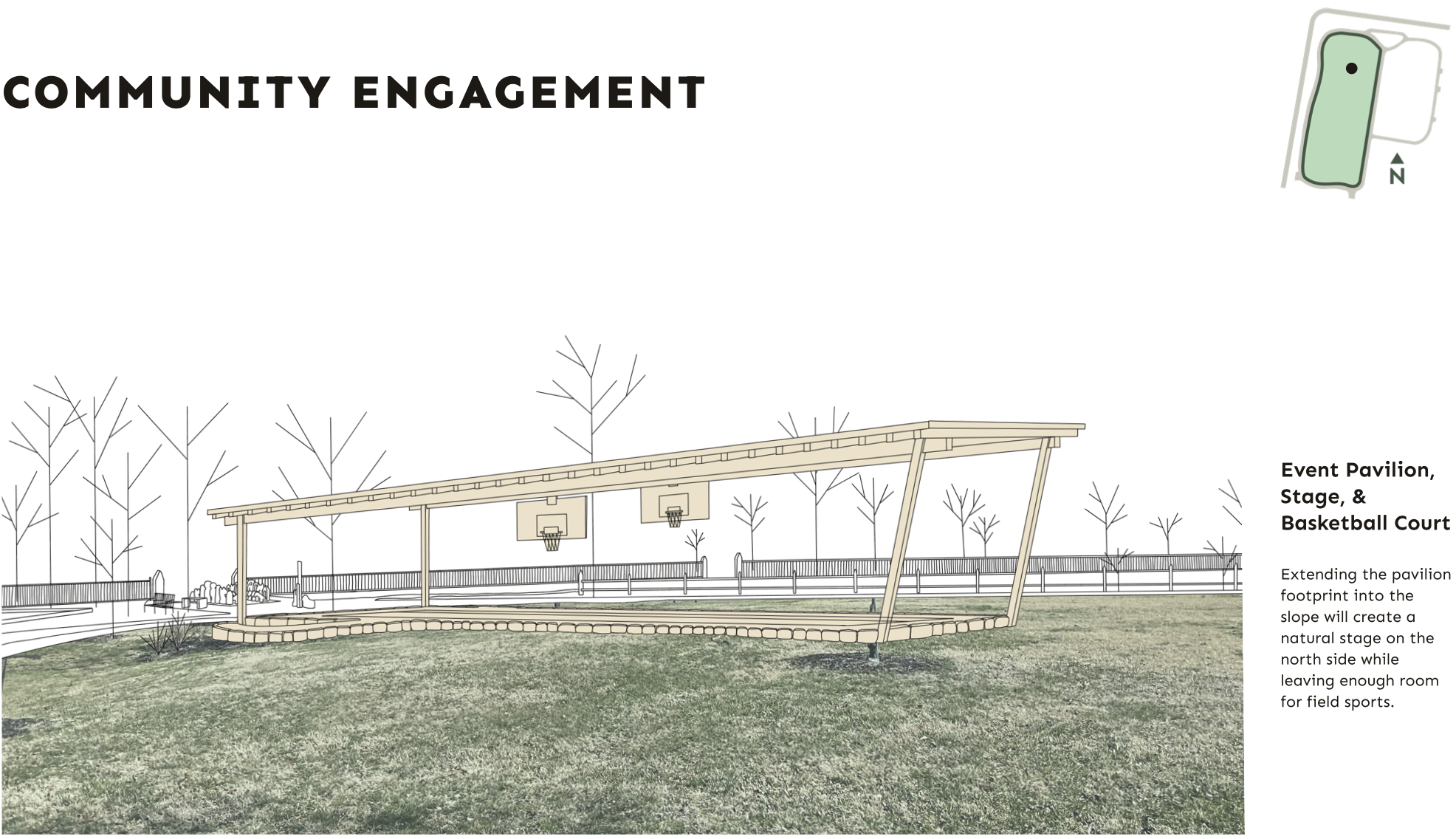
Kelly's concepts explore ways to better support these existing uses. A proposed event pavilion and basketball court would create additional opportunities for recreation and community programming. The pavilion is designed to extend into the existing slope, creating a natural stage on its north side while maintaining enough open space for field sports.
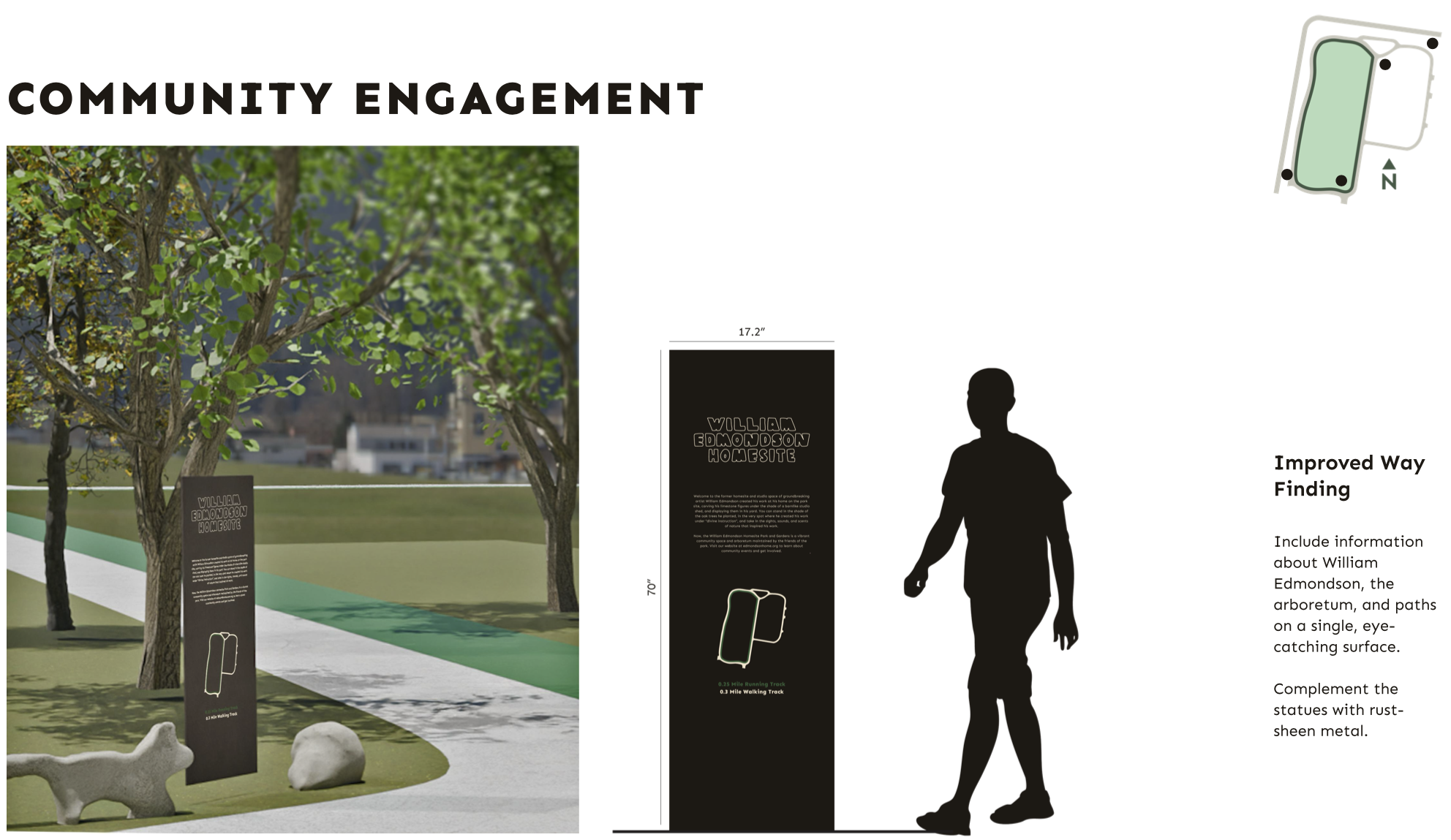
Improved wayfinding would help visitors navigate the park while bringing together information about Edmondson, the site's history, its certified arboretum status, and walking paths. The proposed signage uses a rust-finish metal aesthetic to complement the sculptural elements and create a consistent visual identity.
Together, these improvements envision a park that can accommodate both everyday neighborhood activities and larger community gatherings.
Making the Park More Inclusive and Accessible
Another major focus is creating opportunities for people of different ages and abilities to enjoy the park.
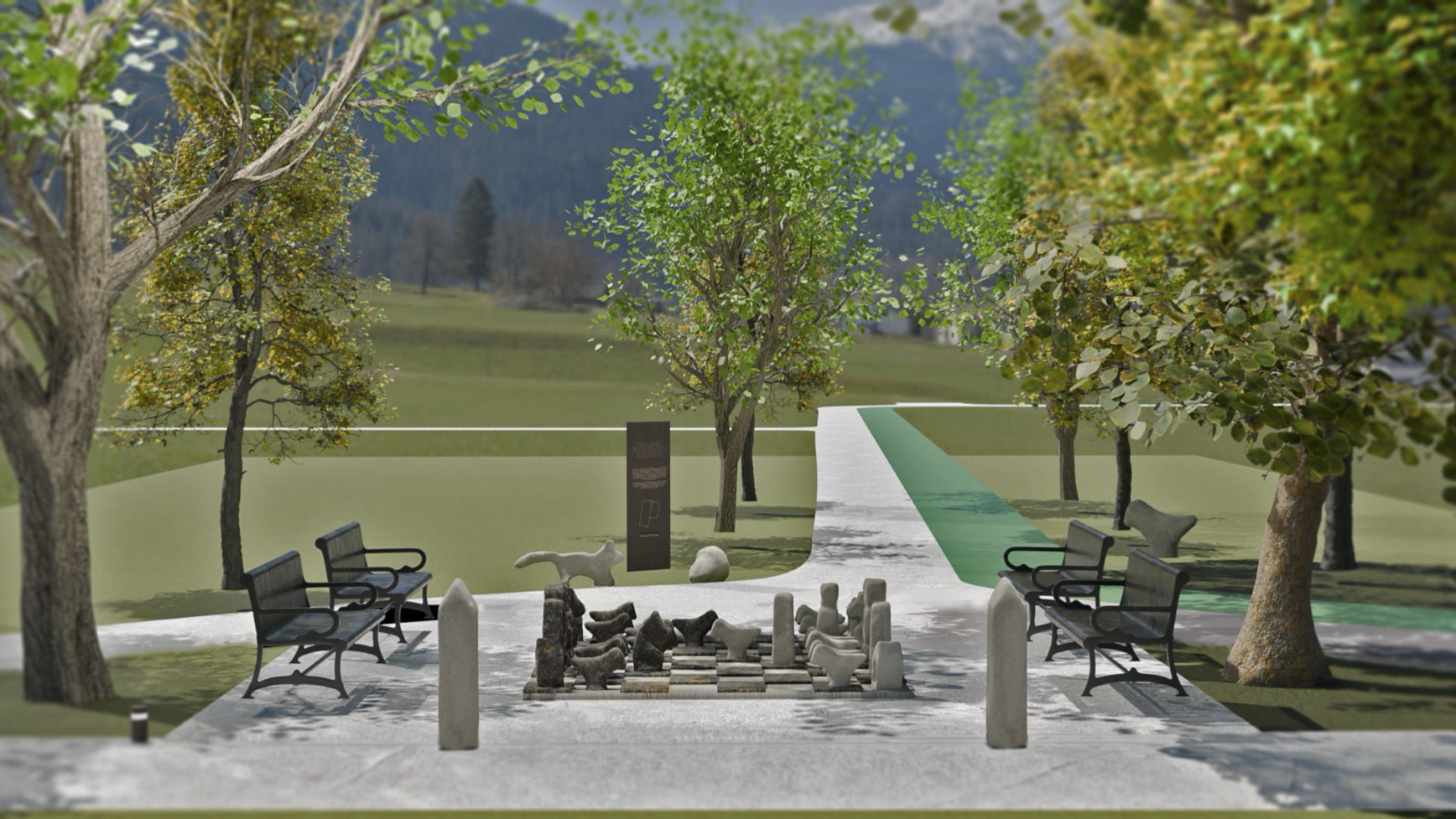
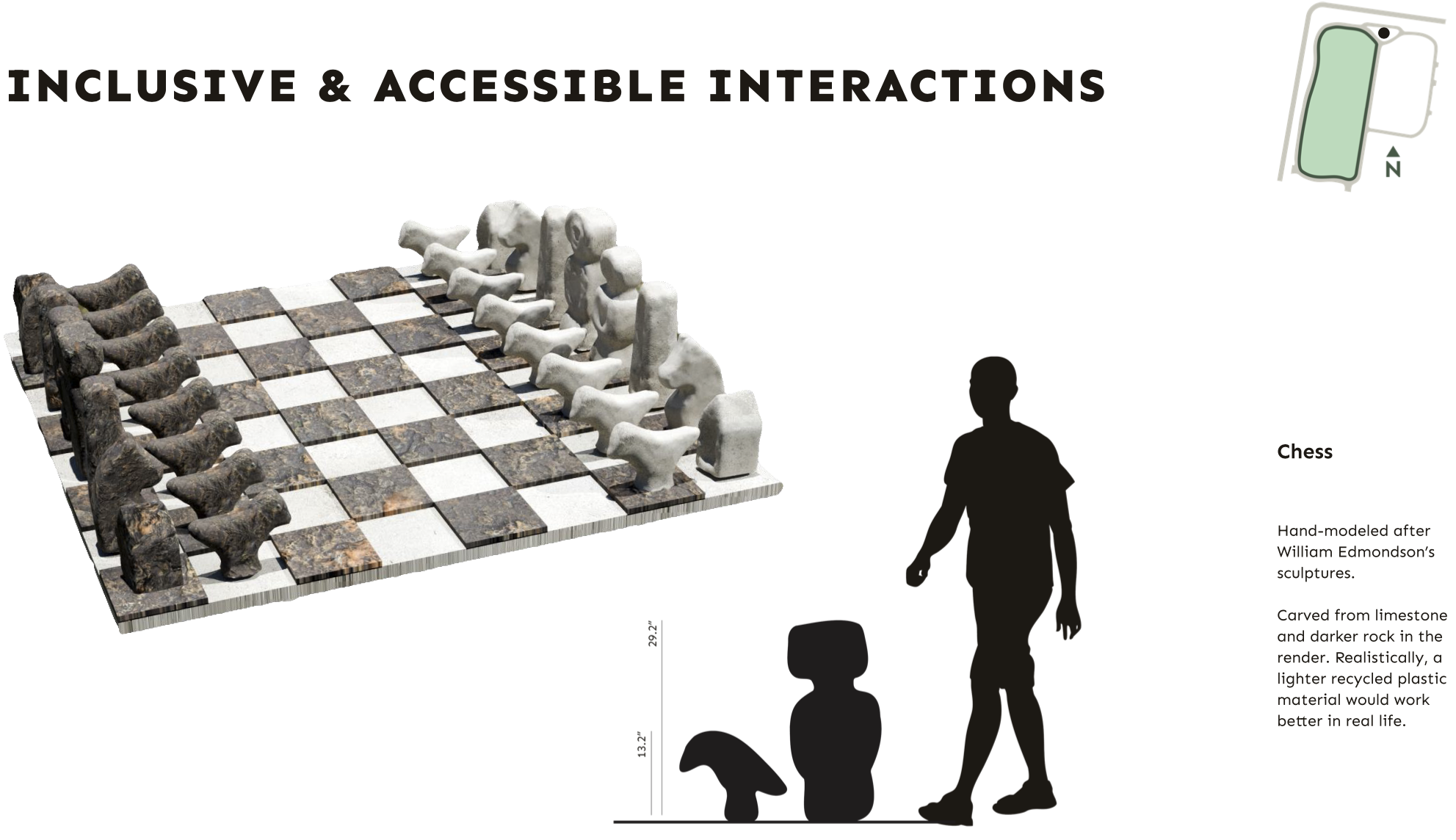
One idea is a permanent outdoor chess table inspired by the forms and textures of Edmondson's sculptures. The concept uses contrasting materials and a sculptural approach to transform a familiar game into a distinctive gathering feature. While the initial rendering explores limestone and darker stone, recycled plastic is suggested as a more practical material for construction.
A proposed two-lane running track would follow the existing walking paths, providing a dedicated space for individual exercise. This responds to an important distinction in how the community uses the park: residents value opportunities for informal recreation and exercise without necessarily wanting to encourage organized sports leagues or scheduled running events.
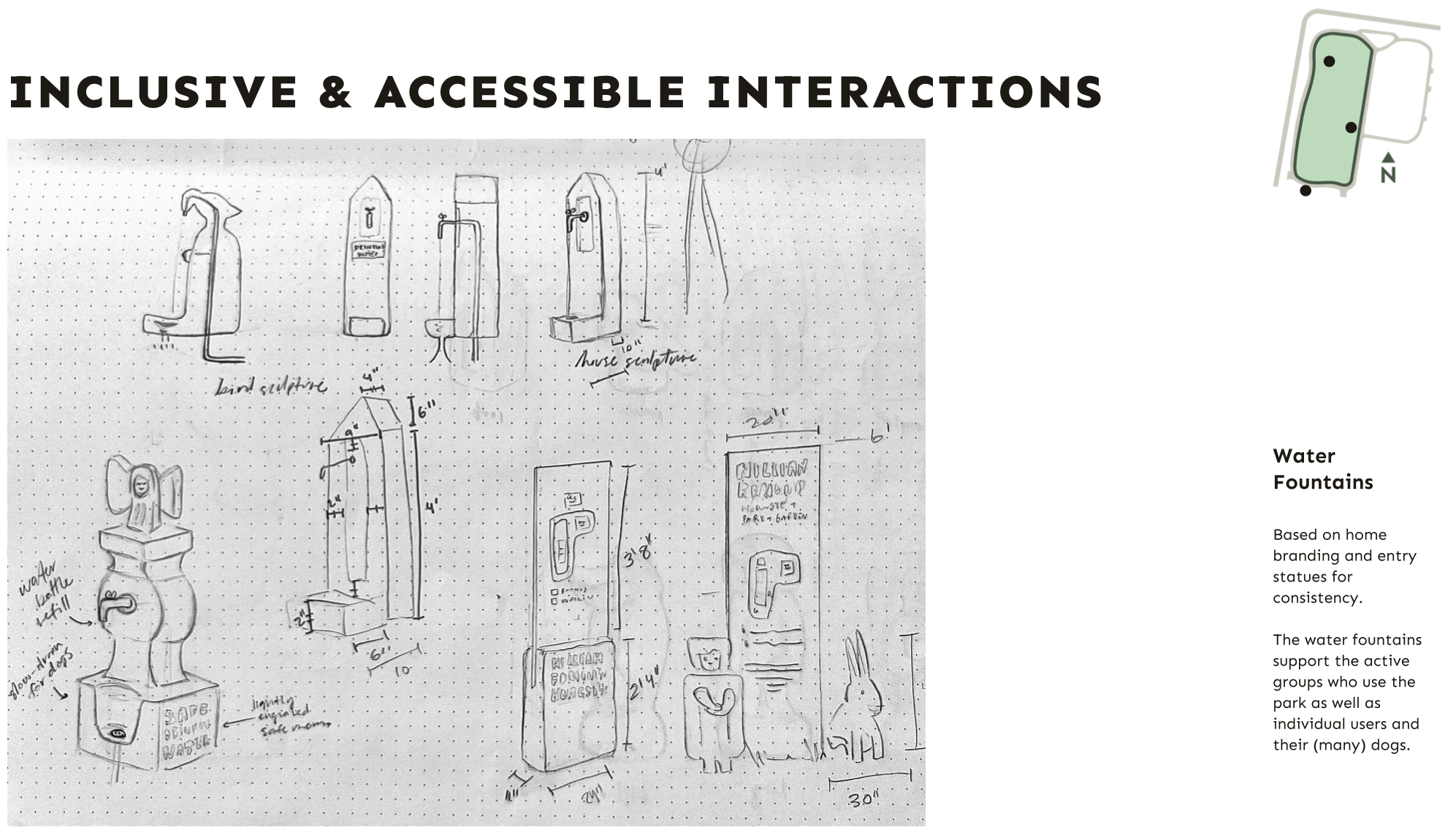
Water fountains are another practical addition. Designed to complement the park's visual identity, these amenities would support the many people who use the park for exercise, recreation, and dog walking.
A More Sustainable and Comfortable Landscape
The design concepts also address some of the park's existing physical and environmental challenges.
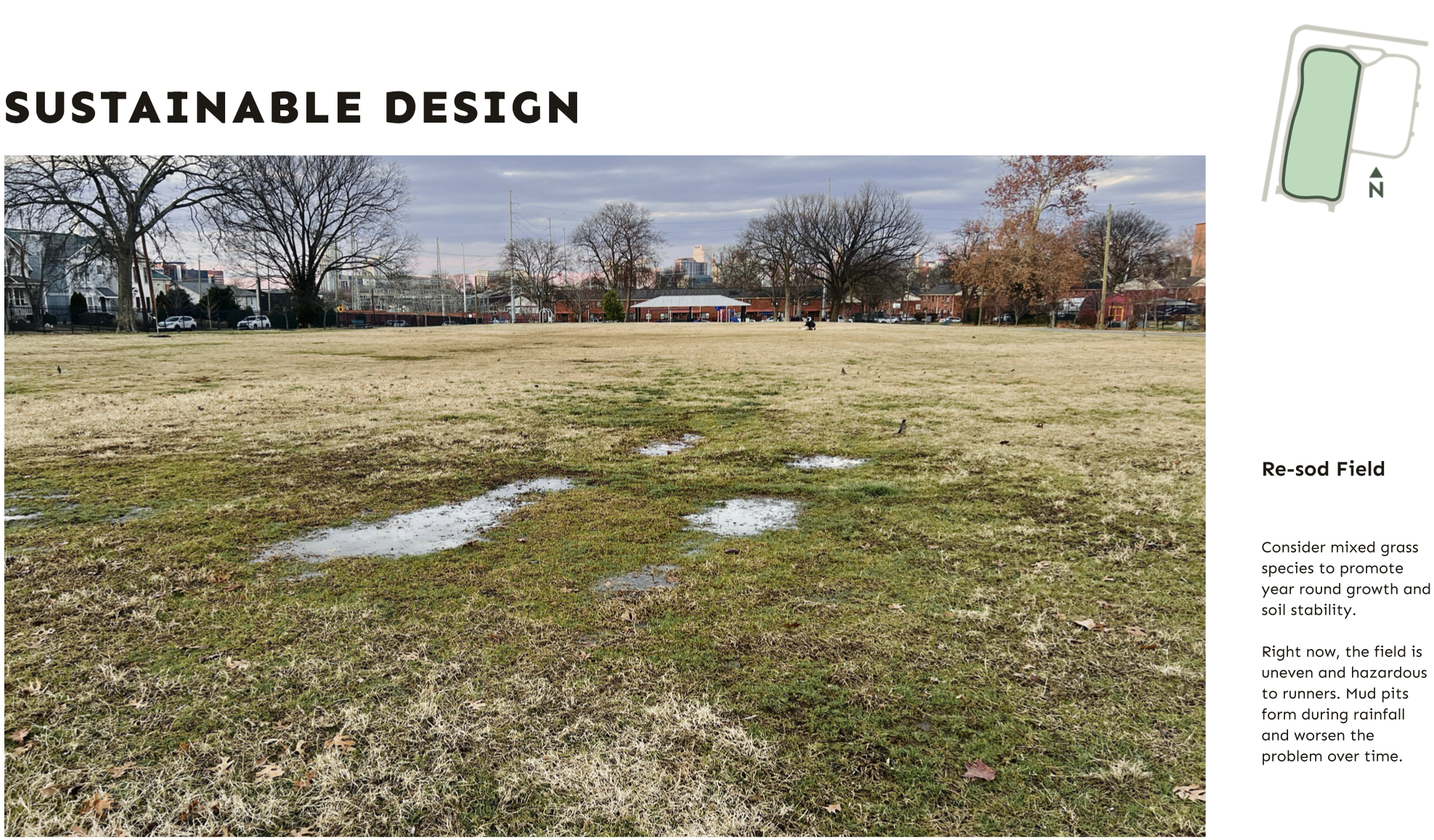
Uneven playing fields and areas that collect standing water can create hazardous conditions for runners and other park users. Kelly proposes re-sodding the field with a mix of grass species to encourage year-round growth and improve soil stability. Addressing the existing mud pits and uneven surfaces would make the open space safer and more usable.
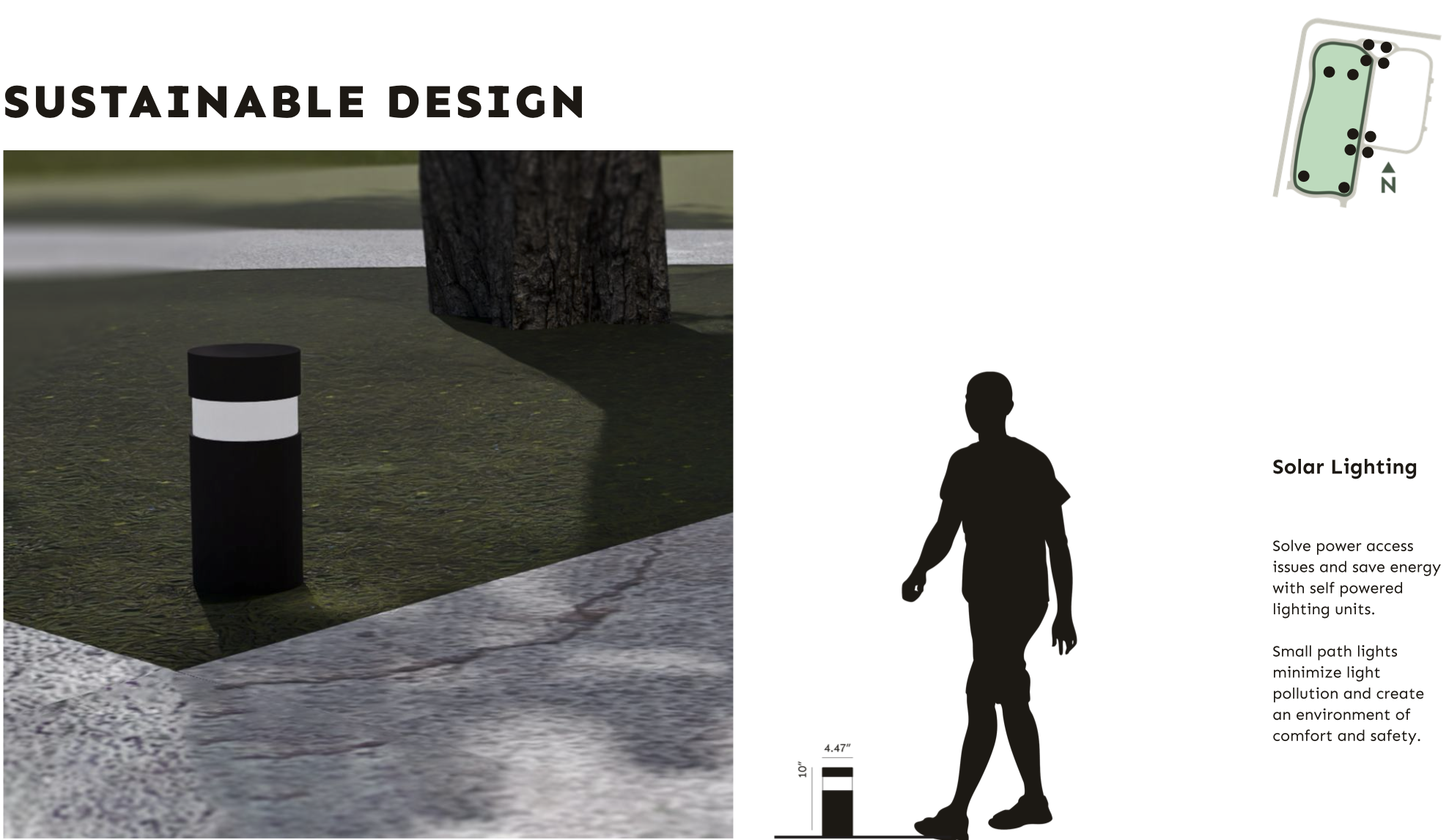
Solar-powered lighting offers another opportunity to improve the park. Because access to electricity is limited, self-powered lighting units could provide illumination without requiring extensive electrical infrastructure. Smaller path lights would help visitors feel more comfortable and safe while minimizing light pollution.
These improvements demonstrate how sustainable design strategies can address everyday maintenance and usability challenges while enhancing the overall park experience.
Continuing a Community Legacy
The William Edmondson Homesite represents an important intersection of Nashville's cultural history, public space, and community-led advocacy. Its future is rooted in the work of neighbors who have fought to protect the property and ensure that Edmondson's legacy remains part of the neighborhood.
Delaney Kelly's design concepts build on that foundation, offering a vision that balances historical interpretation with the practical needs of a living, active community space. From welcoming entrances and sculptural details to recreation, gathering spaces, improved lighting, and a healthier landscape, the ideas explore how design can make the homesite more inviting while honoring the artist who gave the place its significance.
The goal is not simply to preserve a piece of history, but to ensure that the William Edmondson Homesite continues to be a place where neighbors gather, children play, art is celebrated, and future generations can connect with Nashville's cultural legacy.