
By Eseosa Orhiekhoe, Nashville Youth Design Team Alum
4 min read Nashville Youth Design Team alumni, Eseosa, Ivie and Luc, summarized and analyzed the Design Your Neighborhood Advocacy Podcasts from the 2025-2026 school year. The students’ major issue areas focused on affordable housing, transportation, and parks. The following blog is part of a series that demonstrates what middle school students learned about their focus issue, but more importantly, it showcases their “take” on how it is affecting Nashville and particularly how it is affecting young people.
Nashville has several stand-out parks, including Centennial Park with its 1-to-1 scale Greek Parthenon, Warner Park containing hiking and horseback riding trails, and Shelby Park & Bottoms covering over 300 acres of land with beautiful river views. Even so, according to the ParkScore Index by the Trust for Public Land, Nashville ranks 78th out of 100 cities with the highest populations. Even with 15,134 acres of parks, many Nashvillians are not within walking distance to a park because they are not evenly distributed throughout the city. In fact, only 44% of Nashville residents are within a 10-minute walking distance to a park (Trust for Public Land).
This past school year, students at Isaac Litton Middle School (PLT classes and the Martha O’Bryan Center’s afterschool program at Isaac Litton) wrote and recorded podcasts to discuss the importance of parks for youth in our city, the challenges youth have to access parks, and activities they would like to see added that would make parks more engaging for their age group. Keep reading to learn more about important themes and takeaways from their podcasts.
Making the Case for Parks
Physical and Mental Health
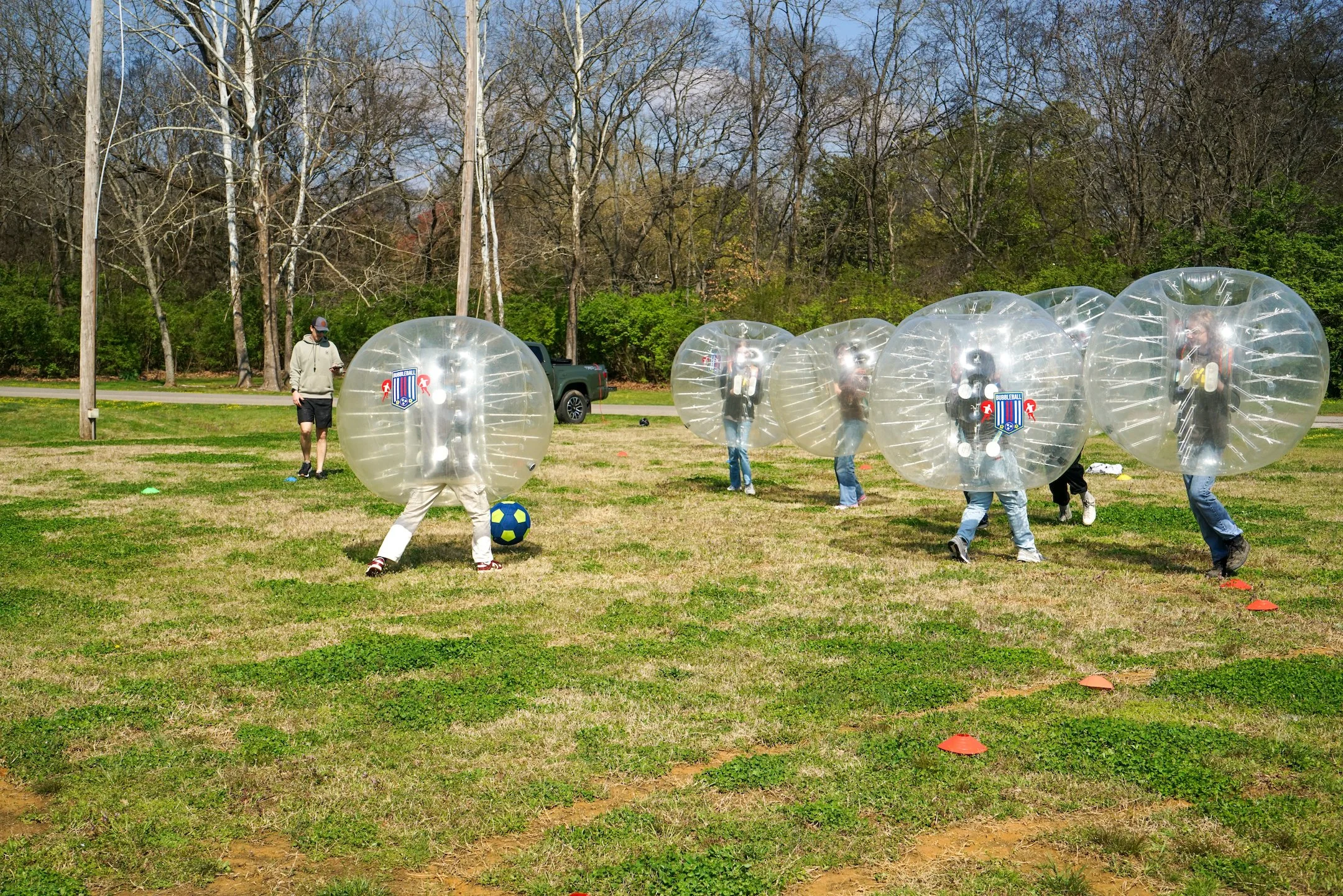
The Nashville Youth Design Team hosting a pop-up activation in Cedar Hill Park from Spring 2024
Parks have a major impact on physical and mental health. When there is improved accessibility to parks, the effects are shown throughout the community. There are opportunities for intergenerational bonding when there are third spaces that provide activities and fun for all ages. Making parks accessible for youth allows families to enjoy the park together and gives teens a space to hang out affordably and safely. The importance of third spaces, like parks, is prevalent now more than ever in the digital age. It supports youth having a positive relationship with themselves and others when they are able to release pent up energy outside. Several podcasts, including Isaac Litton’s “Brick by Brick,” discussed the health benefits of access to parks: “Access to green spaces has been linked to reduced stress, improved mood, and increased opportunities for outdoor learning and play for children.” “Group 2” from Isaac Litton also discussed benefits on “heart rate, mood, and ability to concentrate. Parks are also great for our long-term outcomes such as losing body weight, lowering heart disease risk, and increasing our life expectancy.”
Environmental Impact
When more land is dedicated to park space, it positively impacts the environment. Having trees spread throughout the city allows for increased air quality and provides shade, alongside housing more animals and providing more food for them. Hosts of the “Brick by Brick” podcast highlight the importance of parks for the environment: “Parks play a crucial role in environmental stability by managing stormwater, reducing flooding, and filter[ing] pollutants from the air and water. Trees and vegetation in parks remove toxins from the air supporting biodiversity and provide habitats for wildlife.” Another student also emphasized the importance of parks for the environment by preventing flooding, dangerous heat, and keep our waters clean and the air safer to breathe. According to these students, the benefits of parks for the environment support the need to build more parks.
The Debate
Increase Quantity or Improve Quality of parks
Groups were asked to place themselves in the position of being on the city council and the mayor had just announced a 1 million dollar budget to be used for improvements to parks in their neighborhood. Students considered whether this money would be better spent on investing in new parks so more people could be within walking distance to a park or to focus on adding activities to current parks to engage their age group.
The chart below shows some considerations the groups made:
Adding More Parks
Pros
More people have parks in walking distance
People in low income communities are able to access parks
Strengthens community identity in areas where there were previously no parks
Parks don’t need fancy new features to be fun
Benefits for the environment and biodiversity
Cons
More expensive
Less space for housing and other architecture
Improving Parks
Pros
Cheaper
Uses less land
More features for teens
More visitors can create support for building new parks in the future
People will be more willing to travel farther to visit the parks
Strengthens community identity in areas where there’s already a park
Cons
Disproportionately benefits communities that already have parks
Some students argued that the money used to build parks could go to other projects, like infrastructure, rather than building new parks. In “Debating Mates,” one group member argued “if we make more parks, then there will be less space and land to build things that are necessities for us like homeless shelters or apartments…” Several students also argued that this money would be more beneficial to improving current park amenities, rather than building more parks with fewer features. Another team member from Isaac Litton “Group 2” made the case to “expand existing [parks] and upgrade them. Then you’ll have bigger and better parks. I’d rather have less parks that are 4 miles long than have more parks that are only 2 miles long. Then I can take in [nature] for longer.”
Parks provide a place for community
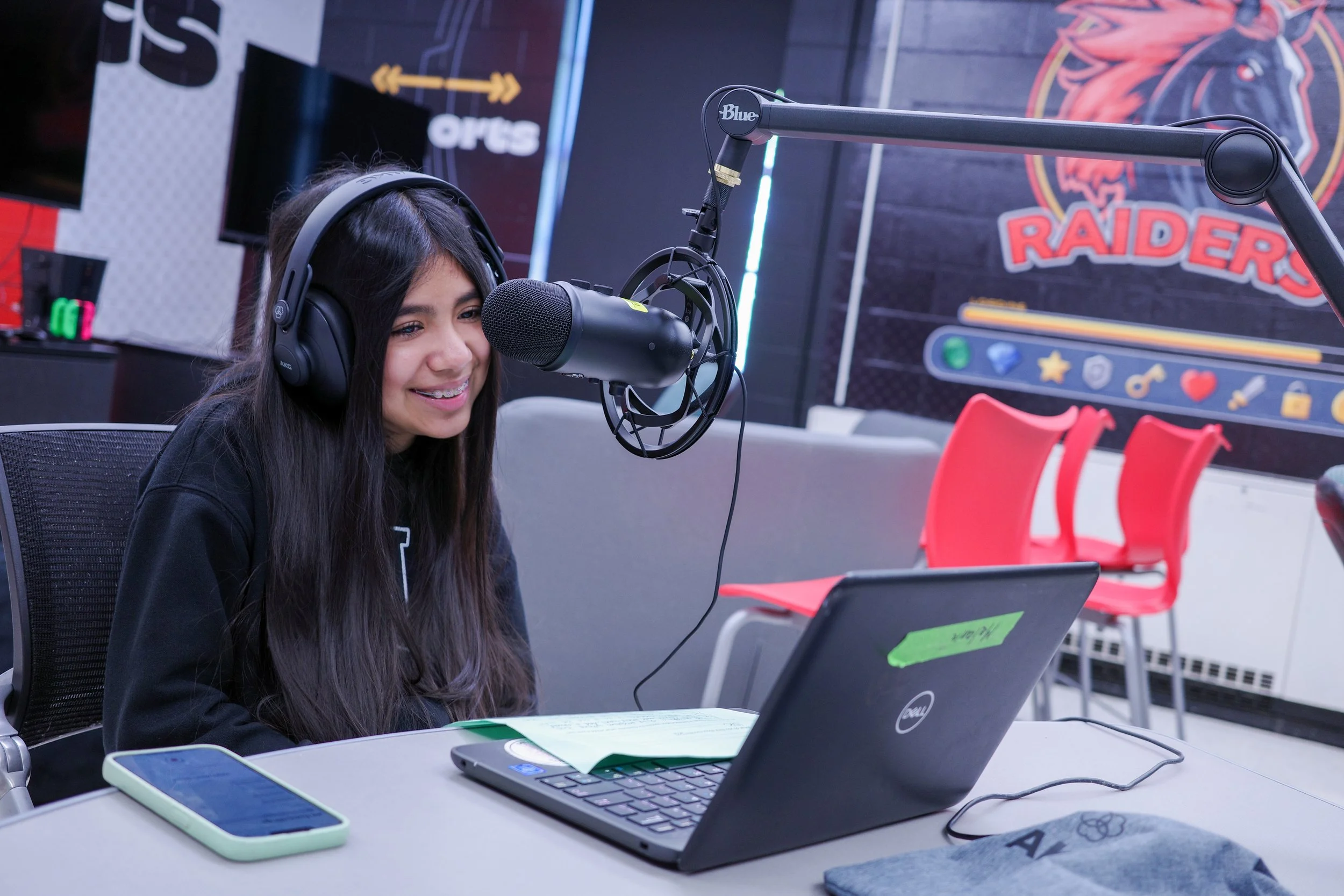
Student recording for a podcast
Representation seemed to be a key point for both sides of the argument with several groups emphasizing how both improving or adding new parks would benefit communities. “I think that if we renew parks and add more features it can bring new people to the parks, making for a bigger community and improving our overall health,” said one student from the “R&C Podcast.” Another youth from “Debating Mates” also talked about the importance of representation: “If we improve the parks, we will cause more people to come in because they feel like they are better represented.” On the other hand, students at Isaac Litton Middle School didn’t believe that this wouldn’t make much of a change towards equity and representation: “If we just added to the current parks, the chances are those parks would be in rich neighborhoods.”
Several groups emphasized accessibility as more important than improved amenities. Another group member from the “R&C Podcast” felt more parks would provide more accessibility to people in low-income communities: “When we add more parks to more areas it feels like every area—rich areas, poor areas, and middle class areas—have their own park and community they can go to.” Isaac Litton Group 4 made similar points, arguing that parks should be made accessible to every neighborhood, regardless of economic status, to make sure that every neighborhood has a greenspace.
“Parks can strengthen communities and help bridge divides. This impacts youth because it gives them outlets of a place to sit and talk to friends or think by yourself and walk around and enjoy nature in peace.”
On either side of the debate, it is clear that one of the primary benefits of parks that many youth want to share is its role as a place for community and belonging. Nashville youth don’t always feel represented by the parks that are in their neighborhoods and they won't go to places where they feel disconnected with those around them. A group of students emphasized this by claiming, “The biggest problem I have seen at parks is a lot of transphobia towards me and a lot of racism when me and my siblings talk in different languages.” These students emphasize the importance of parks being welcoming spaces. Accessibility, along with representation for those who use the parks, are both important to creating a space for youth to connect with friends, enjoy, and connect with the community.
Kids want a place to hang out
Without yards to play in or outdoor spaces to go, hosts of “The Lion’s Mouth”and “Curious Kids” speculate that with kids spending more time on their phones or computers, parks might help kids stay out of trouble and provide fun for all ages. Despite youth often wanting to go outside, a lack of parks does not present the opportunity for fostering physical activity that benefits their bodies. Another student from Isaac Litton “Group 2” said, “Parks give kids a safe and healthy environment to connect with peers [and] nature, but teenagers don’t really have a lot of places to hang out…”
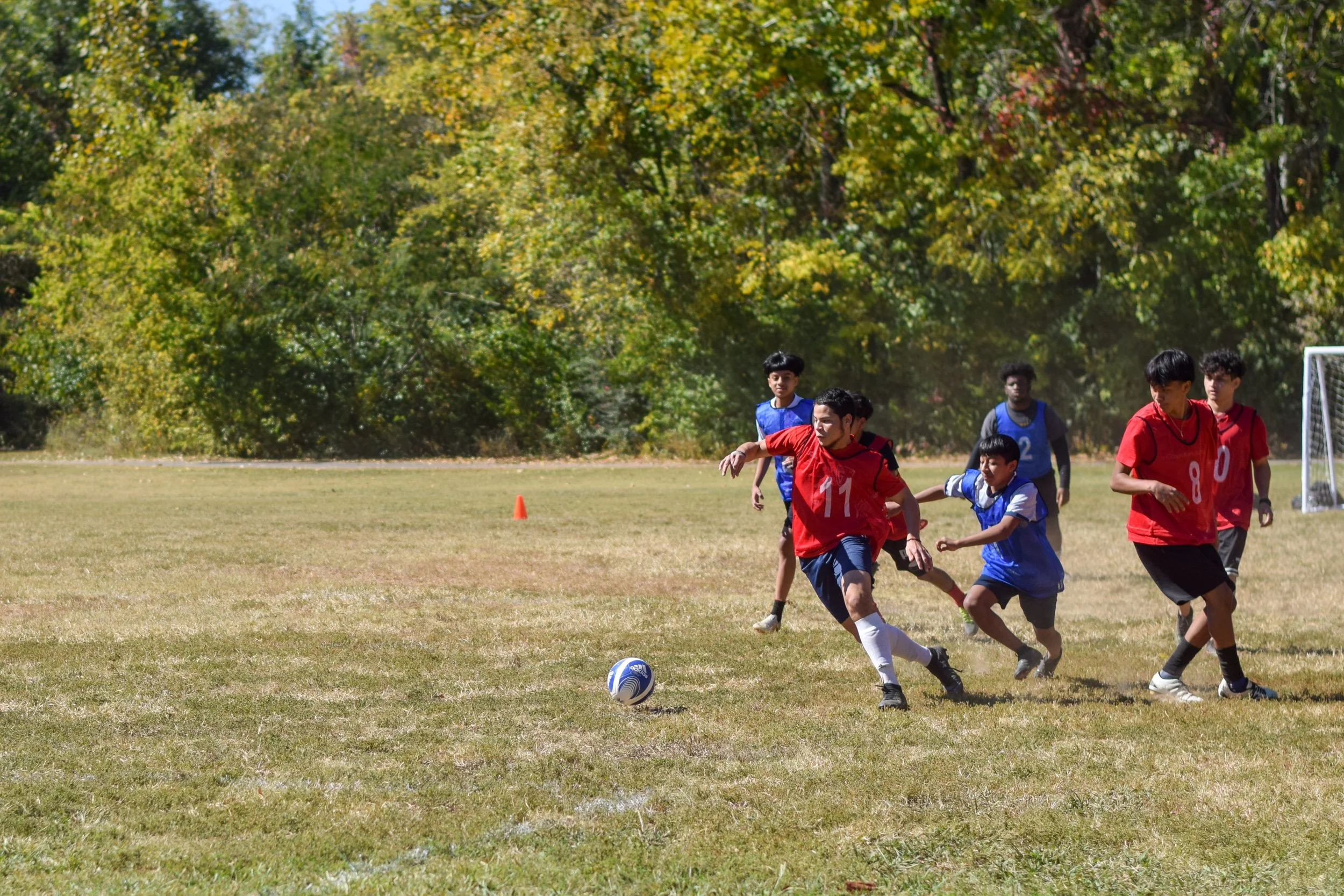
The Nashville Youth Design Team hosting a pop-up activation in Antioch Park from Fall 2023, which has now become a permanent mini soccer pitch
“Group 5” from Isaac Litton presents their own frustrations with not having a space for teens to hang out or connect with their peers: “We are seen as too big, too loud, too old for playgrounds and too young, too loud, and too broke for restaurants, bars and other stores. Kids younger than us have spaces to get out their energy, but we don’t have a place enjoyable enough to hang outdoors where we don’t have to pay.” Another group member goes on to say “We are often left out of park design… with most focus being on the younger demographic.” Having accessible parks with age appropriate activities benefits teens physical and mental health.
Improving parks can increase the fun youth have at them as well. When renovations are made to enhance a park’s trails, playgrounds, and other features, it provides an incentive for youth to travel to a park.
Build Incentive and Access Simultaneously
Many youth see parks as inaccessible or difficult to get to. When discussing which parks they like to visit, one student said, “I usually go to Shelby Park, it's far from my house and takes about 30 minutes to get there. I usually go once a month.” Another student highlighted this issue with accessibility: “I usually go to Centennial Park, this park is far from my house. It takes about 20-30 minutes to get there, so I only go twice a month.” These students’ experiences show that a lack of transportation options are a barrier to youth enjoying Nashville parks. If their parents aren't driving them 20-30 minutes to the park, they either can’t go to the park, aren’t able to go regularly, or have to find a different way to get there, such as the WeGo bus system. Some other suggestions that students made to help address this include adding accessible sidewalks, safer bus stops, and alternative paths for bikes and scooters. These concerns connect with another urban design topic addressed by podcasts written and recorded by students at Wright Middle: transportation.
Stay tuned for the next installation of podcast analysis!