
Fast Road to a Vibrant Street
A vision for Antioch Pike
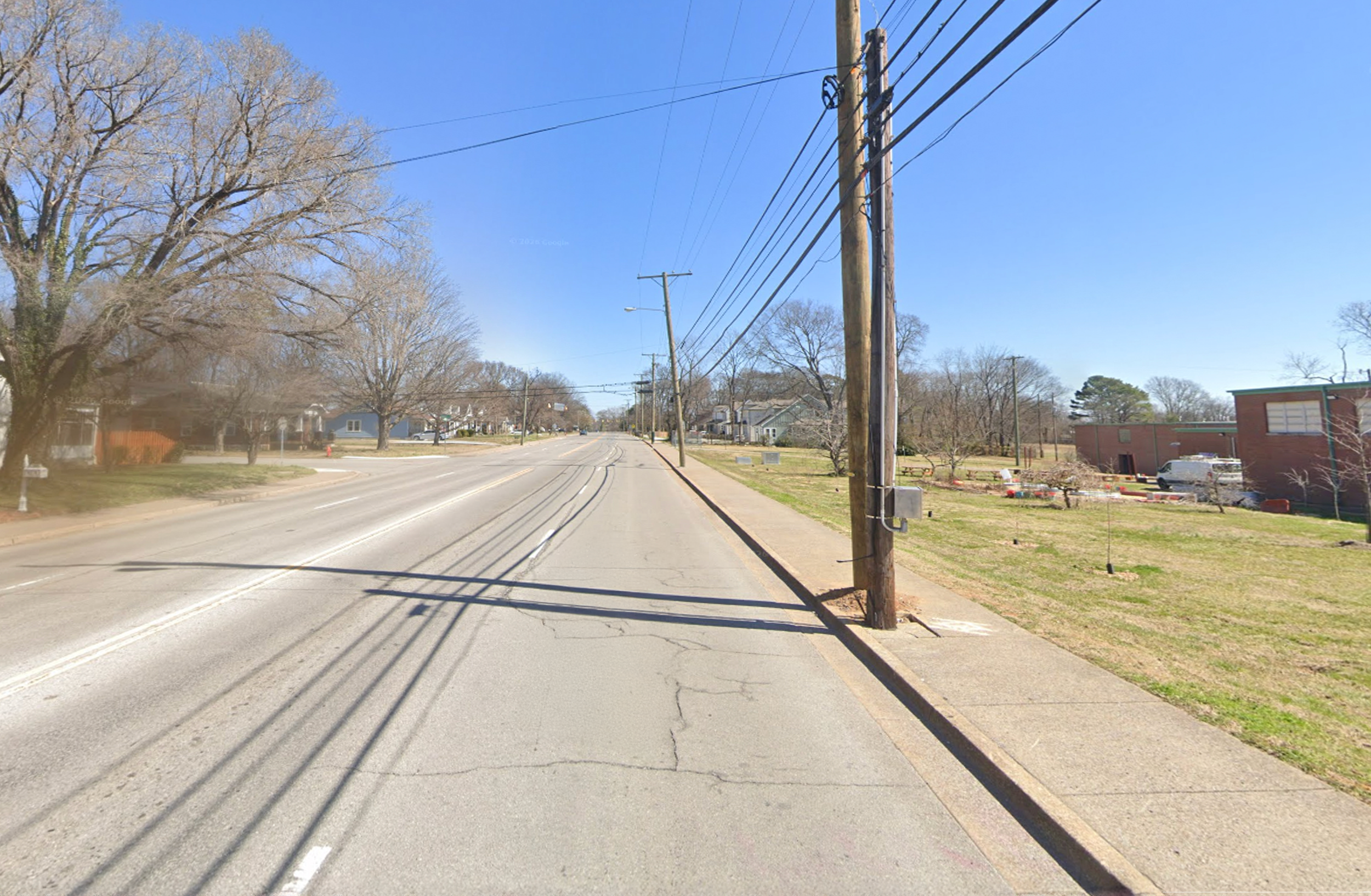
Antioch Pike is a vital connector for the Glencliff community. Spanning a mile between Nolensville Pike and McCall Street, this stretch links neighborhood schools, family-owned businesses, transit stops, and everyday gathering places. Yet for years, it has presented serious safety challenges, marked by high speeds, missing crosswalks, inadequate sidewalks, and limited public green spaces. At the Civic Design Center, we believe streets should do more than just move cars—they should support community health, equity, and everyday human connection. Partnering with the Nashville Department of Transportation and Multimodal Infrastructure (NDOT), Glencliff Neighbors, Walk Bike Nashville, and other community organizers, we set out to design Antioch Pike for people.
Beginning with neighborhood-focused sessions with the Glencliff Neighborhood Association, Cosecha Garden, Wright Middle School, Glencliff High School, and Glencliff Elementary, our team met with community members. We coupled these conversations with a Public Life Study to track pedestrian movement and behaviors along the corridor. We were able to establish priorities: calming traffic speeds, and making crossings safe for families.
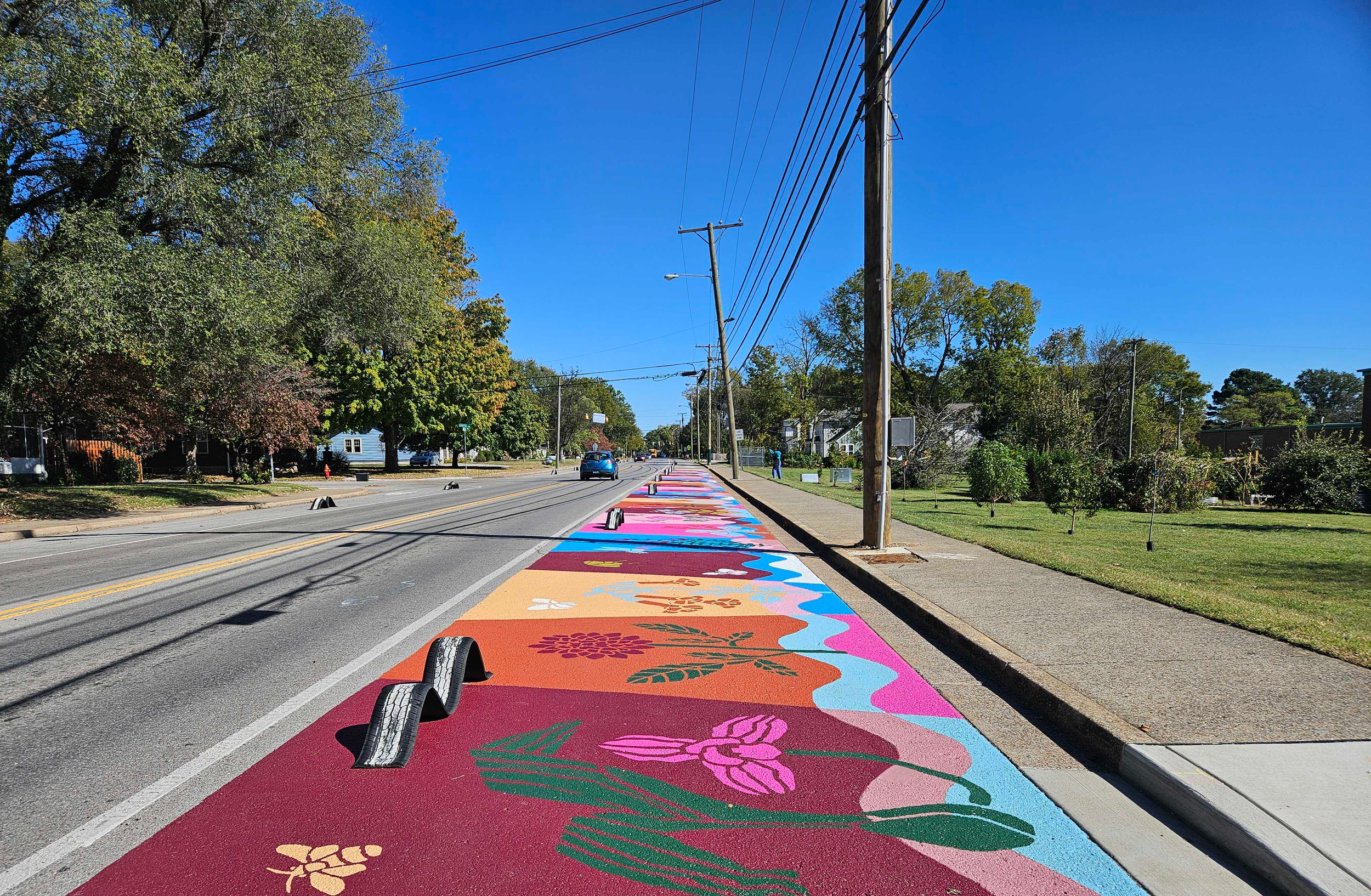
To turn those ideas into immediate reality, we launched into a tactical urbanism process in partnership with NDOT. Events like Open Streets: Antioch Pike and community painting days brought neighbors together to transform asphalt into art. High-visibility painted road murals served a dual purpose, celebrating local culture while naturally prompting drivers to slow down. Working alongside NDOT, we also introduced a tactical urbanism temporary bus stop to evaluate how refreshed waiting areas improve transit rider safety and dignity. Each pop-up acted as a living laboratory where real-time feedback helped us learn what worked best in real space.
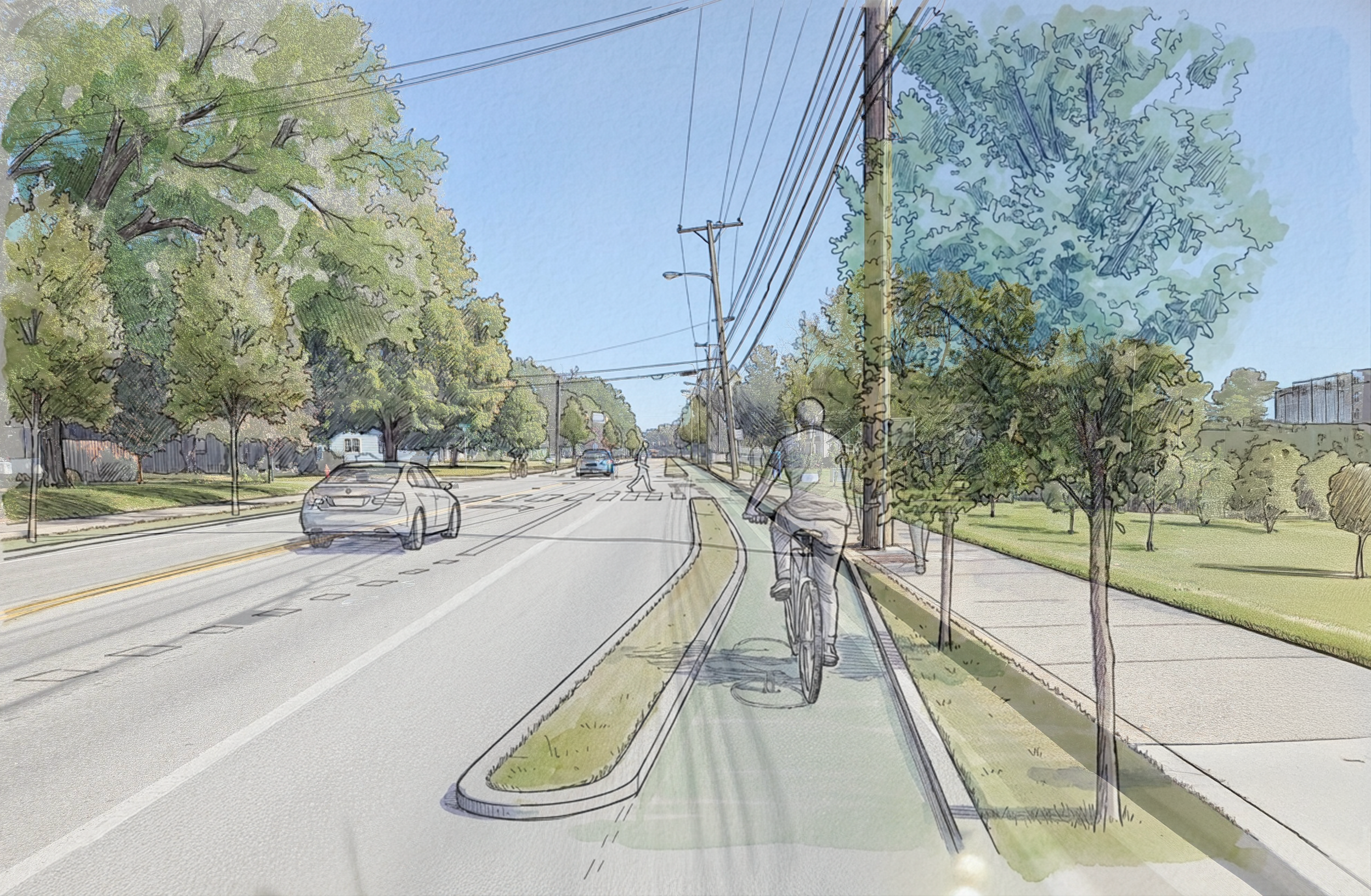
Building on the data gathered during these quick-build experiments, the Civic Design Center translated community input into refined conceptual designs. These visions imagine a complete corridor transformation featuring visually narrowed lanes to discourage speeding, expanded walkways and bulb-outs to protect pedestrians, and shaded seating with green buffers that make walking home or waiting for the bus a welcoming experience.
Now, we are entering the crucial next chapter: moving from temporary pop-ups to long-term infrastructure through NDOT’s Pathway to Permanence program. By demonstrating that these tactical interventions successfully reduce speeds and improve safety, we can build the case for permanent capital investment along Antioch Pike.
Your voice is essential in turning this vision into permanent reality. We invite you to review the concept designs below and share your feedback on what features matter most to you. Together, we can shape Antioch Pike into a safer, healthier, and more connected boulevard for everyone.
Please feel free to comment on this map using the speech bubble button in the top right corner and then click on the map where you would like to comment.