
ReImagining the Gateway to Heritage Park PT. 1
Analysis for the Next phase of Jefferson Street’s Civic Landscape
By Selene Rowan, Urban Design Fellow
7 min read What could the Gateway to Heritage Park become for Jefferson Street’s next chapter? More than a decade after its completion, the park remains an important reflection of the history and culture of North Nashville, but there is an opportunity to build upon its existing framework and reimagine how the space serves the community today. This blog explores what is working, what could be strengthened, and how lessons from other infrastructure-adjacent public spaces can inspire a more active, connected, and welcoming Gateway to Heritage Park.
Existing Gateway to Heritage Park
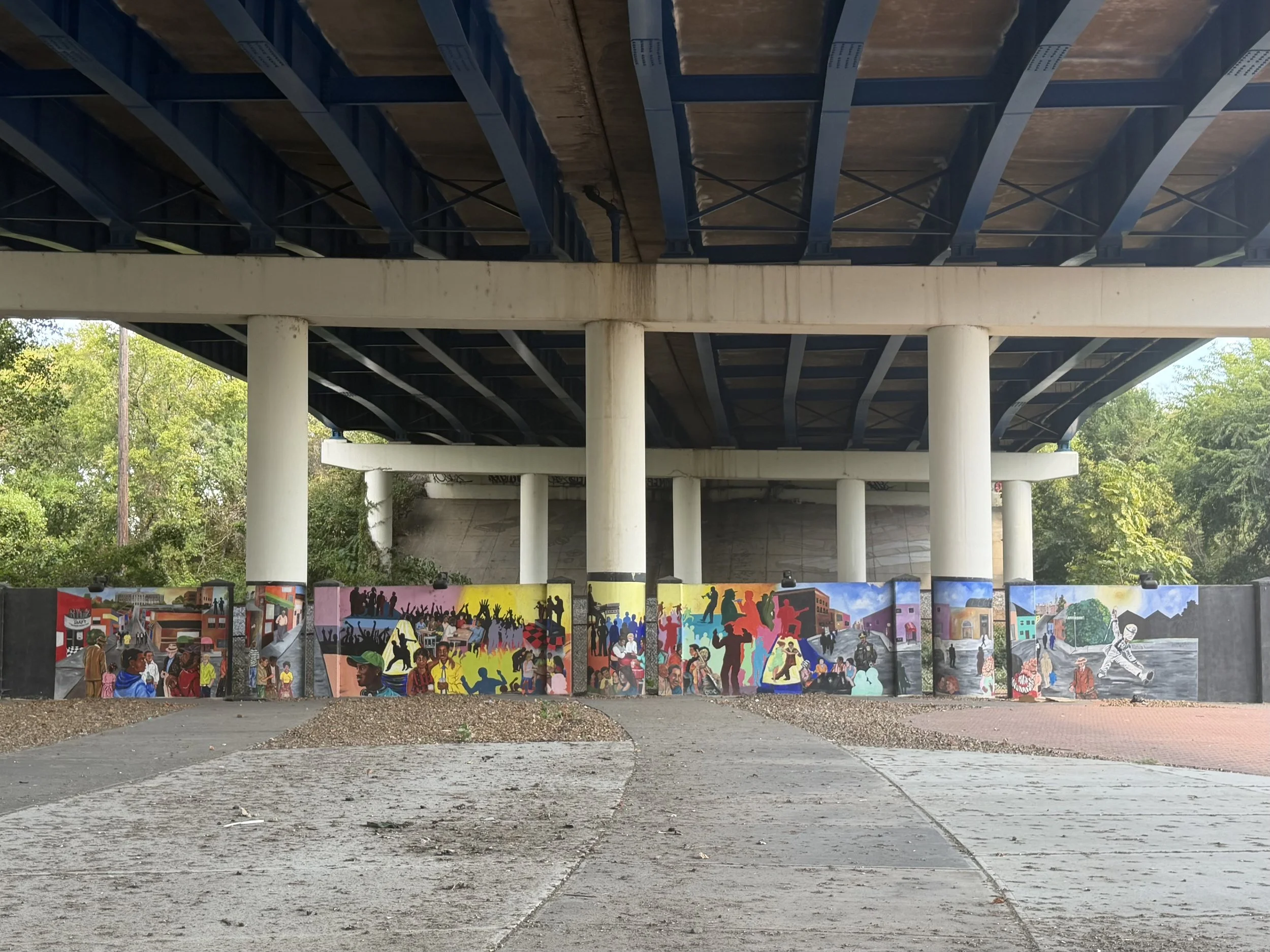
The Gateway to Heritage project stands as one of Nashville’s most significant examples of community-driven urban design. First conceived through the 1996 Jefferson Street Corridor Study and later realized in 2012 through an an active partnership between Metro Nashville, TDOT, local universities, nonprofit organizations, neighborhood stakeholders, EDGE Landscape Architecture, and J.U.M.P. It was a true creative collaboration between public and private sectors to celebrate and revitalize North Nashville. This project’s goal was to honor the community, so it was heavily driven by the local knowledge and history of Jefferson Street neighbors and stakeholders. Gateway to Heritage transformed the I-40 underpass from a neglected and unwelcoming space into a symbolic gateway celebrating the history and culture of Jefferson Street.
Fourteen years after its completion, and with new investments emerging through Nashville’s Choose How You Move transportation initiative and ongoing Jefferson Street revitalization efforts through The Choose How You Move Jefferson Street Corridor Study the time is right to evaluate how Gateway to Heritage is serving the community today and how it can continue to evolve for future generations.
Analyzing the gateway
What’s Working
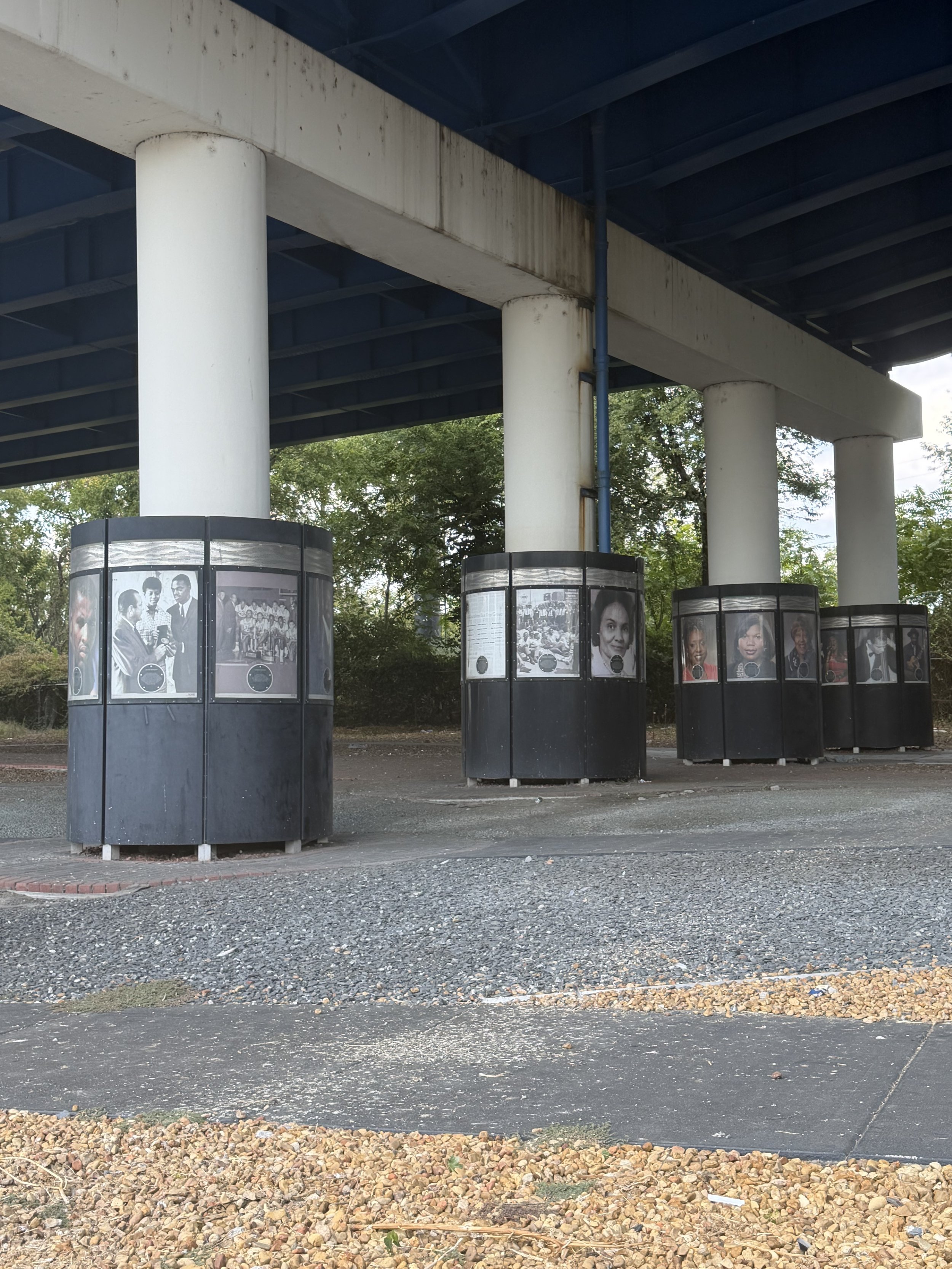
The Gateway to Heritage project remains a valuable civic asset that successfully achieves many of its original goals. The public art and cultural references throughout the site continue to honor the rich legacy of Jefferson Street as a center of Black culture, music, education, and entrepreneurship. The network of pathways and hardscape creates clear circulation throughout the site while maintaining accessibility and visibility. Permeable paving and landscaped areas demonstrate an early commitment to sustainable design practices. The project also continues to represent a successful model of collaboration between Metro Nashville, TDOT, and local universities through maintenance and security . The highway overpass provides weather protection, creating opportunities for activity throughout the year regardless of rain or intense summer sun.
Current Challenges
While the project remains visually significant, several challenges limit its ability to function as a vibrant community destination. The space lacks regular activities, events, programming, and amenities that encourage residents to spend time there beyond simply passing through or passing by in a car . Large paved areas contribute to heat buildup and create an environment that can feel more transitional and harsh than welcoming. There are currently few opportunities for residents to directly shape, activate, or contribute to the space on an ongoing basis. The surrounding road network and I-40 overpass create challenges related to speed, noise, pedestrian comfort, and perceived safety. Lighting, visibility, and overall character after dark could be improved to create a stronger sense of safety and activity. Basic amenities such as restrooms, drinking fountains, bike parking, car parking, and comfortable seating are absent.
Precedent Studies
When reimagining a park within the urban fabric it is important to reflect and seek inspiration from other projects to take into account what as worked in other places. Below are a selection and deep dive of relevant projects.
Urban Wilderness Gateway Park
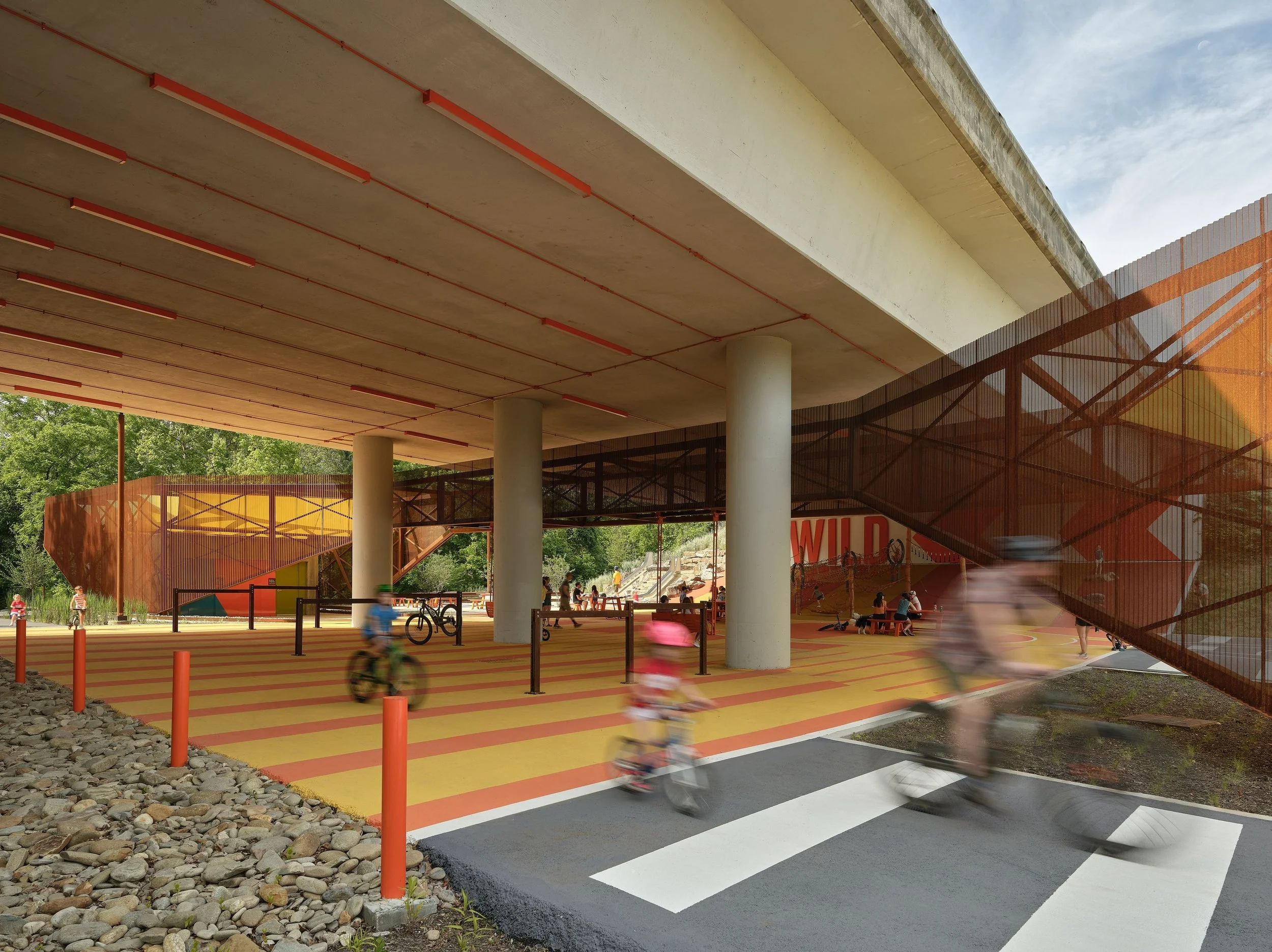
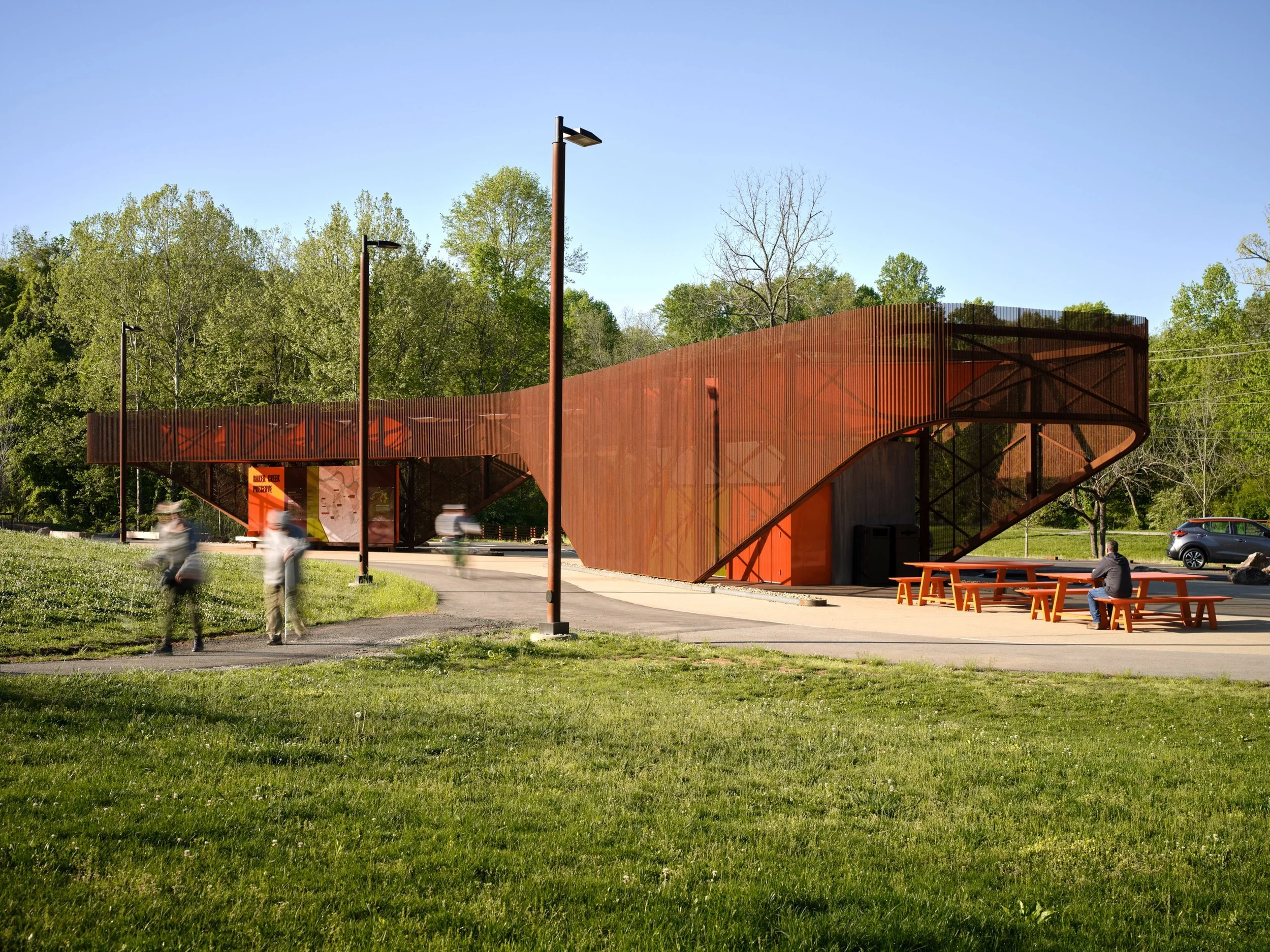
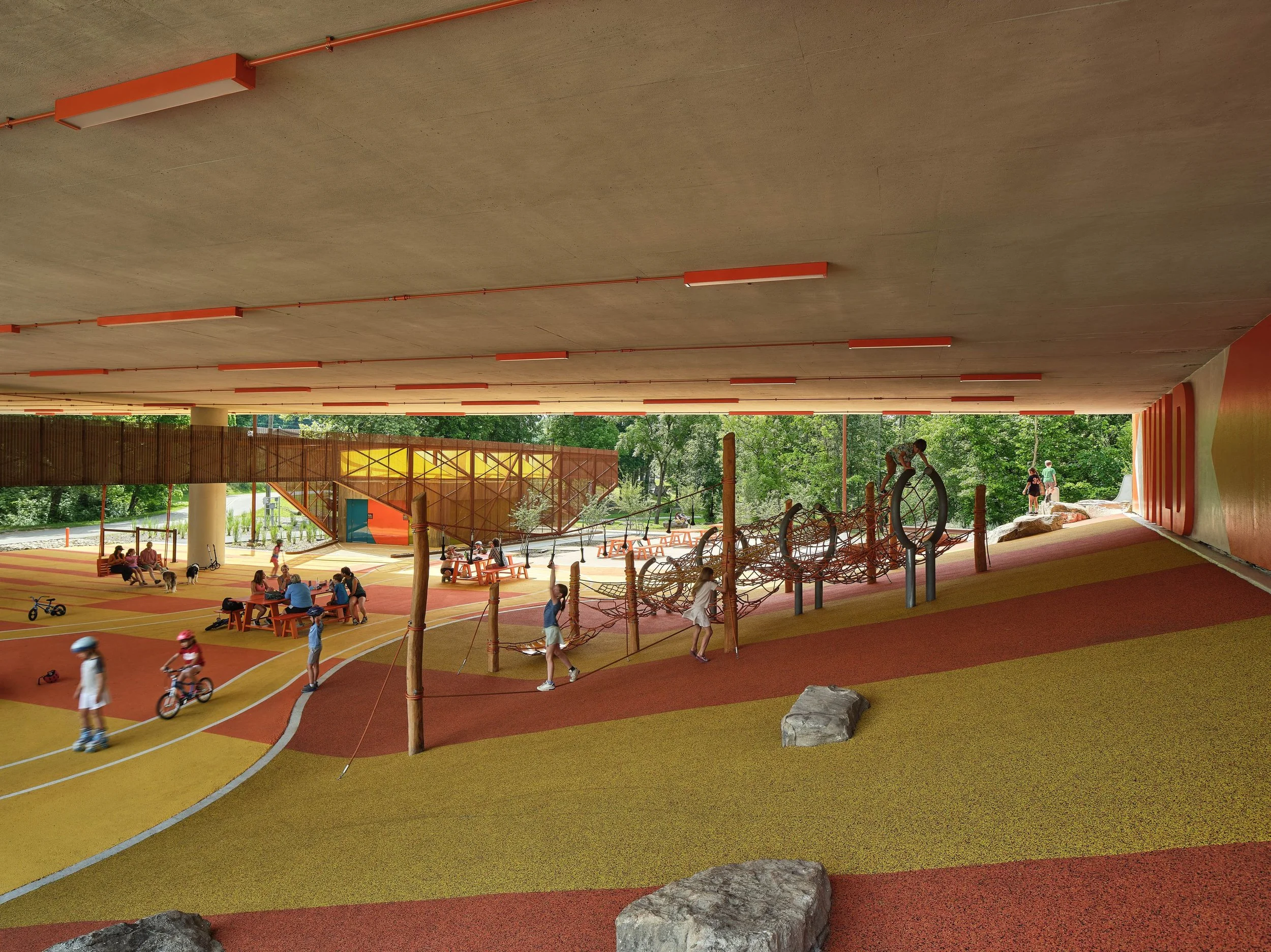
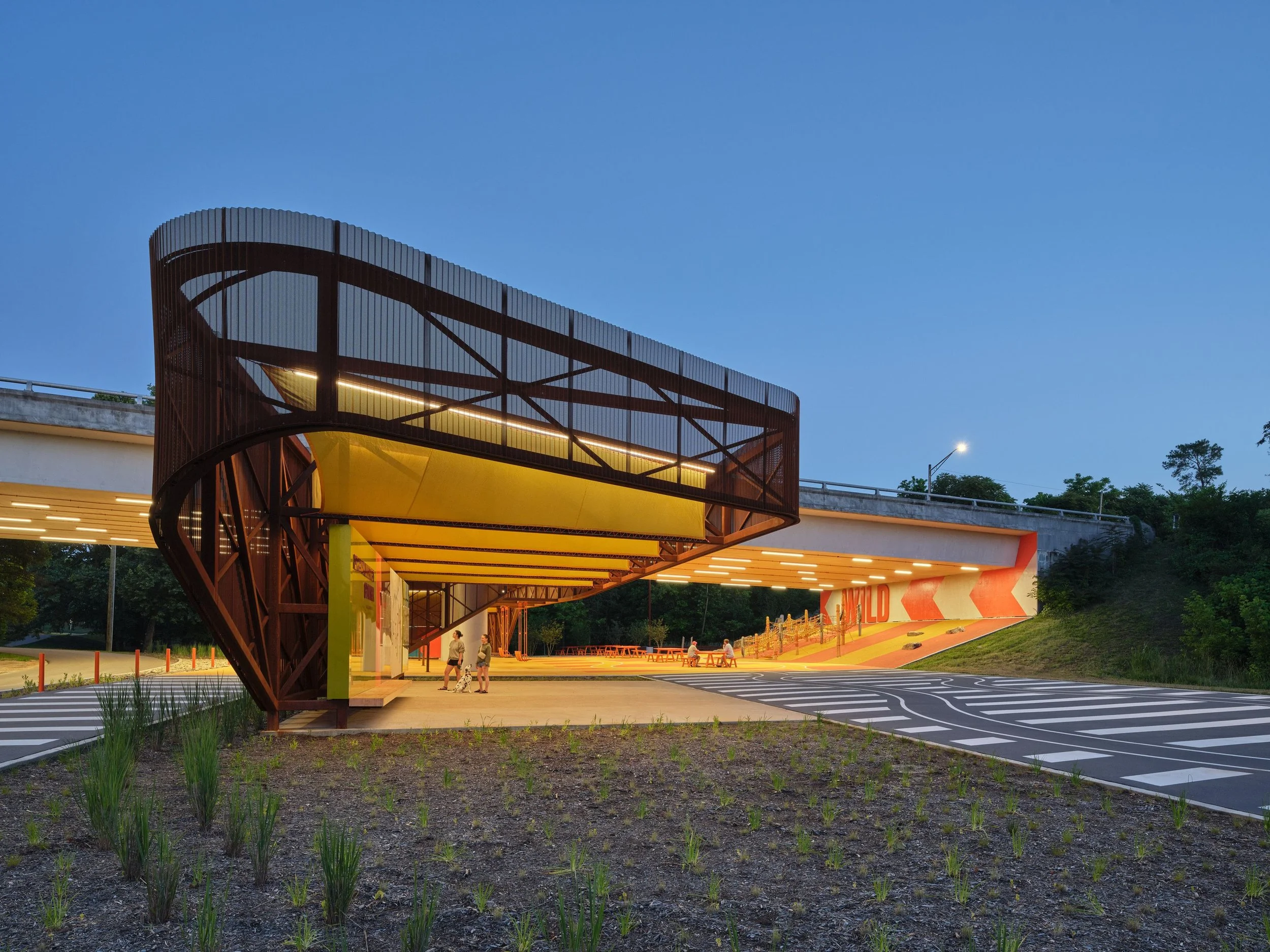
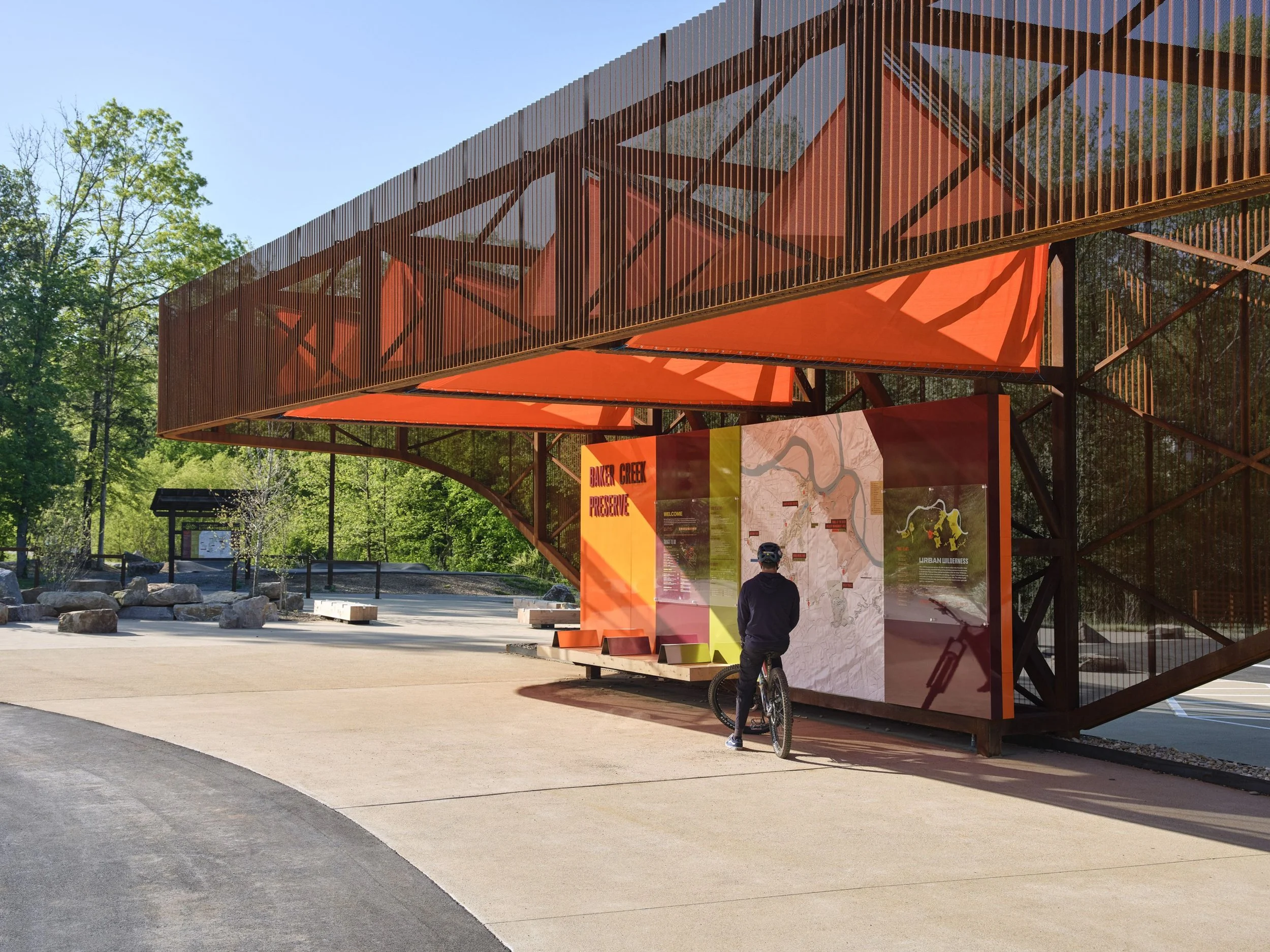
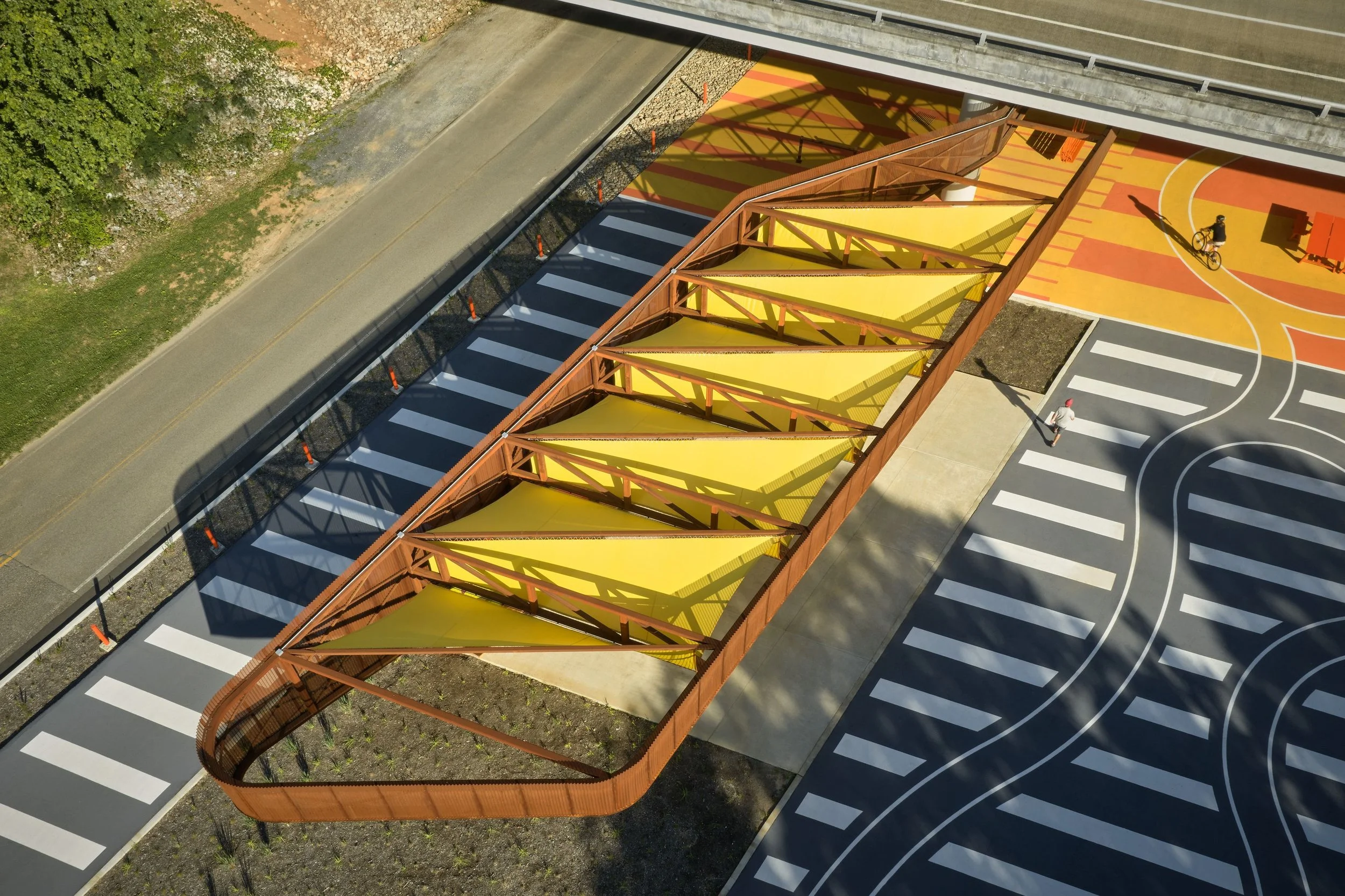
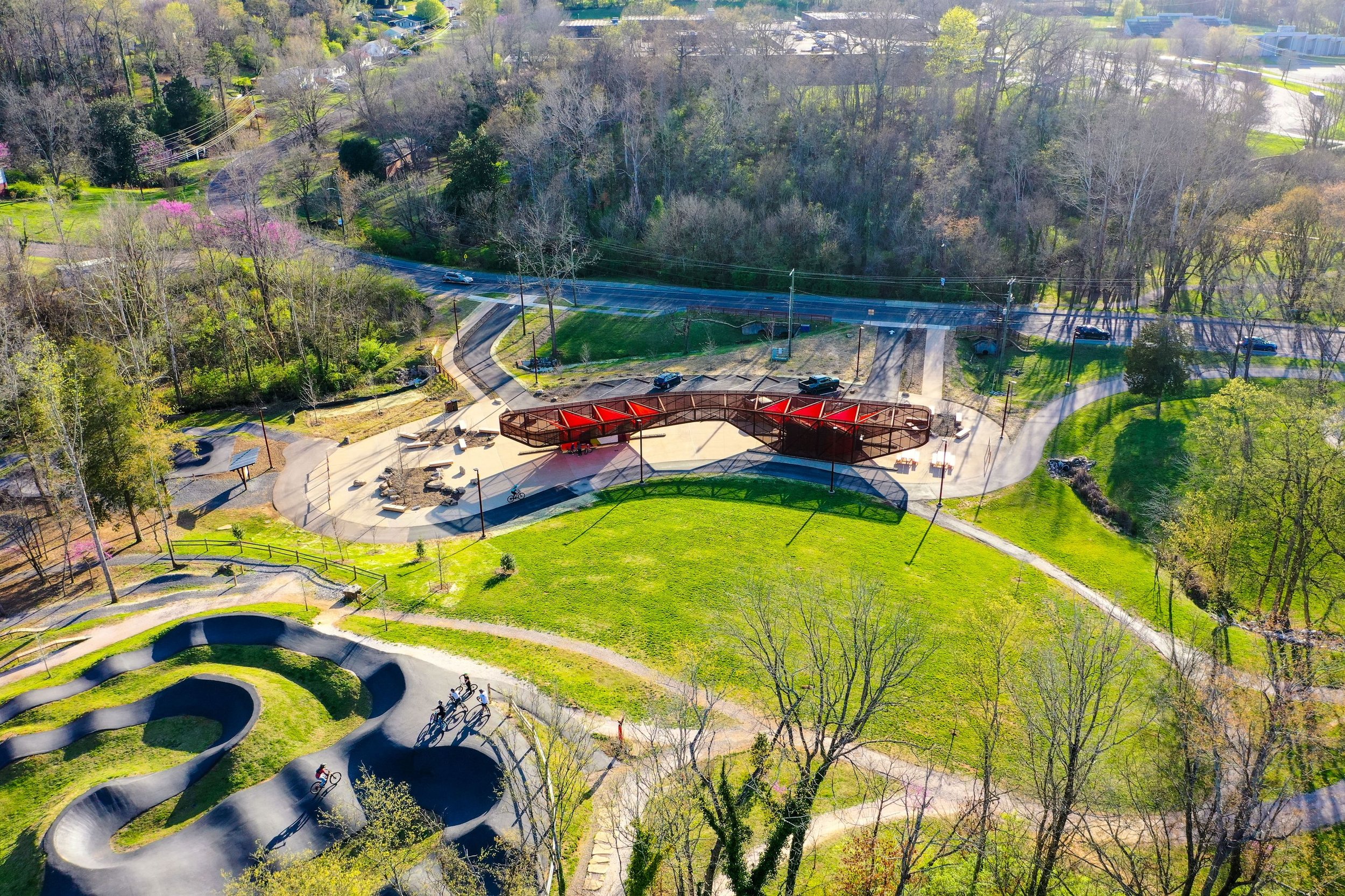
Knoxville, TN
Project by: Port Urbanism and Sanders Pace Design Photos: © Keith Isaacs
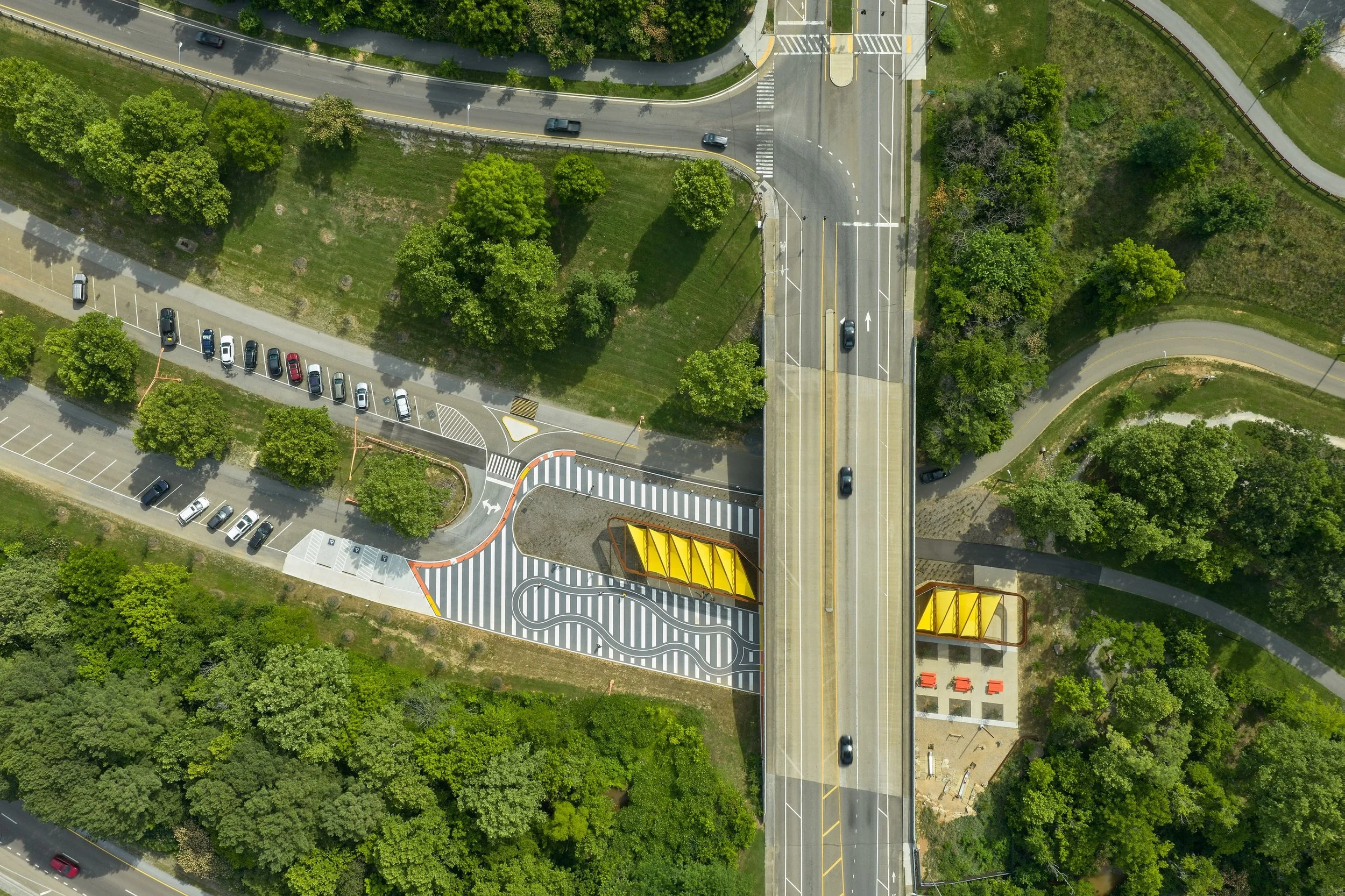
Urban Wilderness Gateway Park in South Knoxville serves as a relevant precedent due to its location within Tennessee and its similar challenge of transforming underutilized infrastructure-adjacent space into a meaningful public space. Designed by Port Urbanism and Sanders Pace Design, the project creates a connection between Knoxville’s Urban Wilderness trail system, the city’s greenway network, James White Parkway, and the surrounding neighborhood. Rather than treating the highway infrastructure as a barrier, the design used it as an opportunity to create a gateway that links people to larger recreational and ecological systems throughout the city.
A particularly valuable aspect of this project is its phased implementation strategy. The park was developed over multiple stages, allowing funding, community engagement, and construction to occur incrementally rather than requiring a single large capital investment. This approach demonstrates how ambitious public projects can be realized over time while remaining responsive to changing community needs and available resources. For the Gateway to Heritage project, Urban Wilderness Gateway Park offers an example of how infrastructure corridors can be reimagined as active civic spaces that support recreation, ecological restoration, and community identity.
The project’s connection to both the greenway and trail network is especially relevant to Jefferson Street. At Gateway to Heritage park there is an opportunity to strengthen its role as a connector between surrounding neighborhoods, institutions, parks, transit investments, and the greenway.
Underpass Park
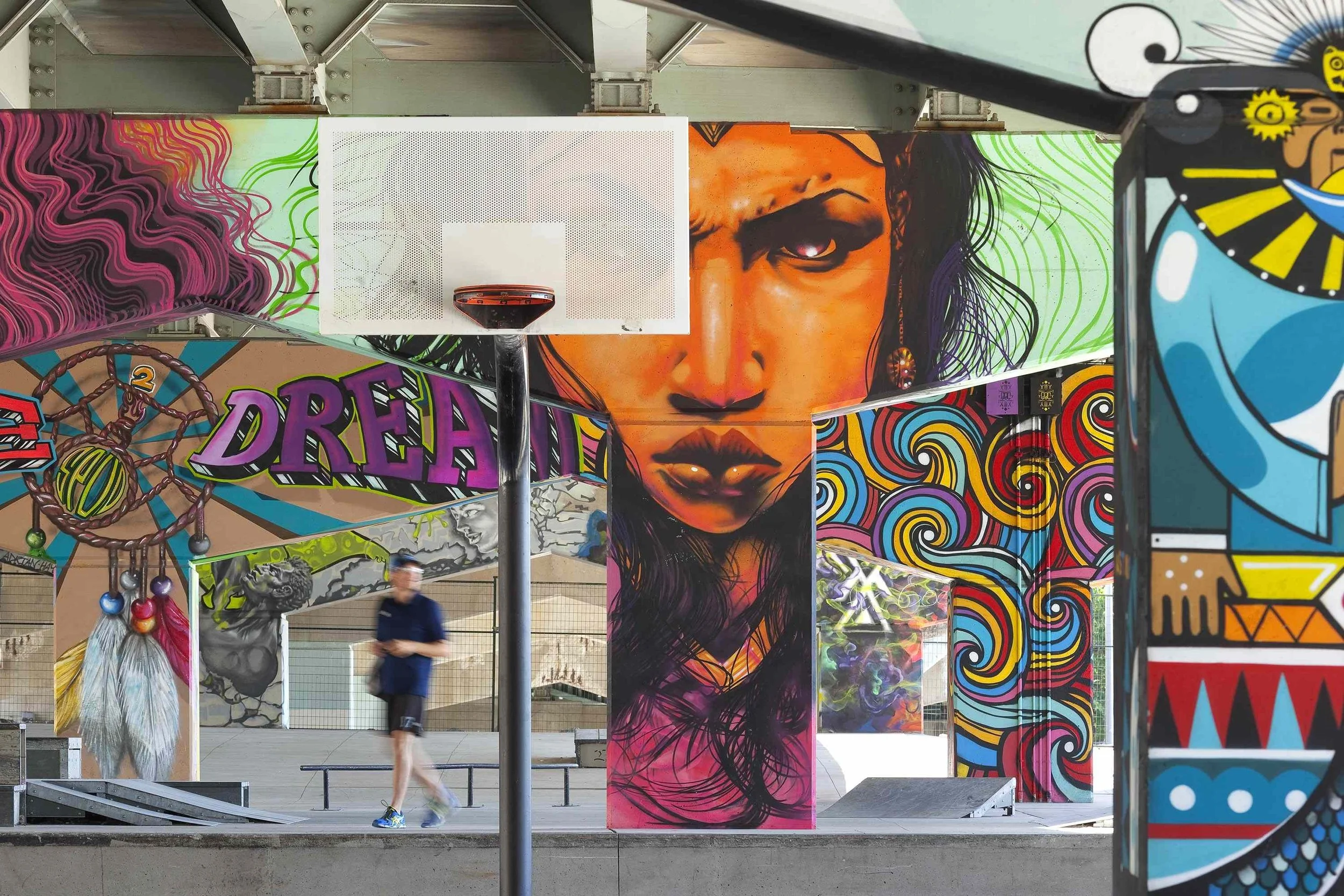
Toronto, Canada
Project by: PFS Studio with The Planning Partnership Photos: Tom Arban
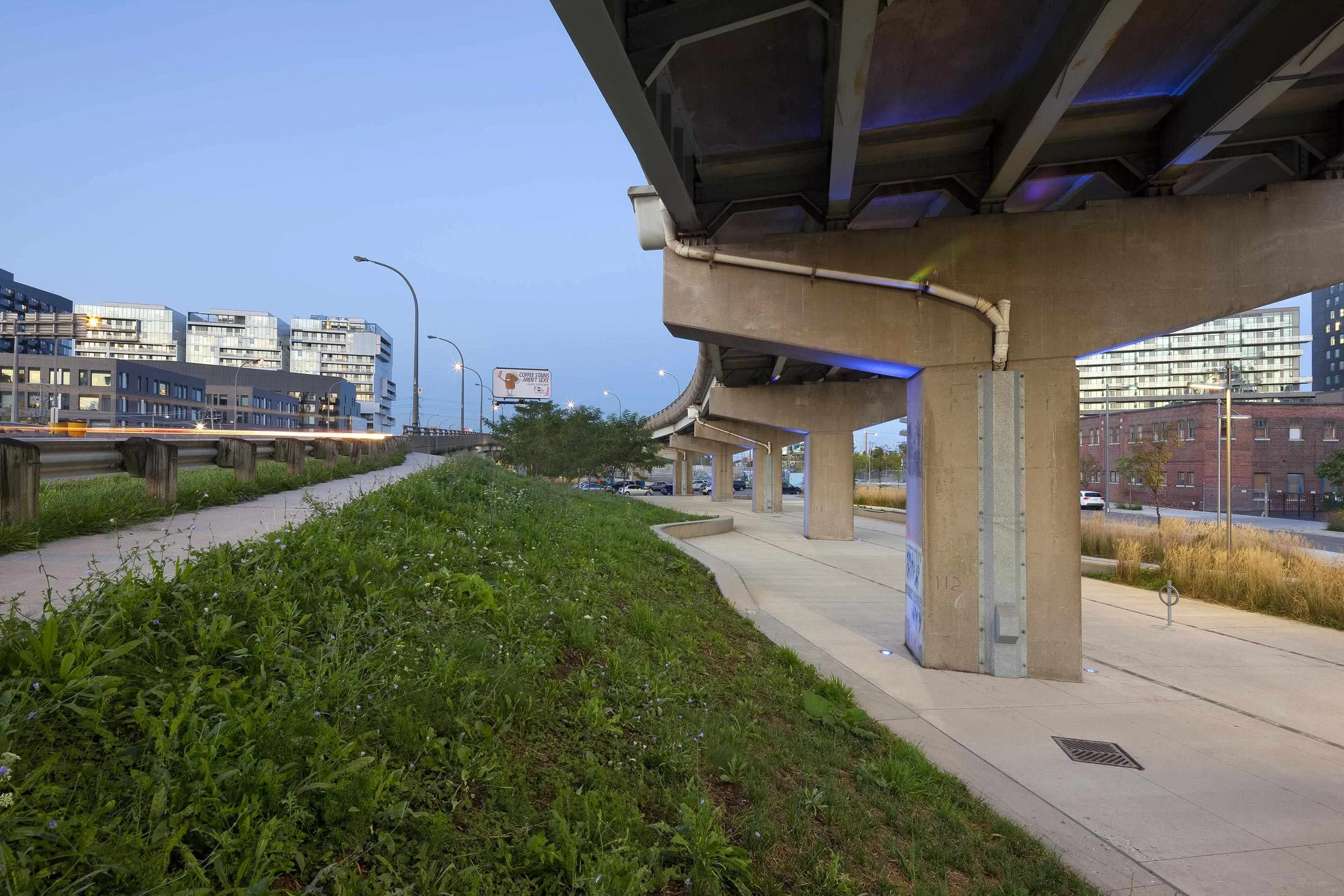
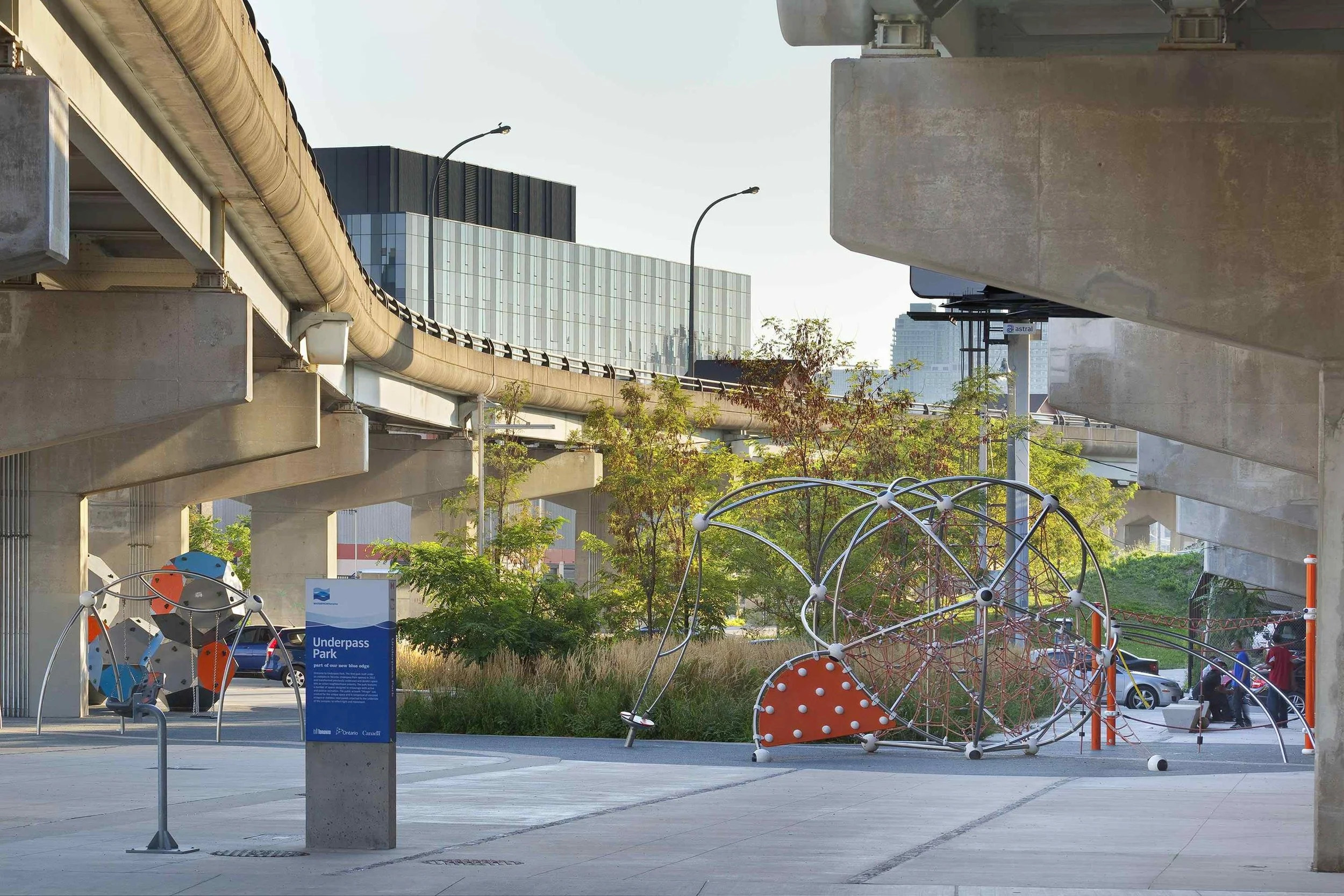
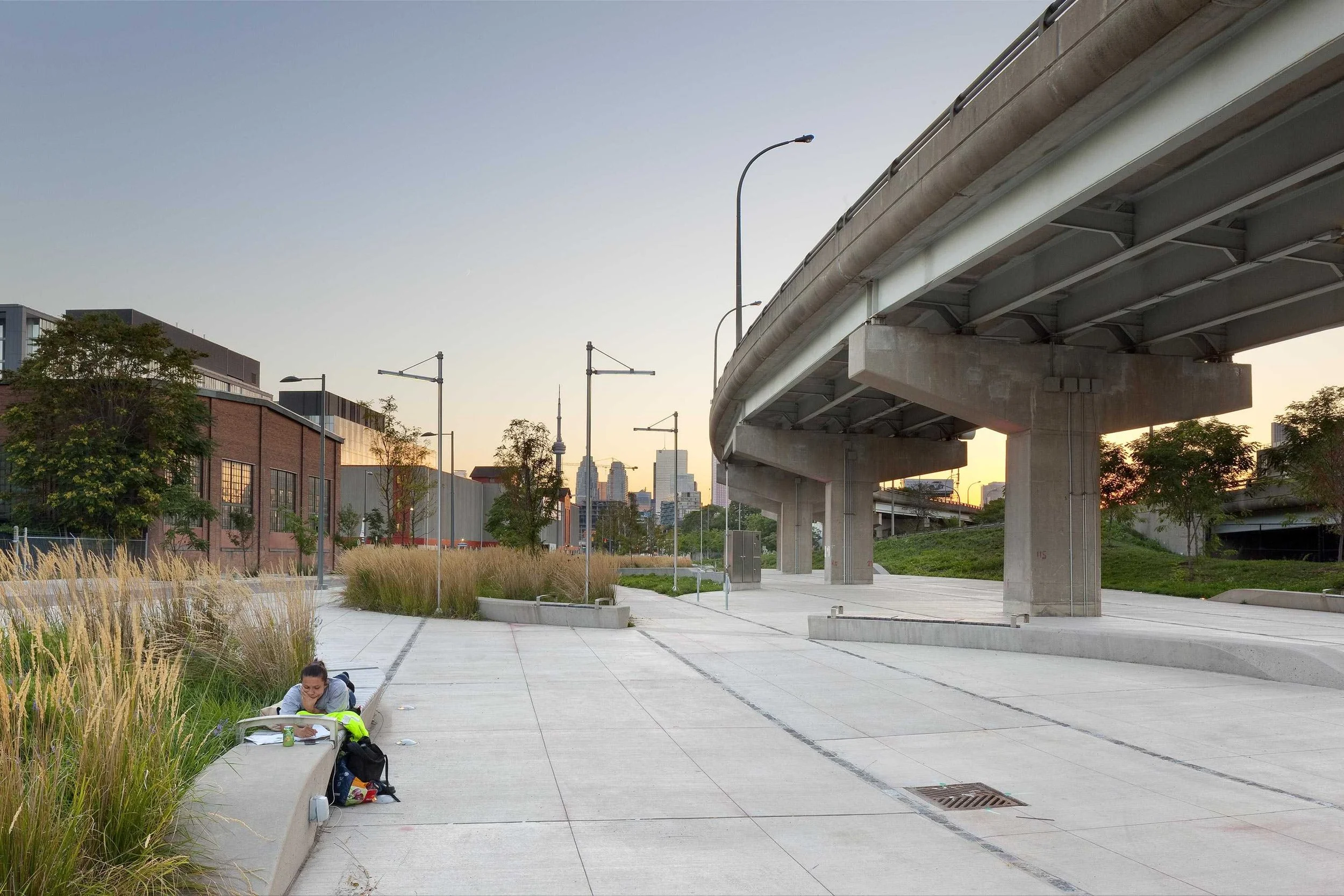
Underpass Park in Toronto, Canada, is another strong precedent for the reimagining of Gateway to Heritage Park. Designed by PFS Studio with The Planning Partnership, the project transforms an underutilized space beneath elevated roadways into an active public destination that reconnects the north and south neighborhoods of the West Don Lands. By embracing the shelter of the overpass, the park provides year-round protection from rain, snow, and summer sun while creating a welcoming community gathering space.
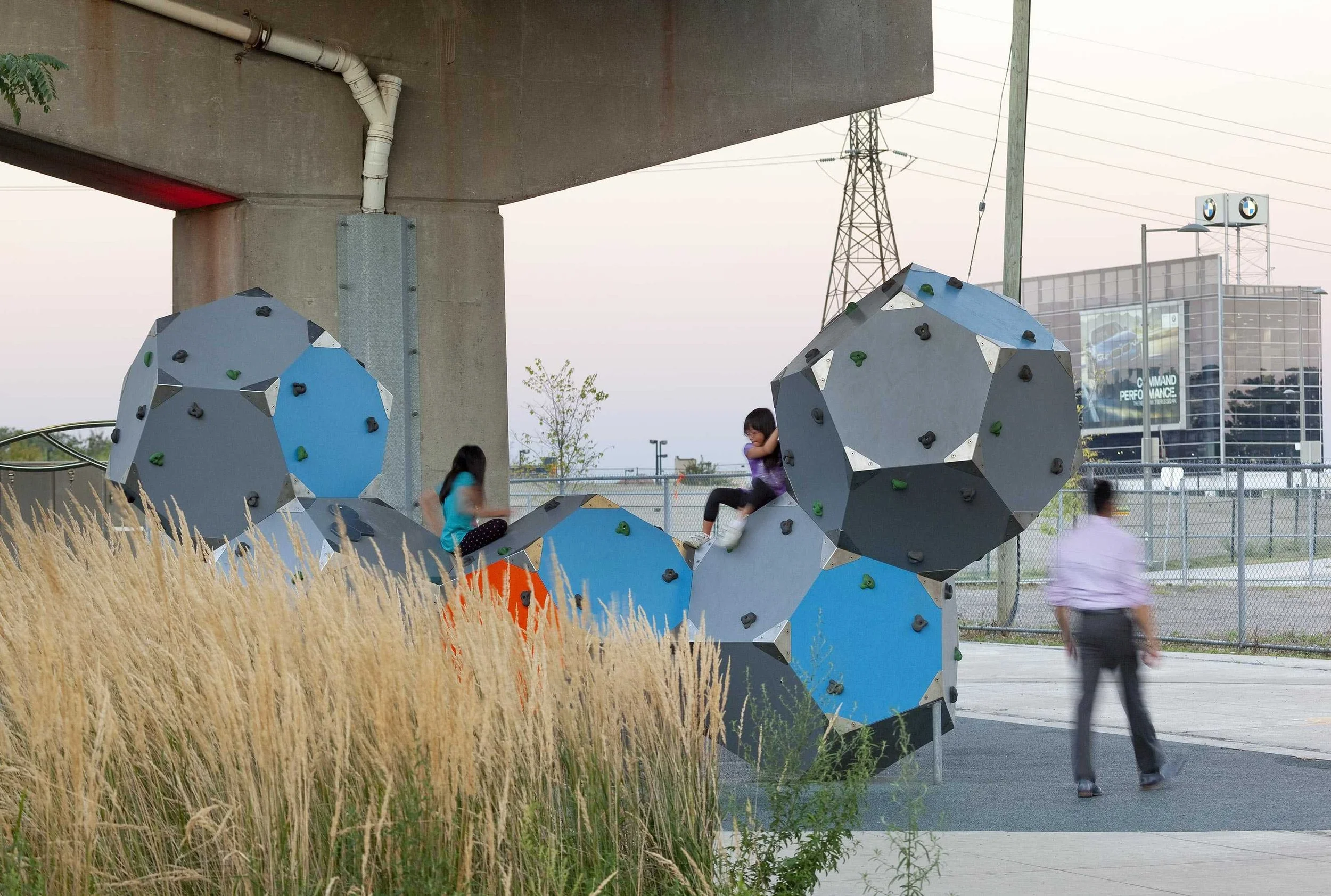
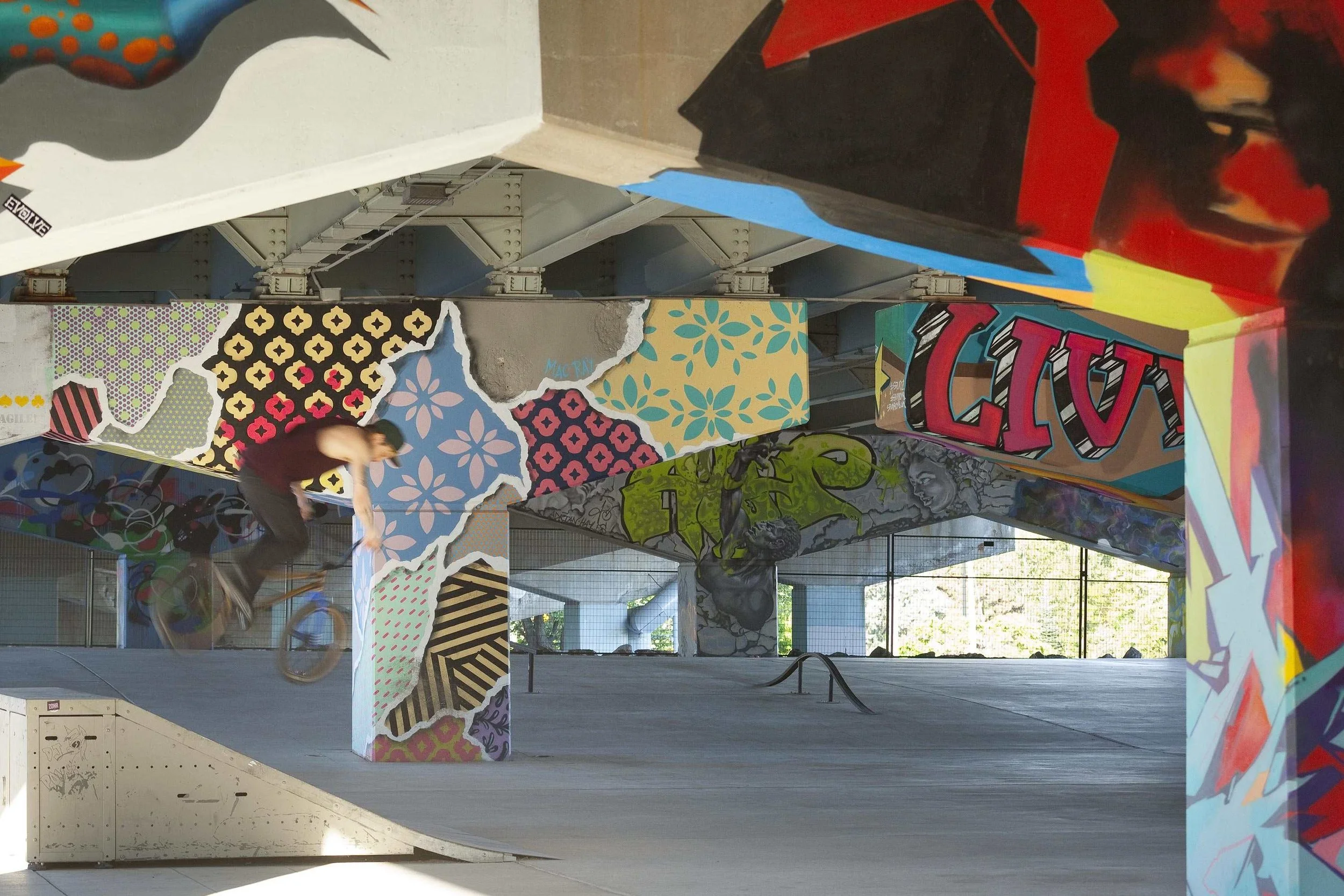
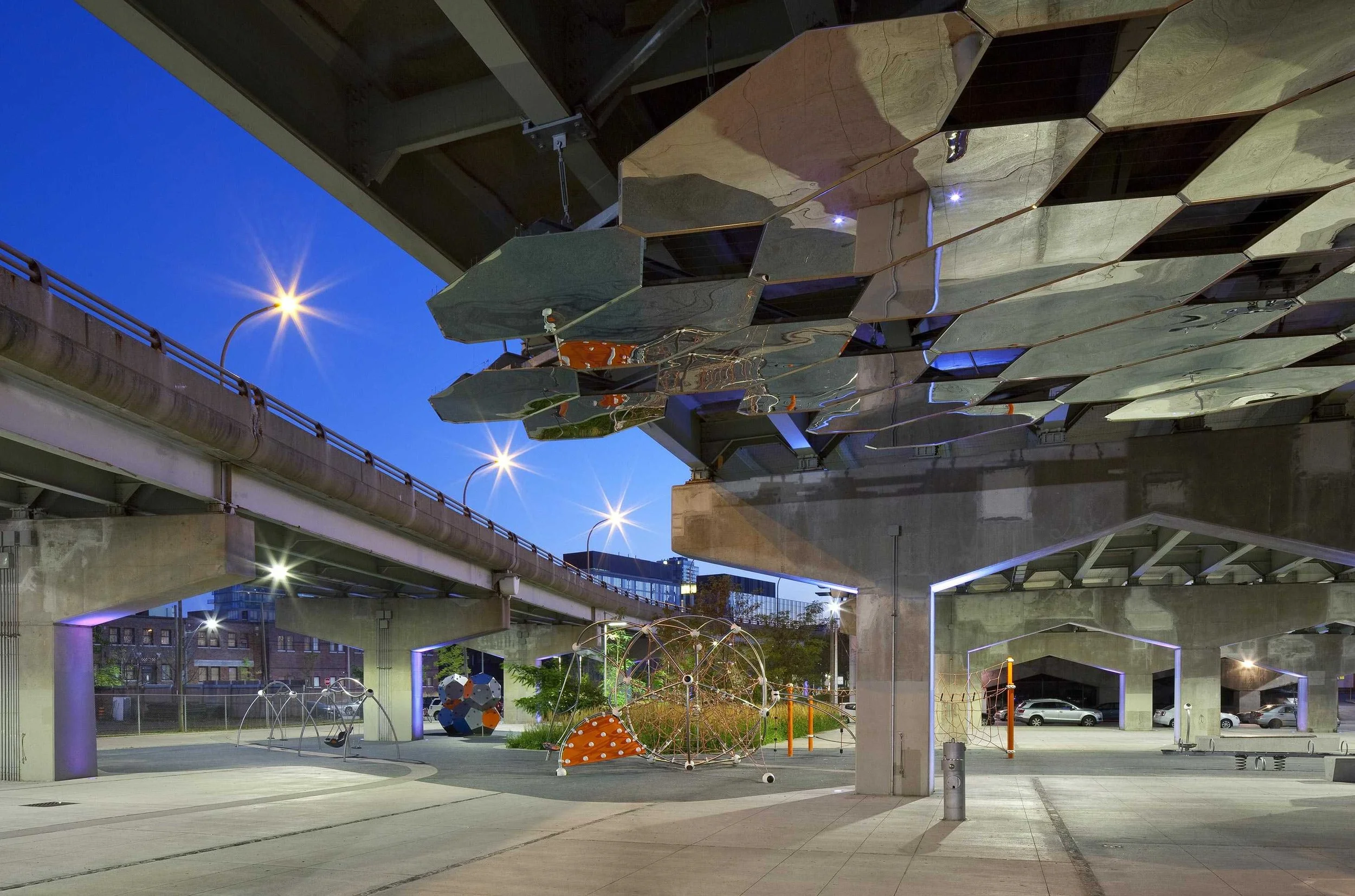
The park offers amenities for all ages, including ping pong tables, public art, basketball courts, a skatepark, and flexible spaces for markets, festivals, and community events. Free equipment rentals, thoughtful lighting, and active programming help keep the park safe, accessible, and well-used throughout the day and evening. Sustainability is integrated through energy-efficient LED lighting, recycled materials, and drought-, shade-, and salt-tolerant plantings. A later phase added a dense grove of resilient trees to soften the surrounding infrastructure and introduce additional green space.
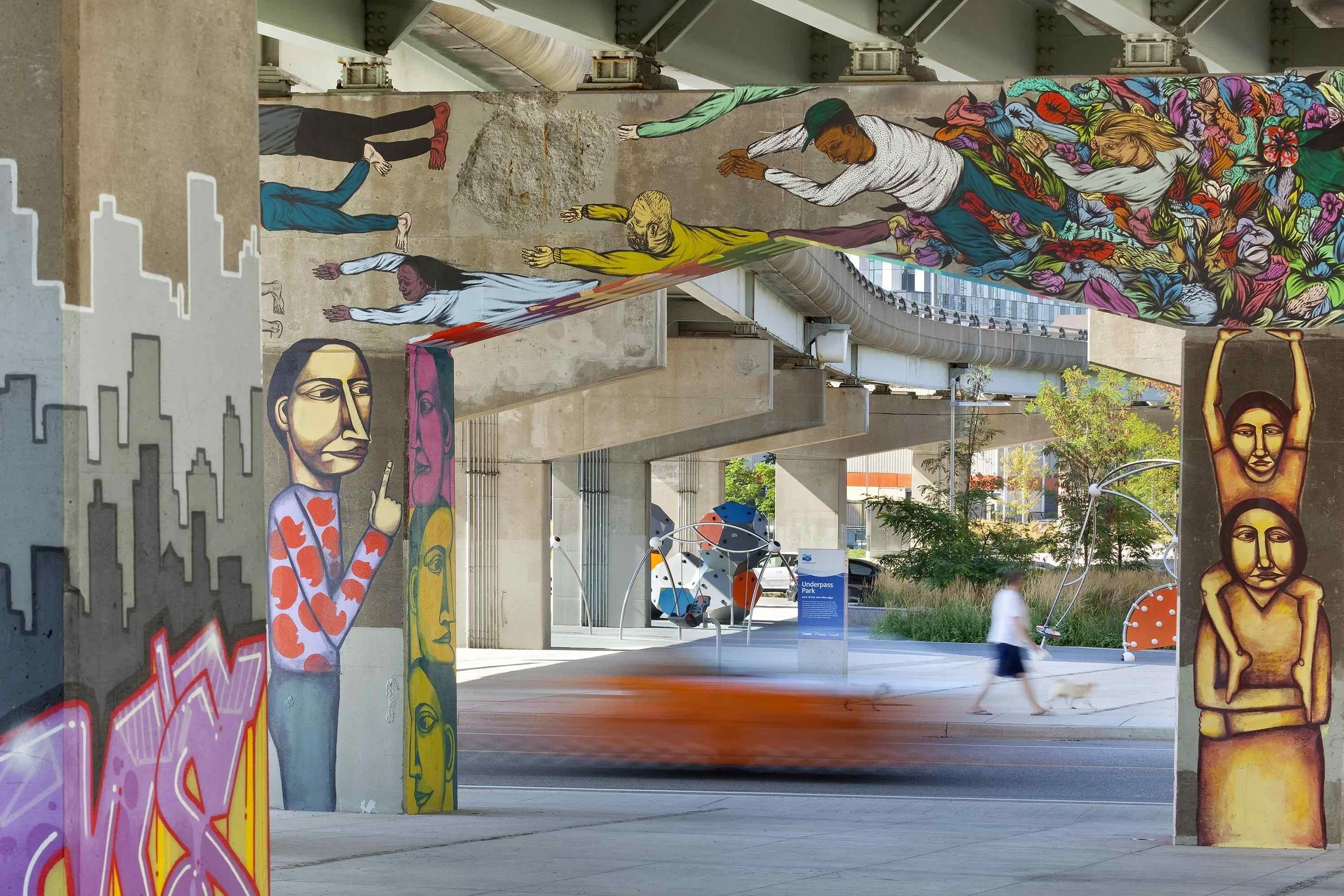
Public art is an important part of Underpass Park’s identity, transforming the concrete infrastructure from a barrier into a canvas for community expression. Murals by artists including Jason Botkin contribute color, character, and a sense of movement to the structural columns, creating an informal outdoor gallery within the park. The suspended mirrored artwork Mirage by Paul Raff Studio takes a different approach, using 57 polished stainless-steel panels to reflect light, sky, and activity below. By manipulating reflection and perception, the artwork visually lifts and softens the heavy infrastructure overhead while encouraging visitors to experience the space in an unexpected way.
Although Underpass Park occupies a larger site than Gateway to Heritage Park, it illustrates how infrastructure can become an asset rather than a barrier. The project demonstrates how recreational amenities, flexible programming, public art, thoughtful lighting, and resilient landscape design can encourage people to stay, gather, and build community.
Opportunities for Transformation
The next chapter of the Gateway to Heritage should build upon the existing framework while introducing new programs and amenities that encourage people to stay, gather, play, and participate. We can reflect on precedents to seek inspiration and focus on a new design that introduces recreational amenities that support users of all ages, expands green Infrastructure, strengthens connections within the transportation network, and supports community-led programming.
Want to explore a proposed design in more detail? Read the Part 2 Blog here!