
Reimagining the Gateway to Heritage Park Pt. 2
A Design for the Next phase of Jefferson Street’s Civic Landscape
By Selene Rowan, Urban Design Fellow
7 min read What could the Gateway to Heritage Park become for Jefferson Street’s next chapter? More than a decade after its completion, the park remains an important reflection of the history and culture of North Nashville, but there is an opportunity to build upon its existing framework and reimagine how the space serves the community today. This blog explores a hypothetical design. Before reading on, check out the site analysis in the first part of this blog series.
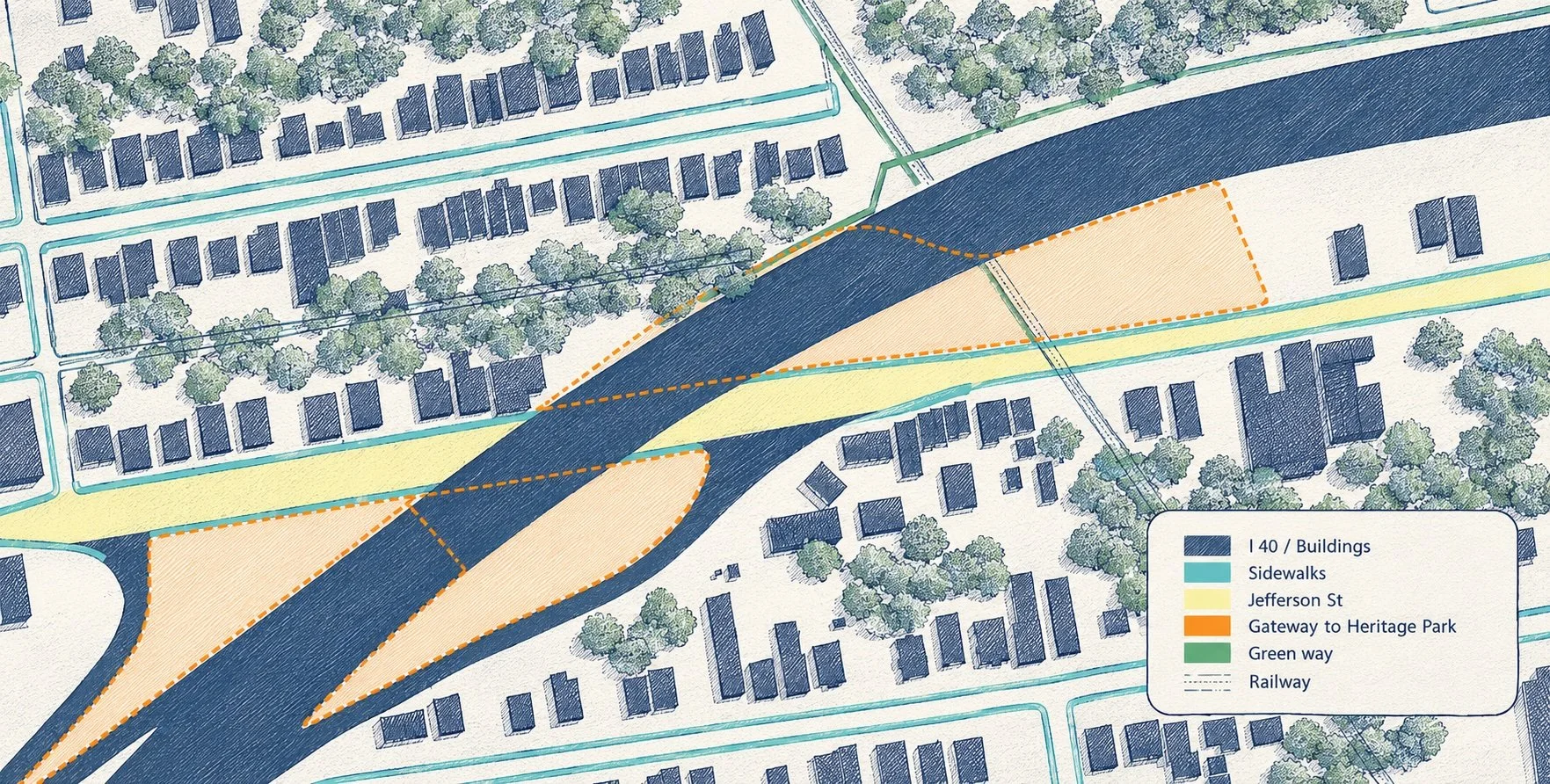
Current Connections at Gateway to Heritage Park
Gateway to Heritage Park sits at a unique intersection of major transportation infrastructure, where I-40, the greenway, railway, and Jefferson Street, the primary corridor through North Nashville, converge. The surrounding network of sidewalks and connections further positions the park as an opportunity to serve as a hub within this complex landscape of movement and infrastructure.
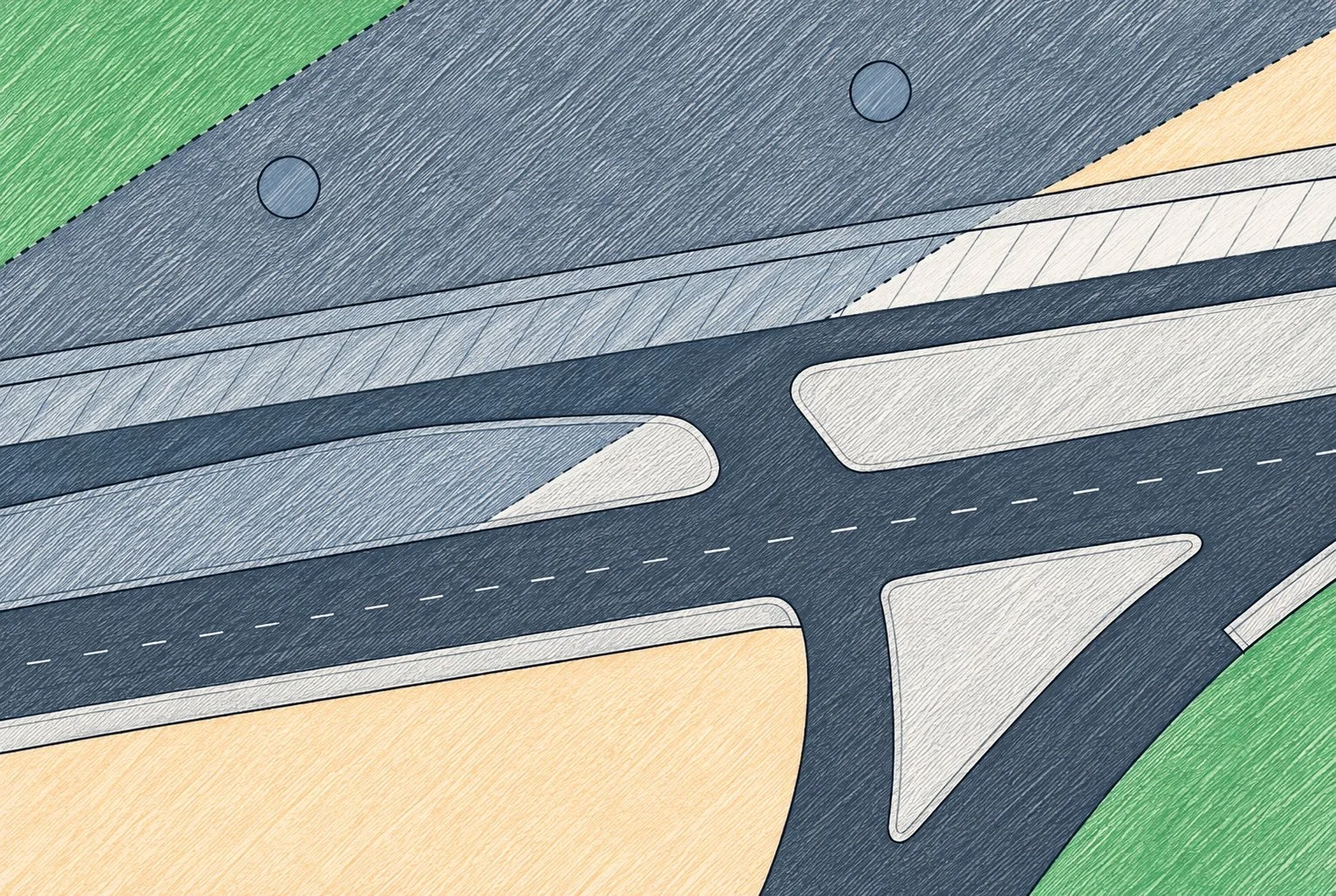
Currently, visitors primarily arrive at the park from Jefferson Street or directly from the I-40 off-ramp. The existing roadway infrastructure prioritizes vehicular movement, with limited accommodations for bicyclists and a lack of clear transitions between high-speed traffic and the public space of the park. The design of the off-ramp in particular encourages vehicles to quickly exit the interstate and continue through the area, creating a harsh, high-speed environment adjacent to the park.
Reimagining this gateway presents an opportunity to shift the focus from movement through the area to connection within it. A new design could slow traffic, improve pedestrian and bicycle connections, and create a stronger sense of arrival. This would encouraging people to recognize Gateway to Heritage Park not simply as a space to pass through, but as a public amenity and destination within the Jefferson Street corridor.
Phasing as a Strategy for Support
Reimagining Gateway to Heritage Park does not have to rely on one large capital investment. A phased approach can allow the project to grow over time while creating opportunities to secure funding, build community support, and demonstrate impact at each stage.
Phase One : Connect & Activate
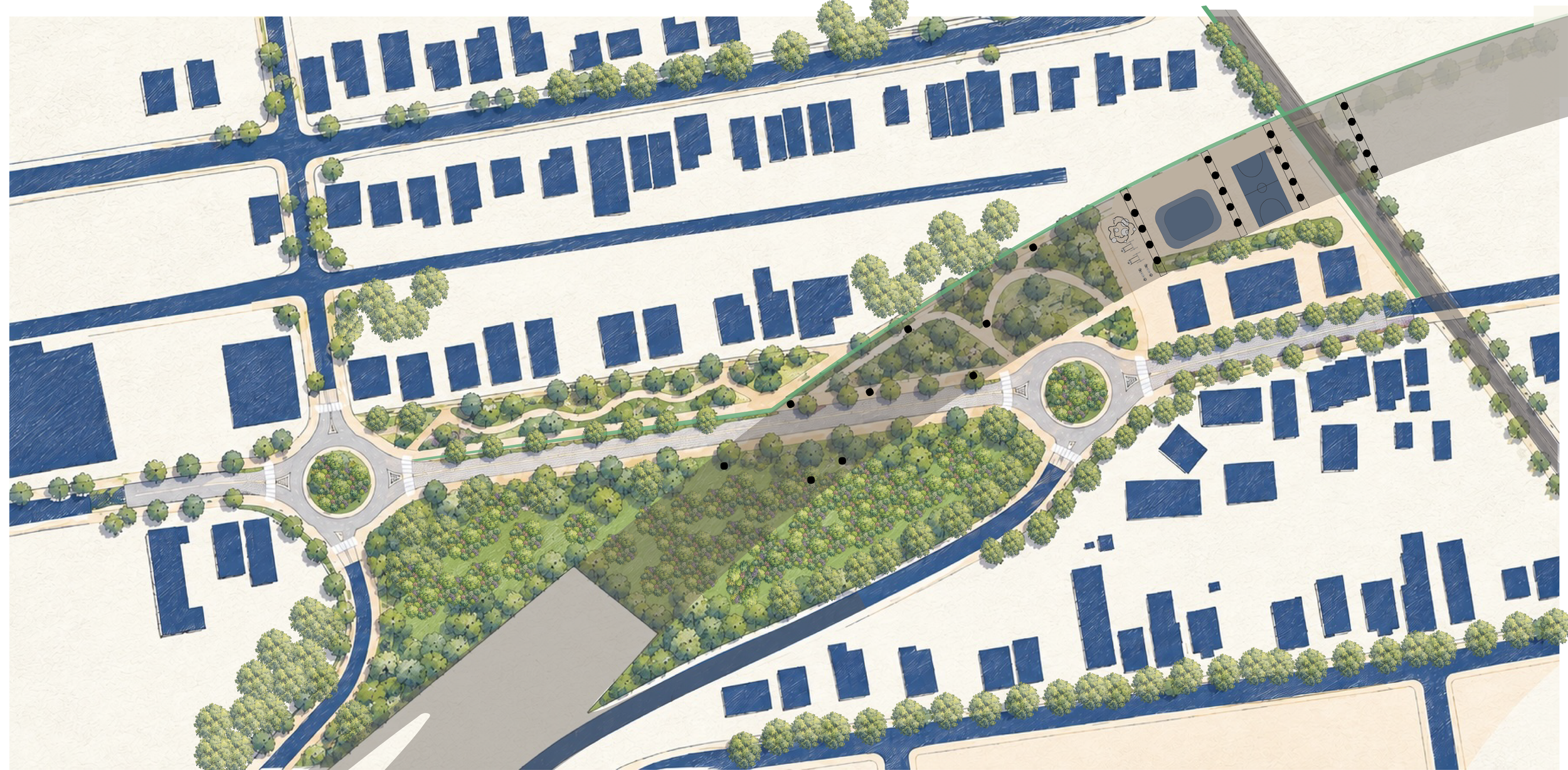
Site Plan proposed
Phase One focuses on improving connectivity, pedestrian safety, and immediate activation around Gateway to Heritage Park. A road diet would narrow travel lanes and introduce traffic-calming measures, including roundabouts, designated crosswalks, curb extensions, and parallel parking. These additions would slow traffic and create a more pedestrian-friendly corridor. A change in pavement material and texture along the roadway in front of the park would further signal a transition into a pedestrian-oriented public space and encourage drivers to reduce their speed. An extended sidewalk would transition into a shared walking and biking path, incorporating small park moments along the way. This expanded public realm would function as an extension of the front yards of the homes and businesses along Jefferson Street, creating opportunities for gathering, connection, and everyday use beyond the boundaries of the park itself. Many of these ideas were explored in the Choose How You Move Jefferson Street Corridor Study. The corridor study came from community engagement and planning sessions.
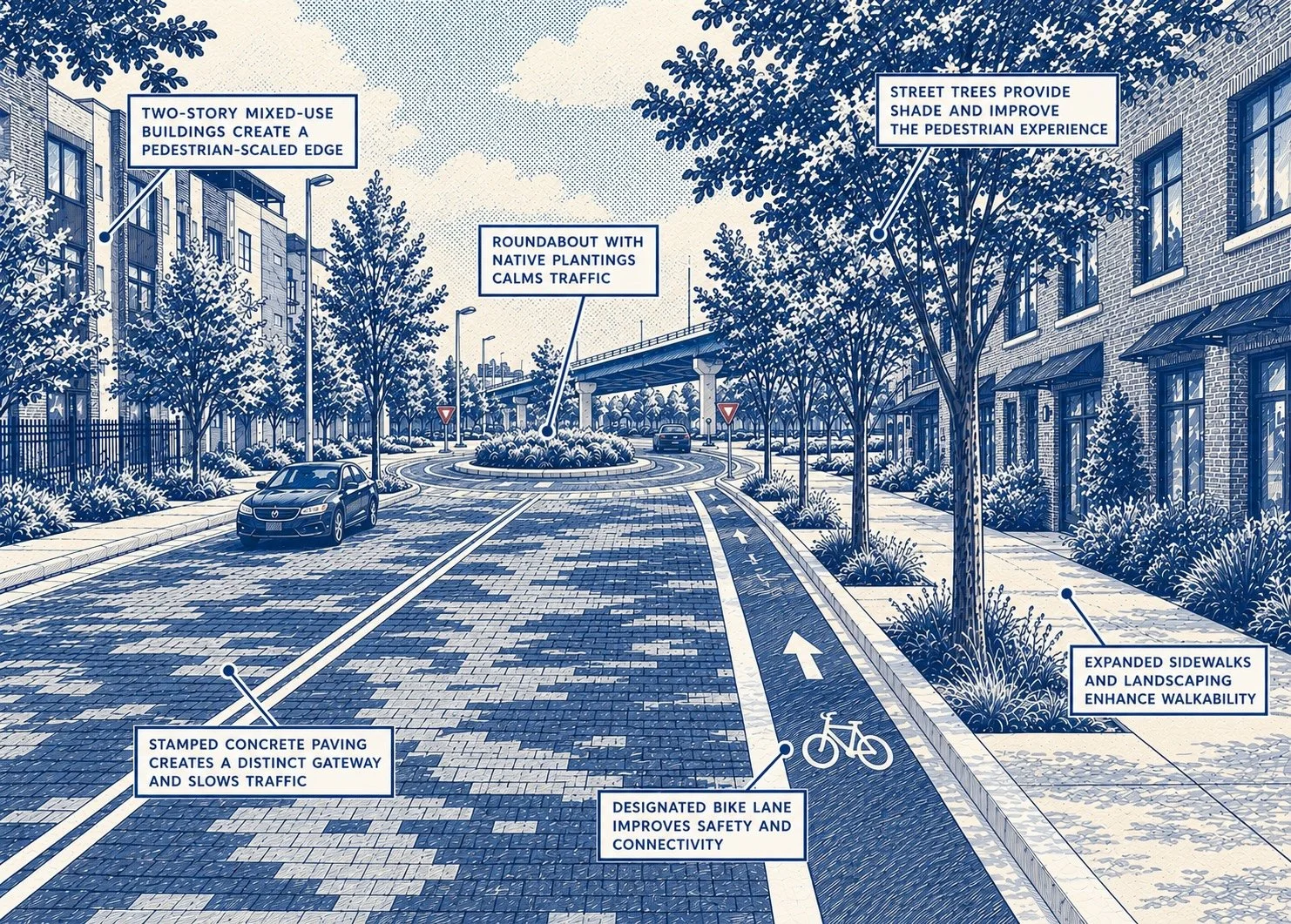
Proposed Design Persective
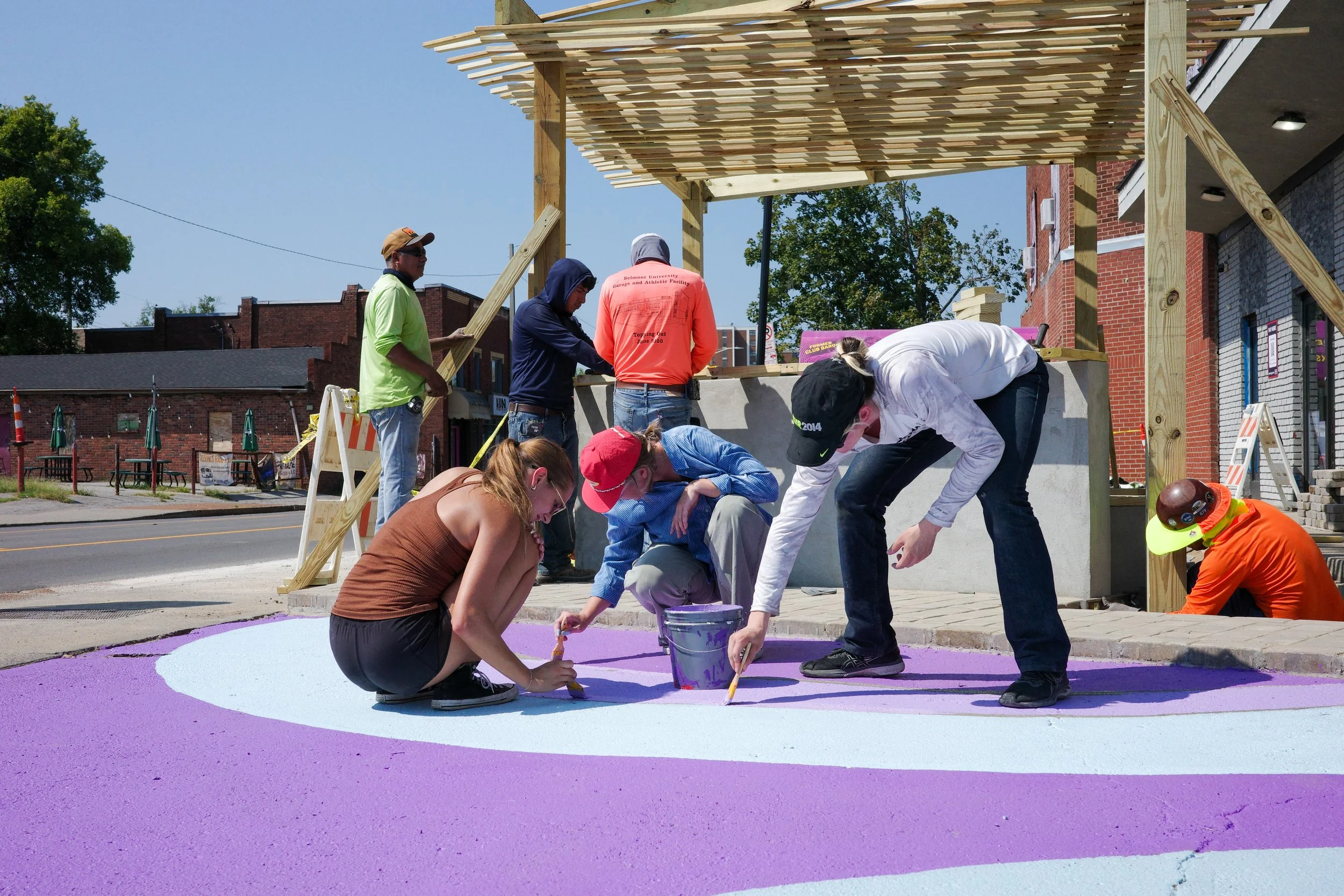
Tactical Urbanism at Kingdom Cafe on Jefferson Street
During Phase One, Temporary, low-cost interventions would activate the park while testing future ideas. Painted games, community murals, pop-up seating, and temporary recreational courts could introduce new activities and encourage residents to spend time in the space. Permanent amenities such as bike parking and lighting would support everyday use. Community feedback from these interventions would help guide future phases and ensure long-term improvements reflect the needs of North Nashville.
Phase TWO: Programing Installation
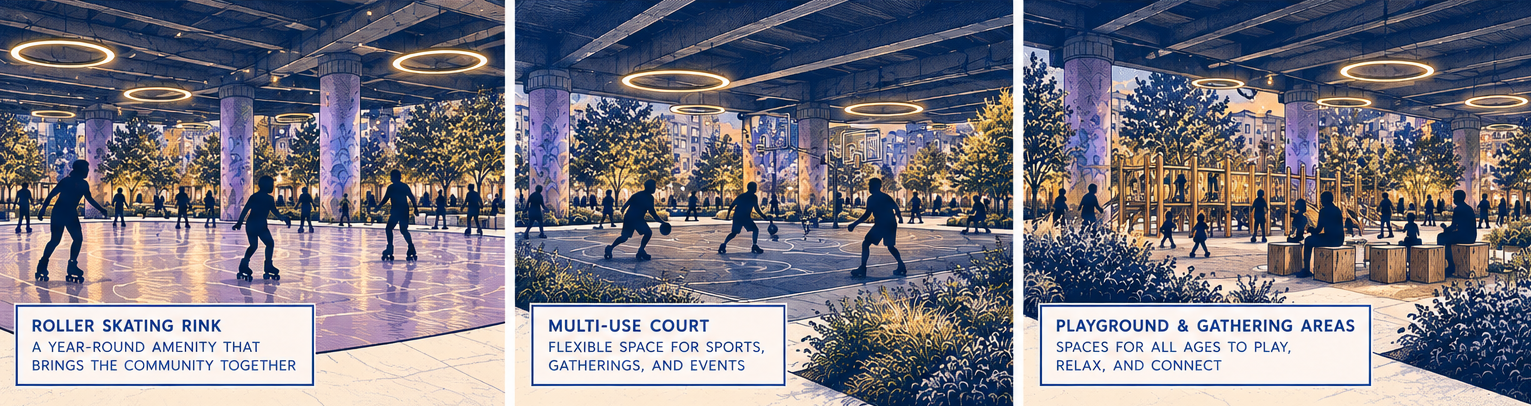
Activations: Roller-Skating Rink, Multi-Use Court, and Playground
Phase Two builds upon the temporary activation of the park by introducing permanent recreational amenities and flexible spaces that encourage year-round community use. The addition of a roller skating rink, multi-use court, playground, shaded gathering areas, seating, public restrooms, and a greenway trailhead, provide opportunities for users of all ages while transforming the park into a welcoming neighborhood destination.
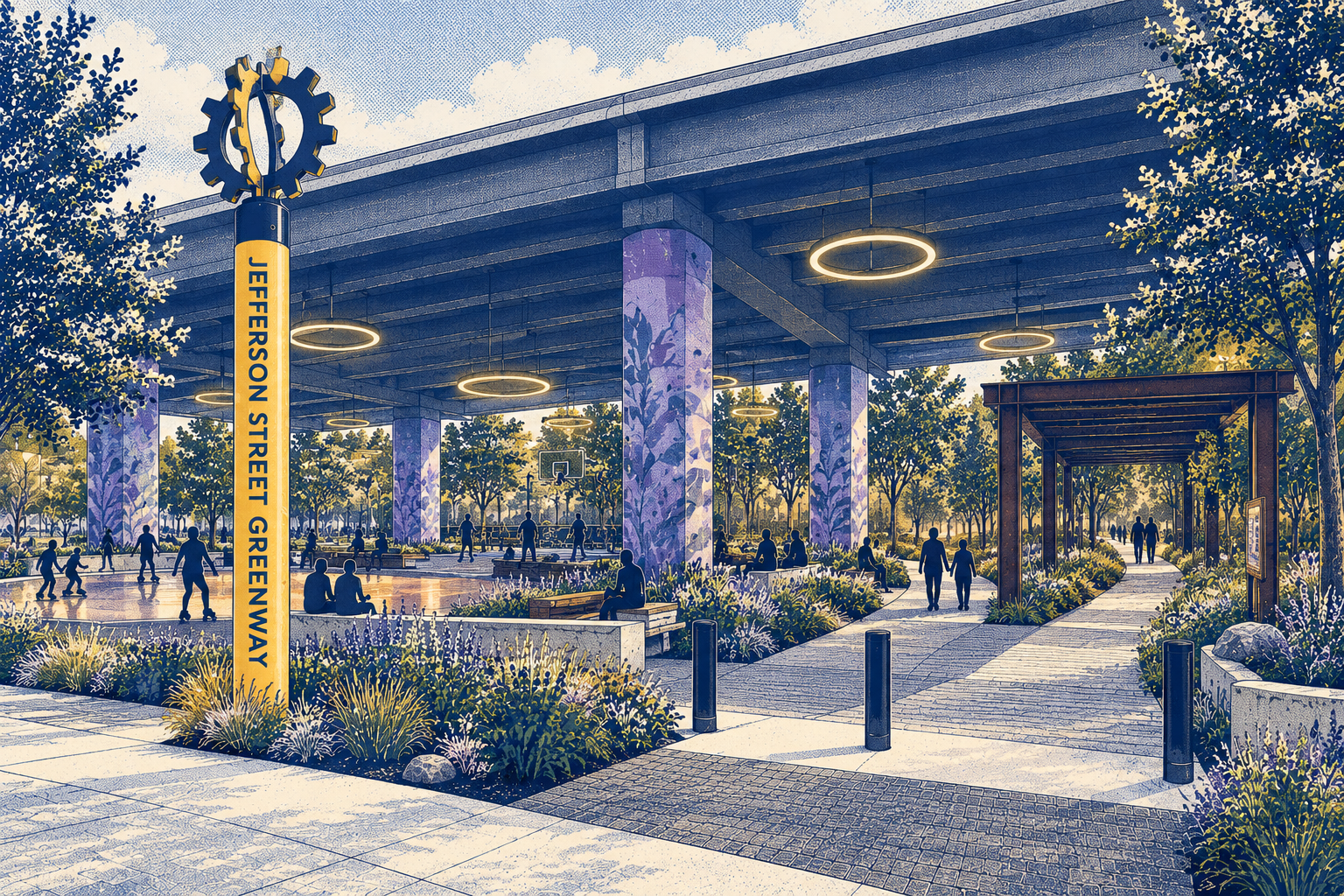
Greenway Trailhead
In addition to physical improvements, Phase Two establishes regular programming that brings the space to life. Farmers markets, pop-up events, food vendors, cultural festivals, roller skating nights, outdoor performances, and community gatherings would create recurring reasons for residents and visitors to return.
Phase Three: Establishing a Lasting Civic Destination
Phase Three focuses on long-term investments that establish Gateway to Heritage Park as a lasting civic destination for North Nashville. Gateway signage and public art visible from I-40 would strengthen the park’s identity, celebrate the cultural heritage of Jefferson Street, and create a recognizable landmark for the neighborhood.
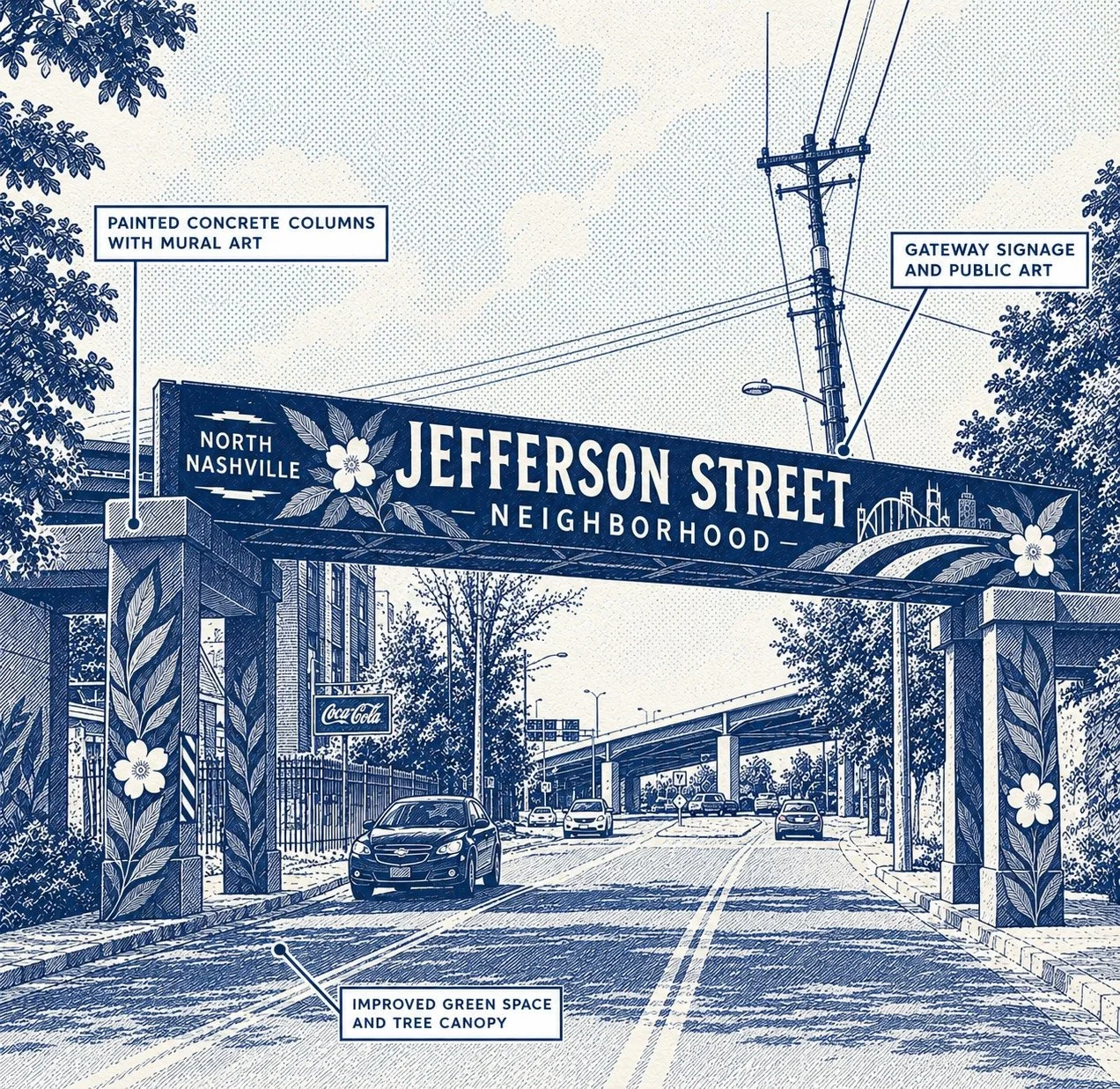
Proposed Gateway Signage
The integration of rain gardens and bioswales would help manage stormwater runoff from I-40 while improving the site's ecological performance. Additional investments, including expanded tree canopy, and enhanced green space, further improve the park’s accessibility, usability, and environmental resilience. Together, these improvements transform the park into a vibrant community hub that supports recreation, education, and neighborhood life for generations to come.
Plantings to Fit the Context
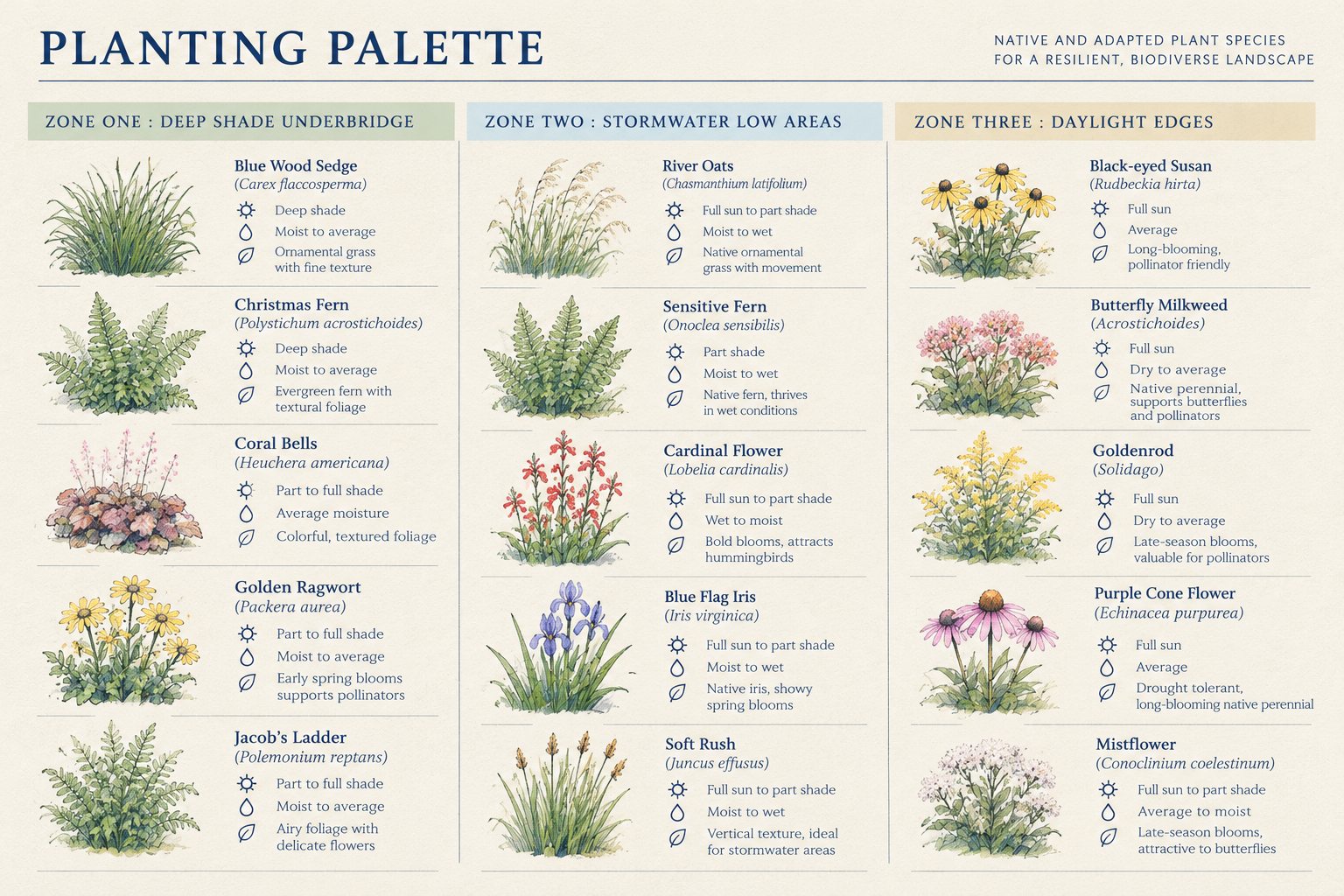
The proposed planting palette establishes a framework for the distinct environmental zones throughout the site, responding to varying conditions of sunlight, shade, and stormwater. Plant selections prioritize native and adaptable species that enhance biodiversity, support local ecosystems, and improve stormwater management. Together, these plantings create a resilient landscape that softens the surrounding infrastructure while contributing to a more inviting and ecologically functional public space.
Design Principles for Future Development
The Gateway to Heritage project already successfully transformed a neglected underpass into a civic landmark that celebrates the culture and history of Jefferson Street. However, the next chapter of the site should move beyond commemoration alone and focus on activation. By introducing recreation, green infrastructure, community programming, and opportunities for ongoing public participation, the Gateway to Heritage can evolve from a symbolic gateway into a thriving public destination, one that not only honors the past but actively serves the present and future needs of North Nashville.
Honor Jefferson Street’s history while creating opportunities for new stories and traditions.
Prioritize people over vehicles by creating comfortable, safe, and welcoming pedestrian experiences.
Transform the space from a destination people pass through into a destination people choose to visit.
Priortize commmunity members by empowering ownership through participation, programming, and stewardship.
Continue to honor the Gateway to Heritage as a visible symbol of North Nashville’s continued investment and growth.
