
Nashville’s Next Great Public Spaces
Revisiting the Main & Gallatin Civic Square
By Eric Hoke, Design Director
5 min read: By leveraging the Choose How You Move transit plan's "Places for Everyone" component, Nashville can finally realize a 27-year-old community vision to transform the Main and Gallatin intersection into a vibrant, pedestrian-friendly civic square.
In April 2026, New York City Mayor Zohran Mamdani unveiled a transformational redesign of Brooklyn’s iconic Grand Army Plaza. The proposal does something bold yet beautifully simple: it eliminates a dangerous, vehicle-heavy roadway to seamlessly link the Soldiers’ and Sailors’ Memorial Arch directly into Prospect Park, reclaiming nearly an acre of asphalt for pedestrians, cyclists, and transit riders.
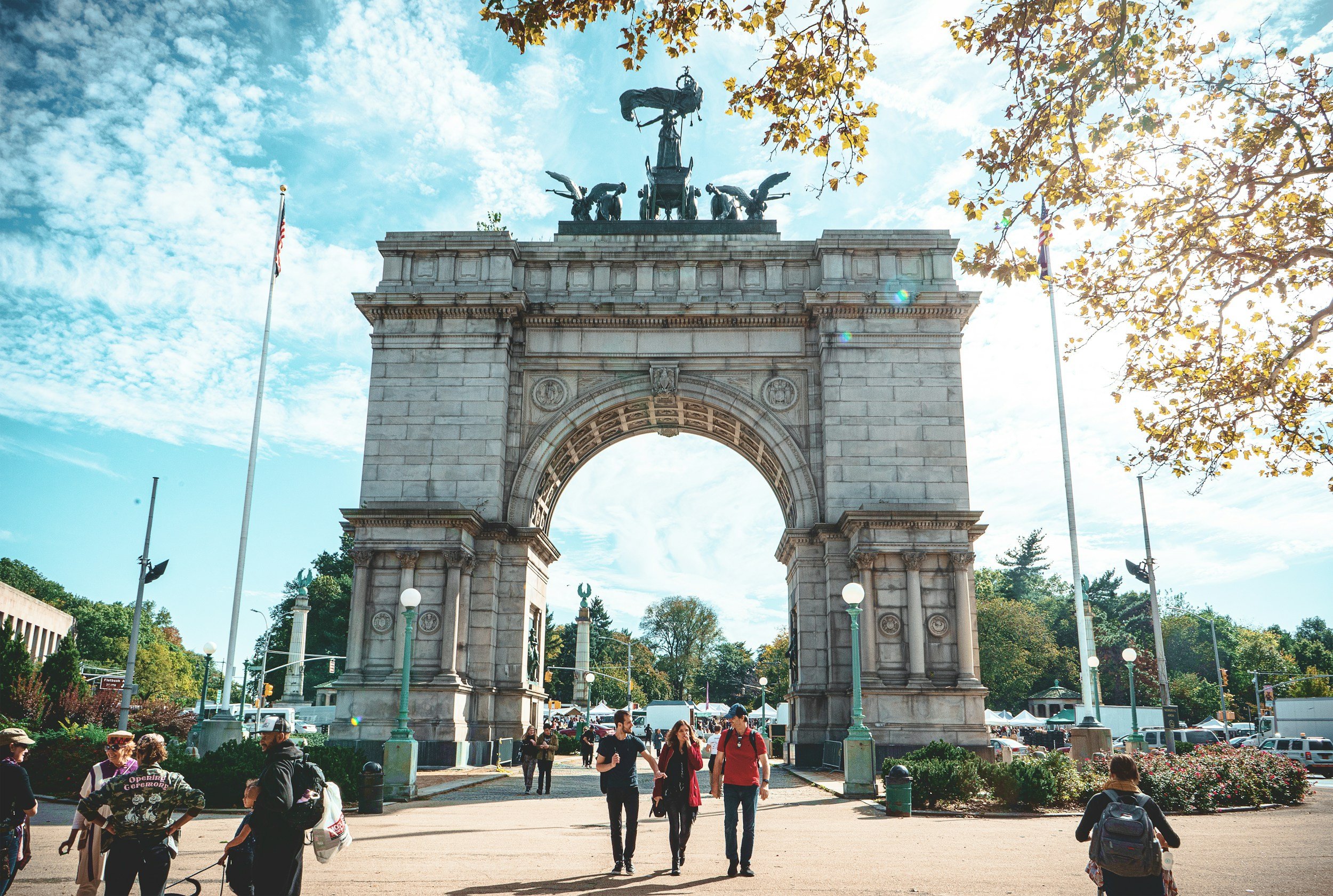
Image looking at New York cities Grand Army Plaza, the gateway to Brooklyn’s backyard and Prospect Park
Looking at the maps of Brooklyn’s future "town square," it’s impossible not to think about East Nashville. Specifically, asphalt-heavy convergence at the intersection of Main Street and Gallatin Avenue.
For over two decades, the Civic Design Center’s The Plan of Nashville discussed a vision for this exact spot: The Civic Square. It’s an idea that has sat on the shelf, waiting for the right moment, the right funding, and the right alignment. Now, with the passage and implementation of the Choose How You Move (CHYM) transportation plan, that moment has arrived.
“The R/UDAT team recognized 5 Points as the heart of the East Nashville community, noting that the alignment of East Nashville Jr. High School, East Nashville High School, the Carnegie Library, and Woodland Street Presbyterian Church was no coincidence. Early 20th Century planners intentionally clustered civic, religious, and social institutions near commercial centers and neighborhood crossroads, and the team proposed reclaiming and celebrating this historic civic node with a new accessible public gathering space.”
To understand why this intersection idea is so vital, we have to look back to a pivotal moment in East Nashville's history. Following the devastating April 1998 tornado, the community faced the monumental task of rebuilding. In 1999, the American Institute of Architects (AIA) brought a Regional/Urban Design Assistance Team (R/UDAT) to Nashville. This community-led workshop brought neighbors, business owners, and planners together to imagine a better future out of the destruction.
It was during this 1999 R/UDAT process that the concept of a civic square at Main and Gallatin was first born. Neighbors recognized that the awkward intersection was an opportunity for a true neighborhood anchor. This community-generated vision was later solidified in The Plan of Nashville.
R/UDAT aerial perspective drawing of 5 points (new Civic Square can be seen in the middle right of this image, bordered by trees
R/UDAT calls for a new Civic Square at the East Branch Library
Right now, the intersection of Main and Gallatin functions primarily as a funnel for vehicular traffic. It splits the neighborhood, forcing pedestrians to navigate hostile crosswalks with long wait times just to get from one side of the street to the other.
A Bold Vision Takes ShapeCivic Square Vision from Hodgson Douglas Landscape Architects
Civic Square Vision from Hodgson Douglas Landscape Architects
The initial 1999 R/UDAT vision laid the groundwork for subsequent planning efforts, directly shaping the later Hodgson Douglas Landscape Architects plan that shifted the proposed plaza space just north of the East Nashville Library. By doing so, the plan found a way to seamlessly tie together the Main Street and Gallatin Avenue intersection, transforming this crossroads into a formal civic square. Just like Brooklyn's Grand Army Plaza redesign, the goal here isn't to stop movement, but to simplify it. By reclaiming underutilized lanes and excess asphalt, we can create a central, green pedestrian oasis that anchors the neighborhood and calms traffic, all without altering East Nashville’s grid.
“East Nashville Civic Square is about giving a rich and dynamic neighborhood a true center, a space that belongs to everyone who lives and gathers there. The R/UDAT vision recognized this critical need. The East Nashville Civic Square Vision gave form to this idea. We believe the time is right to renew this effort because the need has only grown. As Nashville’s urban fabric continues to evolve, intentional public space isn’t a luxury — it’s the essential connective tissue that holds our communities together.”
Main Street / Gallatin is one of the most heavily utilized transit corridors in the city. Under Choose How You Move, this corridor is slated for transformational infrastructure upgrades, including bus priority lanes, safer sidewalks, and modernized bike infrastructure. You can see the early corridor plans taking shape on Metro's website.
But a true civic square requires more than just transit infrastructure; it requires public space enhancements like landscaping, street furniture, public art, and community gathering areas. Fortunately, the CHYM plan accounts for exactly this kind of placemaking.
More Public Space Opportunity Within the Choose How You Move program is a dedicated budget line item called Places for Everyone. This could account for 1% of the total funds generated by the transit tax. This item is meant for civic enhancements that go beyond standard transportation infrastructure to deliver generational improvements to neighborhoods.
Main and Gallatin are just the beginning. This intersection represents a city-wide opportunity. Across all of Nashville’s newly designated All-Access Corridors, from Dickerson Pike to Nolensville Pike, there are similar opportunities to align CHYM funding with existing, community-led neighborhood plans. By pairing the "Places for Everyone" item of CHYM with the broader transit buildout, this could help stitch neighborhoods back together, transforming concrete transit corridors into vibrant public plazas all across the city.
Map showing a list of places that align CHYM and other neighborhood planning efforts that would be good candidates for civic plaza spaces.
Created by the Civic Design Center, the Public Spaces Opportunites Map highlights key opportunities across the transit system where the "Places for Everyone" program can intersect with existing planning efforts, such as greenways, parks, and Metro-owned land. By aligning these initiatives, Metro can leverage upcoming transit investments to fund a network-wide civic plaza program. For East Nashville, a transformed Main and Gallatin square would serve as the ultimate waiting environment for bus riders, a safe nexus for intersecting greenways, and a highly visible, welcoming pedestrian gateway.
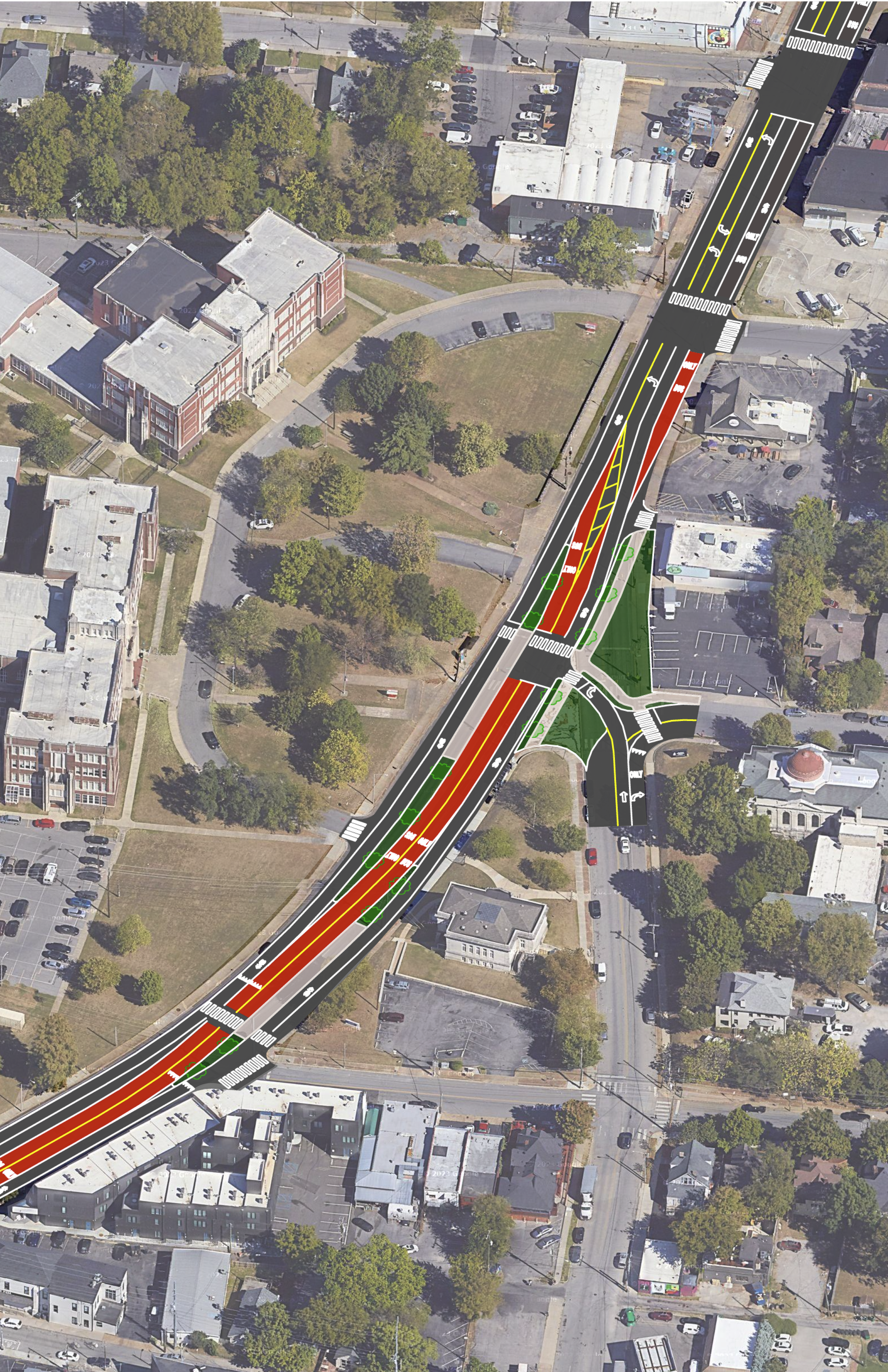
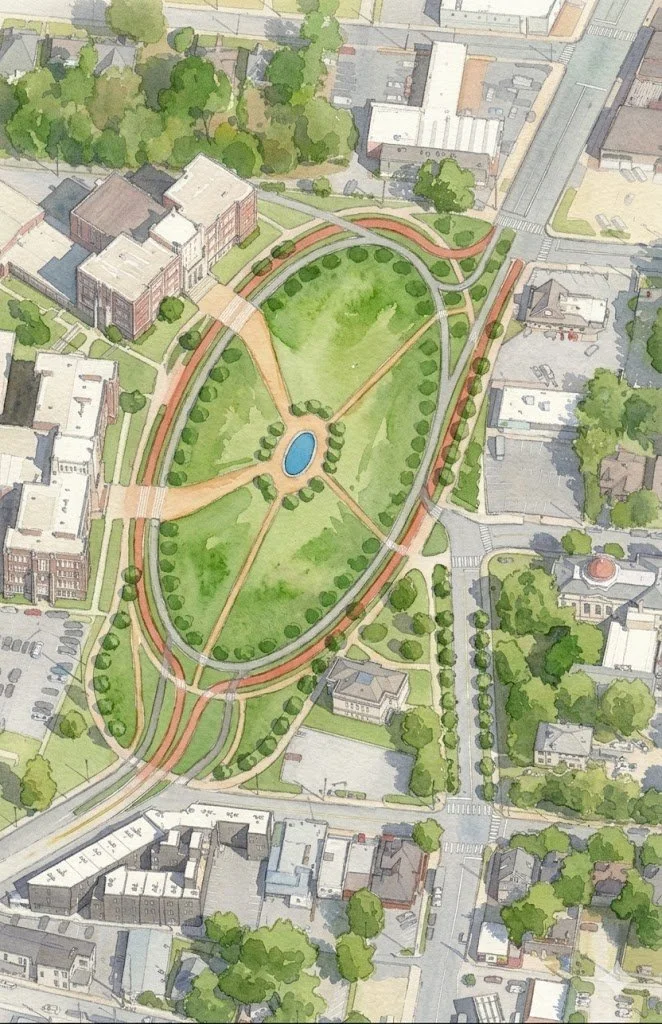
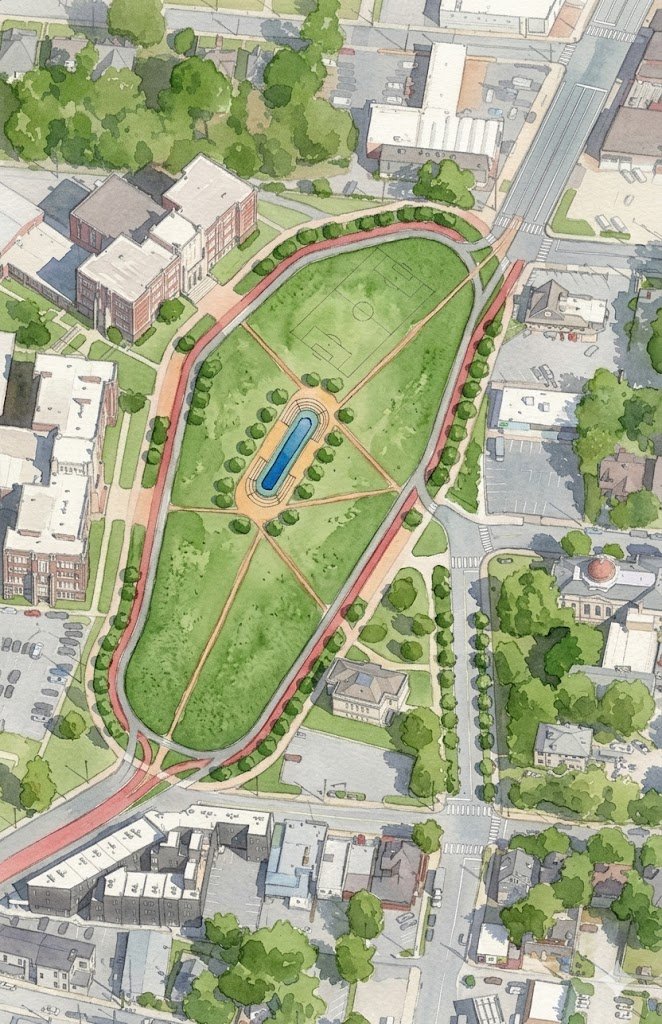
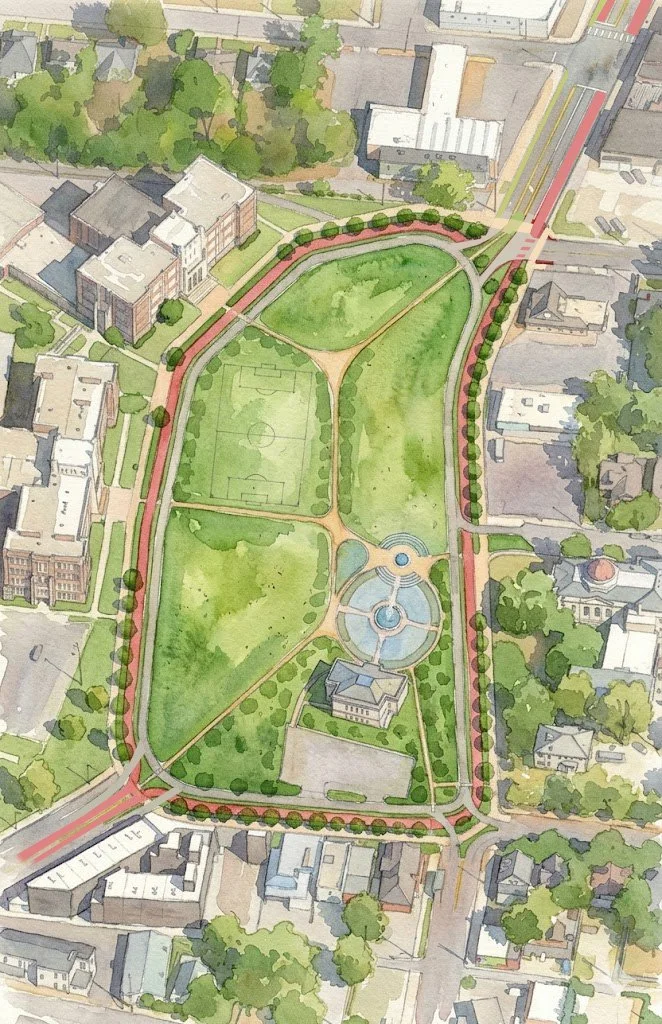
The top left was a concept from NDOT that came from feedback from the June 2024 Meeting, the top right is a Design Center plan for a “Civic Oval” playing off the Hodgson Douglas plan, the bottom left is a Design Center plan called the “Civic Amoeba” that looks at trying to maximize the metro-owned land, and the bottom right is a Design Center plan called the “Super Square” which take part of Forest Ave for the circulation of Main and Gallatin. The Red lanes on these images represent bus-only lanes, the gray represents vehicular travel lanes, and the beige represents connecting pathways.
Aerial perspective looking toward downtown at the Design Center Civic Oval Concept
As we revisit the Civic Square plan, we must adapt the original footprint to respect the existing fabric of the block. Specifically, any updated design should integrate neighborhood properties like Velvet Taco and Donut Distillery. Instead of routing a plaza through these parcels, the Design Center’s updated concept transforms the space into a communal "front porch." Imagine a continuous, tree-lined pedestrian promenade that seamlessly connects their outdoor seating directly into a central public green. It is also important to consider the important landmark, the 108-year-old Woodland Presbyterian Church, currently up for sale. Metro has a generational opportunity to align the future adaptive reuse of this historic structure with the new public square. By rerouting Gallatin around this central space, we can drastically improve safety on a notoriously dangerous street. Splitting the traffic flow allows pedestrian crossings that only require navigating one direction of the arterial’s heavy traffic at a time.
Tactical Improvements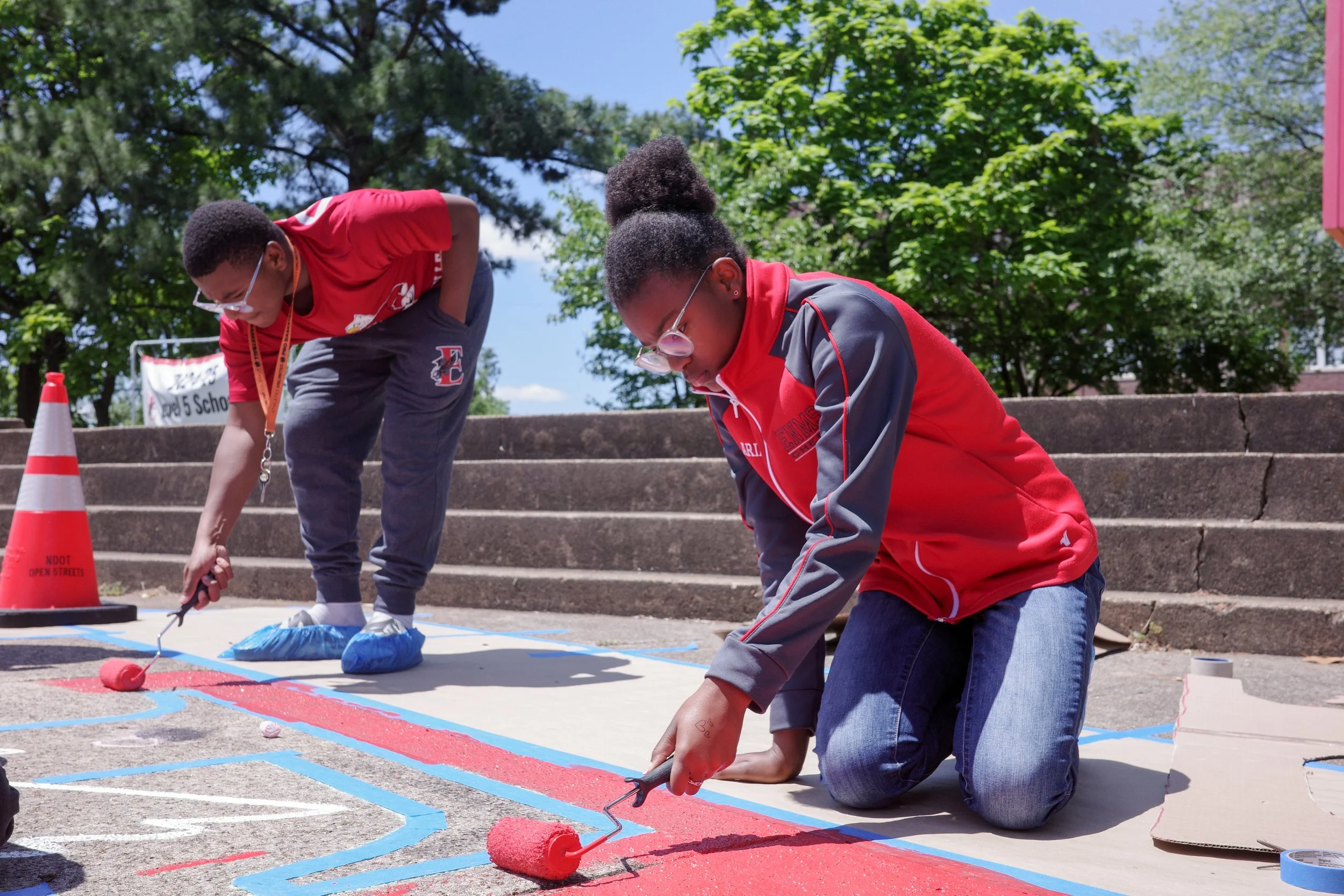
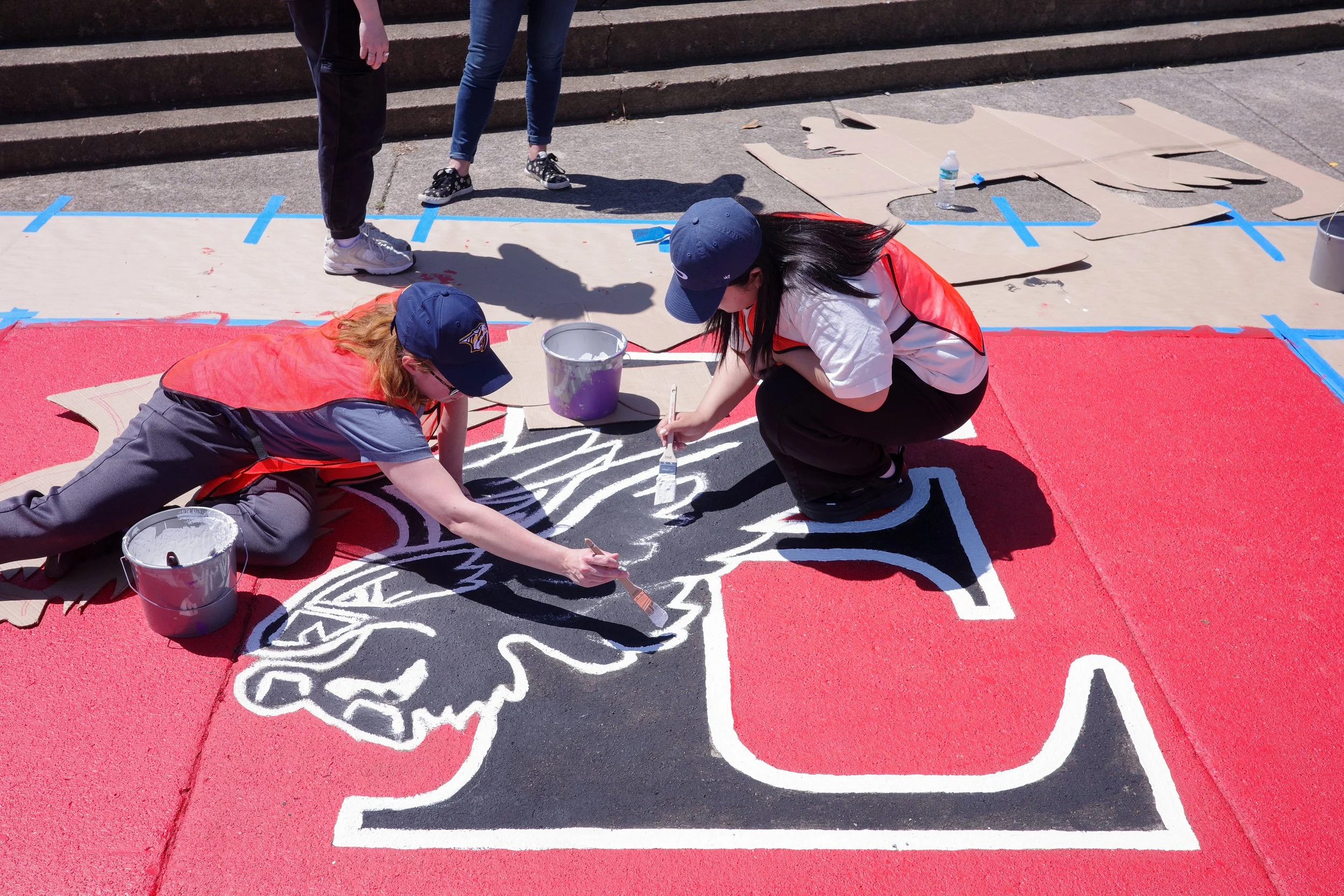
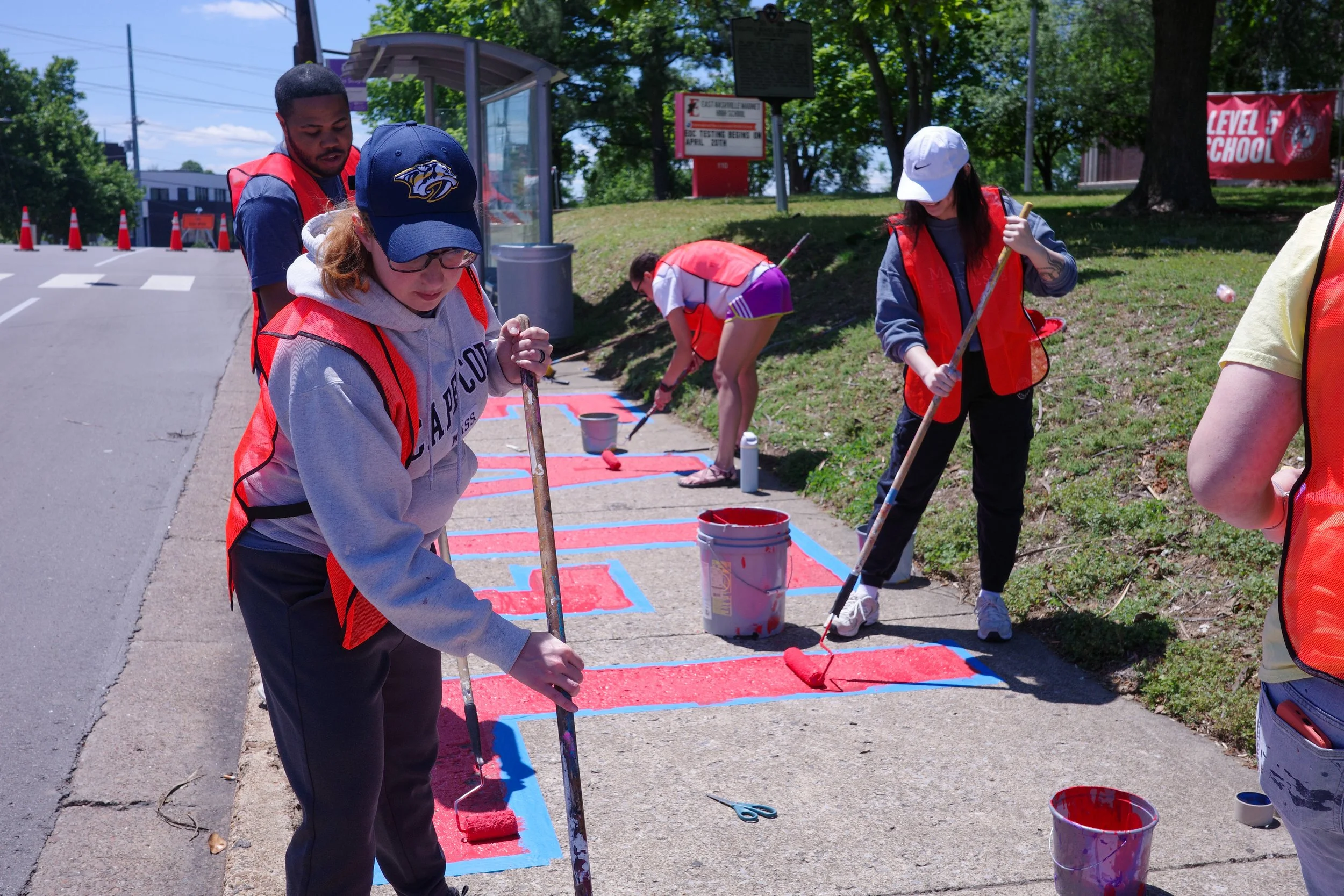
Installation from spring 2026, working with students from East Nashville Middle to enhance the inbound bus stop in front of the schools
At the heart of this intersection is the massive daily influx of students walking from East Nashville Magnet Middle and High School over to the library's after-school programs. Because students are already the primary users of this space, the Civic Design Center’s Youth Programs partnered with NDOT this spring to claim the crossroads for the community. Working within the city's Tactical Urbanism program, students painted school mascots and creative wayfinding directly onto the sidewalks to inject local pride and clear navigation into their neighborhood. By transforming this dangerous transit bottleneck into a cohesive civic square, we can elevate this brilliant student artwork and build a joyful, structurally safe pedestrian gateway that hundreds of these scholars deserve every single day. This builds on a playful intervention that the Design Center worked on with neighbors to help bring attention to this intersection and help the community think about the future.
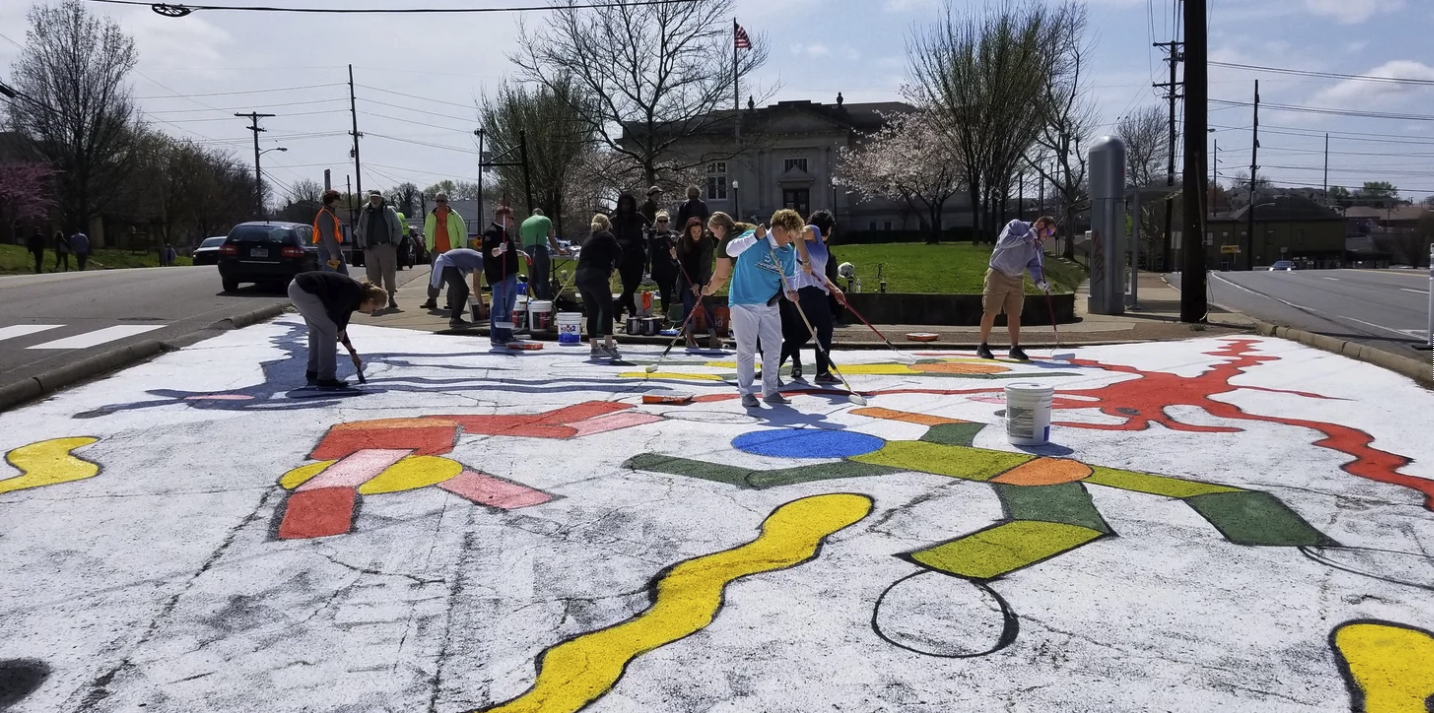
Image from neighbors pitching in to make the outbound bus stop at this intersection more vibrant and fun.
Brooklyn's reimagined Grand Army Plaza is a powerful reminder that streets are flexible, and asphalt can always be reclaimed for people. As Nashville takes its next great leap forward with Choose How You Move, we must ensure our infrastructure investments can help us achieve our grandest civic imaginations. By aligning the "Places for Everyone" fund with decades of community-led visions, we can deliver a safe, vibrant landmark for Nashville. This is our moment to get it right. If we don't have serious consideration for the Main and Gallatin Civic Square, we could forfeit our best chance to build it.
Let us know what you think about the Civic Square below!