
Learn about Neighborways
Written By Eric Hoke, Design Director
Concepts by Brittany (BJ) Baker, Design Intern + Remington Lynch, Design Studio Manager
5 min read Neighborways are creative interventions for a network of streets without pedestrian or bicycle paths. In Nashville, where sidewalk infrastructure is very costly and most neighborhood streets do not have them, neighborways are a great interim solution for safer movement.
What if the streets in your neighborhood could become some of the safest and most welcoming places to walk, roll, and connect?
The Google Map Street View above shows an example of Neighborway-like treatment to an intersection in Portland, OR.
The Civic Design Center is exploring that possibility through Neighborways: a people-first approach to transforming streets that might be lacking basic infrastructure into safer, more accessible routes for everyone.
Neighborways offer a practical way to better connect Nashville’s existing street network with its growing system of greenways, helping to close critical gaps in the city’s walking and biking infrastructure. By prioritizing low-speed, low-traffic streets and enhancing them with traffic calming, wayfinding, and pedestrian- and bike-friendly design elements, neighborways can create comfortable, continuous routes for all modes. Neighborways would extend the reach of greenways beyond parks to everyday destinations like schools and local businesses.
What Are Neighborways?
Neighborways are not a single street improvement or a single multi-use path; they are a network of connected streets designed to prioritize people over highspeed cut-through traffic.
Individually, a street might not have sidewalks or traditional pedestrian infrastructure, but when multiple streets are thoughtfully linked together and enhanced with the right tools, they can function as a cohesive system that supports safe, comfortable movement for children walking or biking to school, people with disabilities navigating their neighborhoods, older adults seeking safer places to stay active, and anyone who prefers a calmer street experience and may not feel as comfortable on busier roads.
How Do you implement Neighborways?
Neighborways combine several strategies to reshape how streets function:
Wayfinding: Clear, intuitive signage and markings help people navigate the network, identify preferred routes, and feel confident using them.
Traffic Calming: Design elements like speed humps, curb extensions, mini traffic circles, and narrowed travel lanes slow vehicles and discourage cut-through traffic.
Pedestrian-Oriented Design: Street markings, shared lane indicators, improved crossings, and visual cues signal that people—not just cars—belong in the space.
Together, these elements transform ordinary streets into low-speed, low-stress environments where walking, rolling, and biking feel safe and natural.
Nashville-Grown Examples
The Nations: Traffic Calming
Neighborways are not just a concept—they are a tool developed by Metro Nashville to expand safe, neighborhood-scale mobility.
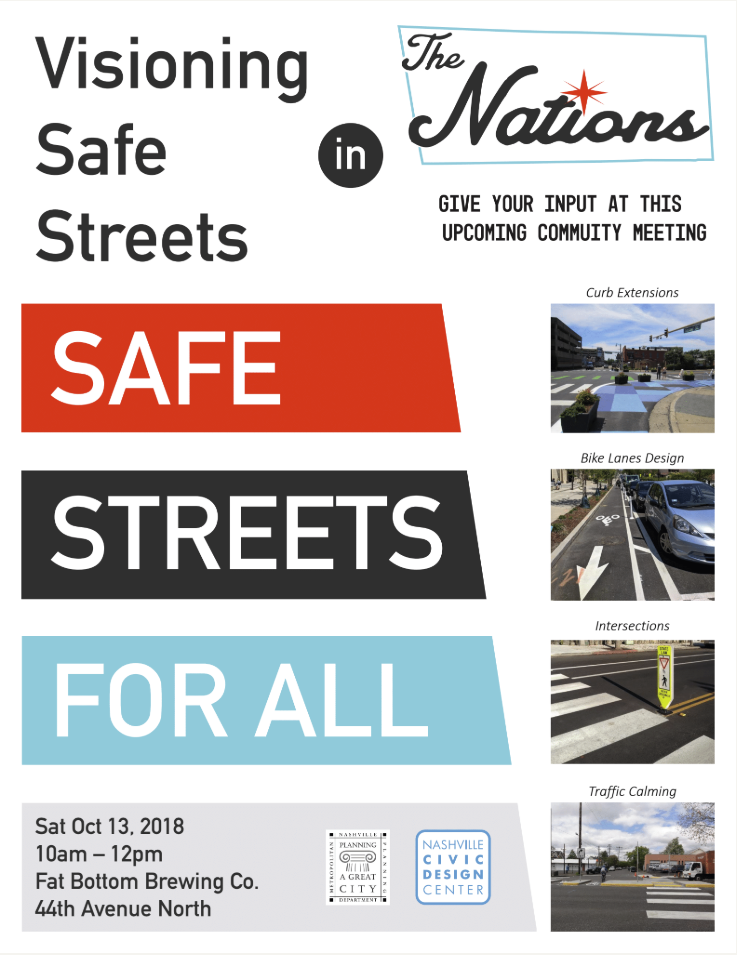
Poster for Meeting to discuss Neighborways in the Nations
Map of proposed Neighborway and other WalkNBike Projects
Comments from the meeting
In 2018, the approach was piloted in The Nations neighborhood, where a network of calmer residential streets was used to help people safely connect to more substantial infrastructure like the 51st Avenue two-way cycle track. This connection demonstrates the power of Neighborways as a “first-and-last mile” solution, bridging the gap between where people live and where higher-quality bike and pedestrian facilities exist.
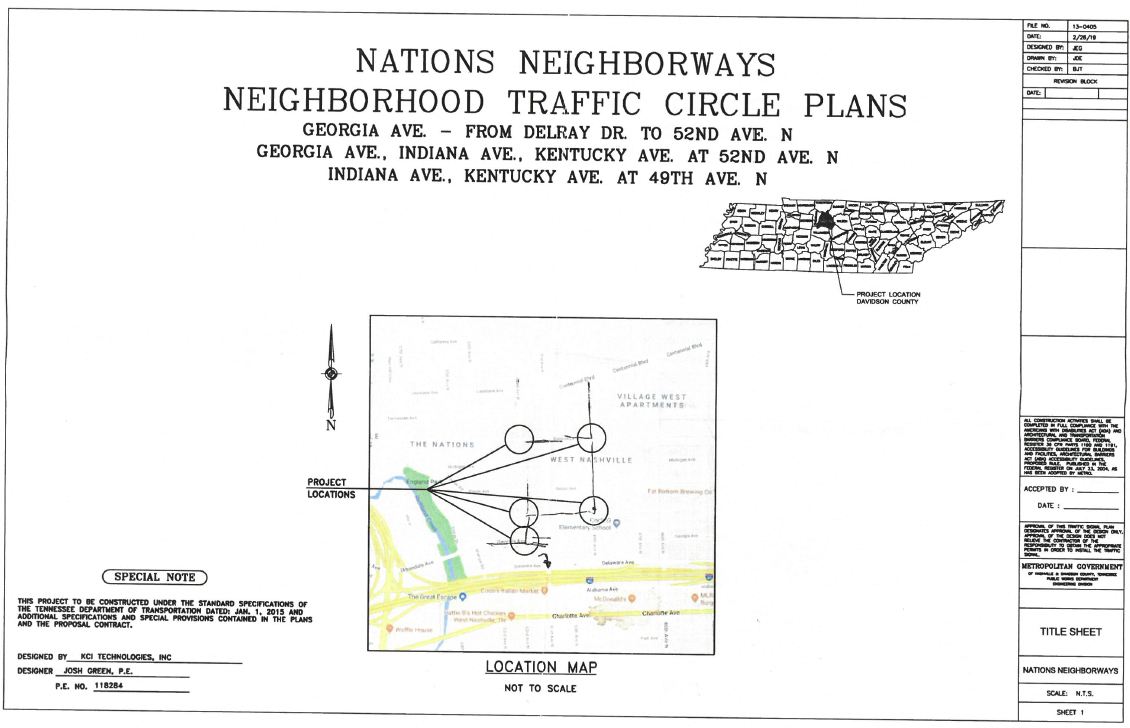
Final Neighborway intervention locations
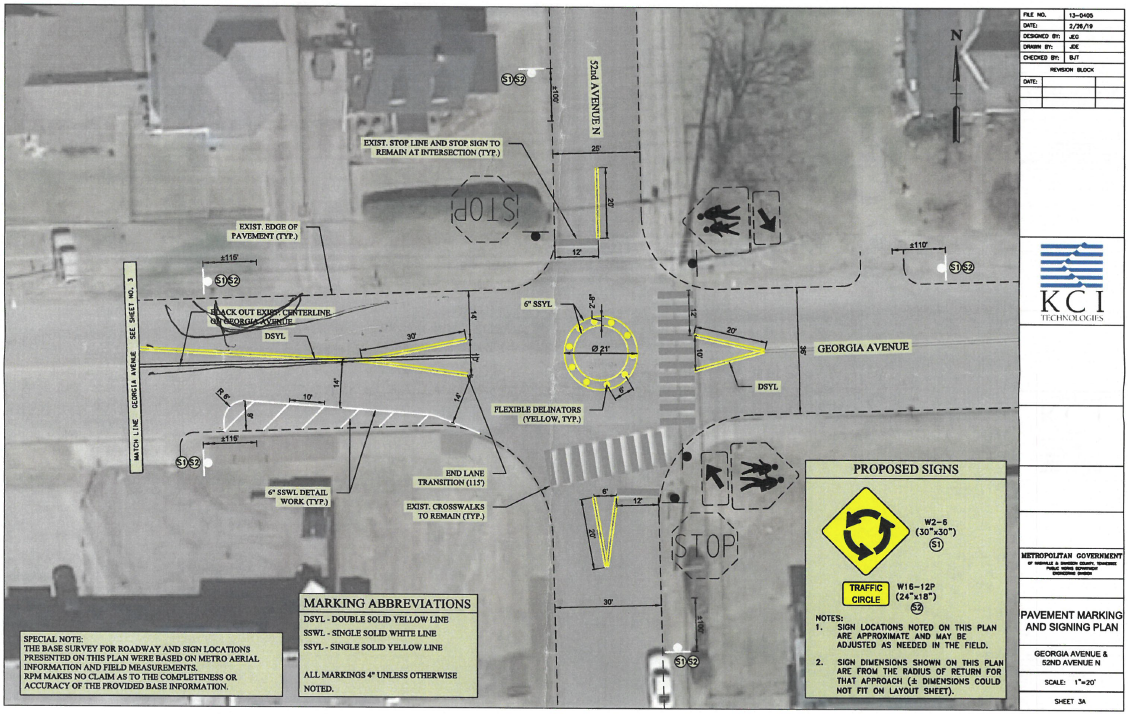
Neighborhood intervention at 52nd and Georgia
By linking everyday streets to major corridors, Neighborways help extend the reach and usability of Nashville’s growing multimodal network.
The Google Map Street View above shows the final installation at Georgia and 52nd
Napier: Pedestrian-Oriented Design
Building on this foundation, we have continued to explore how Neighborways can be adapted to serve communities across Nashville.
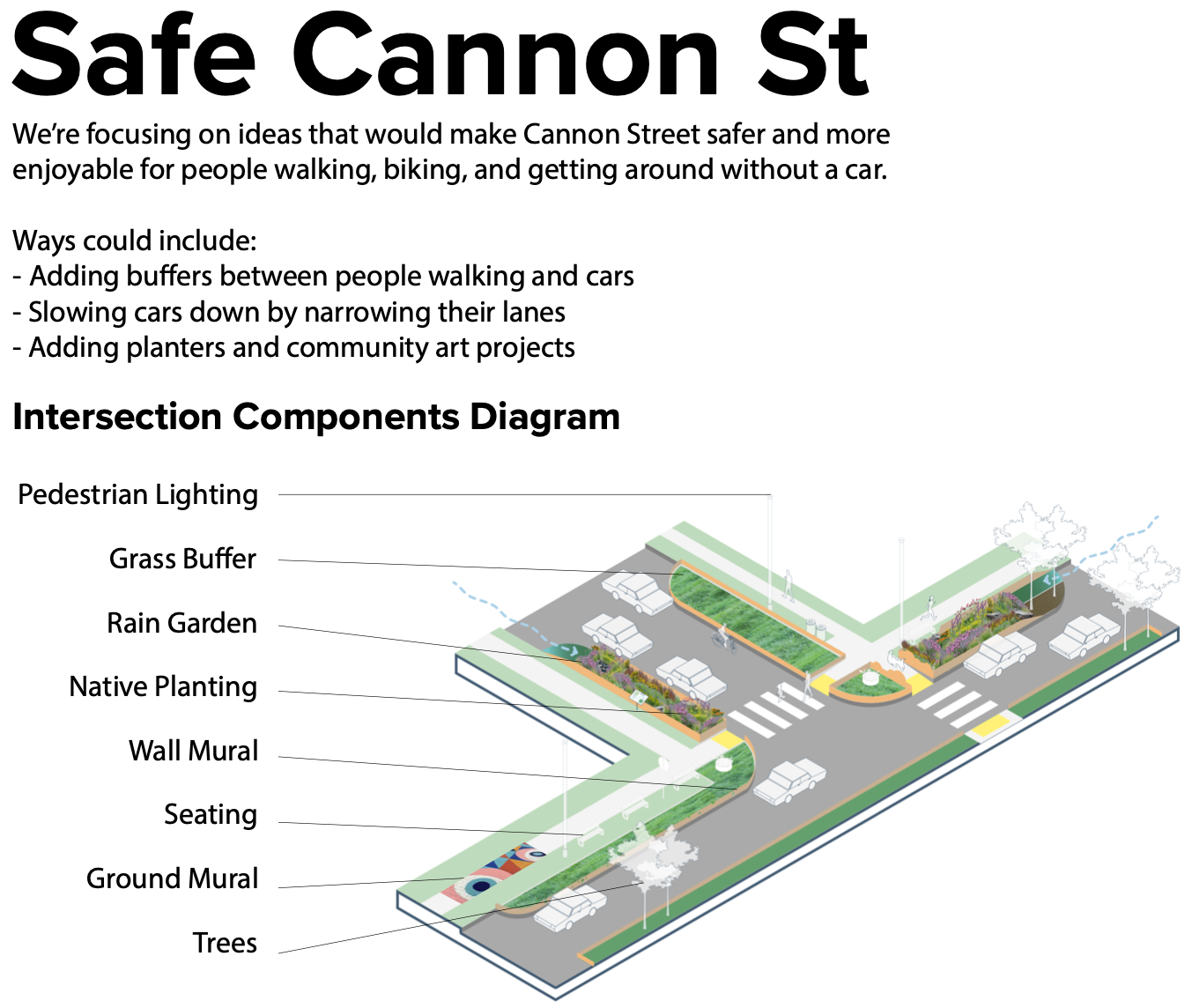
Engagement graphic showing community members’ possible interventions
In partnership with the Nashville Department of Transportation (NDOT), Walk Bike Nashville, and residents of the Napier neighborhood, the Civic Design Center developed design concepts for Cannon Street—a key street with the potential to safely connect important community anchors, including the Pruitt Branch Library and Napier Elementary School.
After engaging with Napier Elementary, we found ways to make the kids with the "Walking School Bus" safer. We sought methods to slow cars on Cannon Street. For Bike to School Day, we tried short-term fixes like traffic circles and bikelanes (see more about that work here). When an idea worked and the community approved, we pushed to make it permanent. We dropped unpopular ideas, like traffic circles. Our focus is on making Cannon Street safer and more pleasant for walking, biking, and other car-free travel.
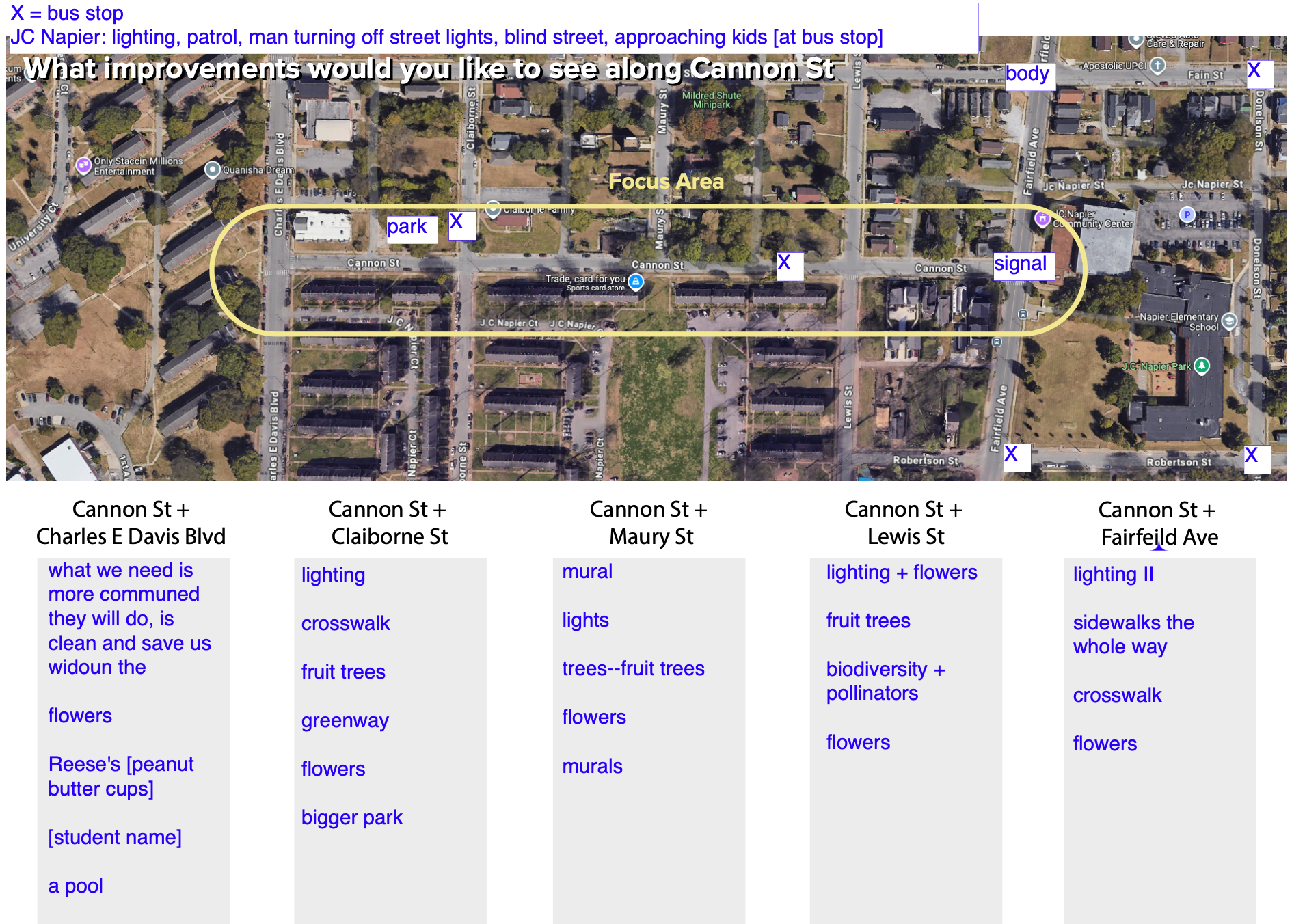
Notes from community members
This effort focused on how a Neighborway approach could add buffers between pedestrians and cars and slow traffic by narrowing vehicle lanes, creating a safer and more comfortable route for students and families traveling to school. Community members also hoped to incorporate planters and community art projects, introducing creative traffic-calming elements along an existing neighborhood street. By working directly with the community, the project reflects how Neighborways can be locally informed, context-sensitive, and responsive to everyday needs, not just a design strategy, but a collaborative process.
Expanding the Toolkit: Wayfinding
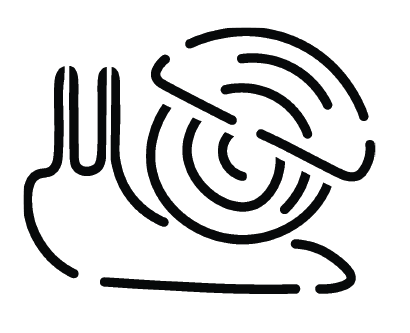
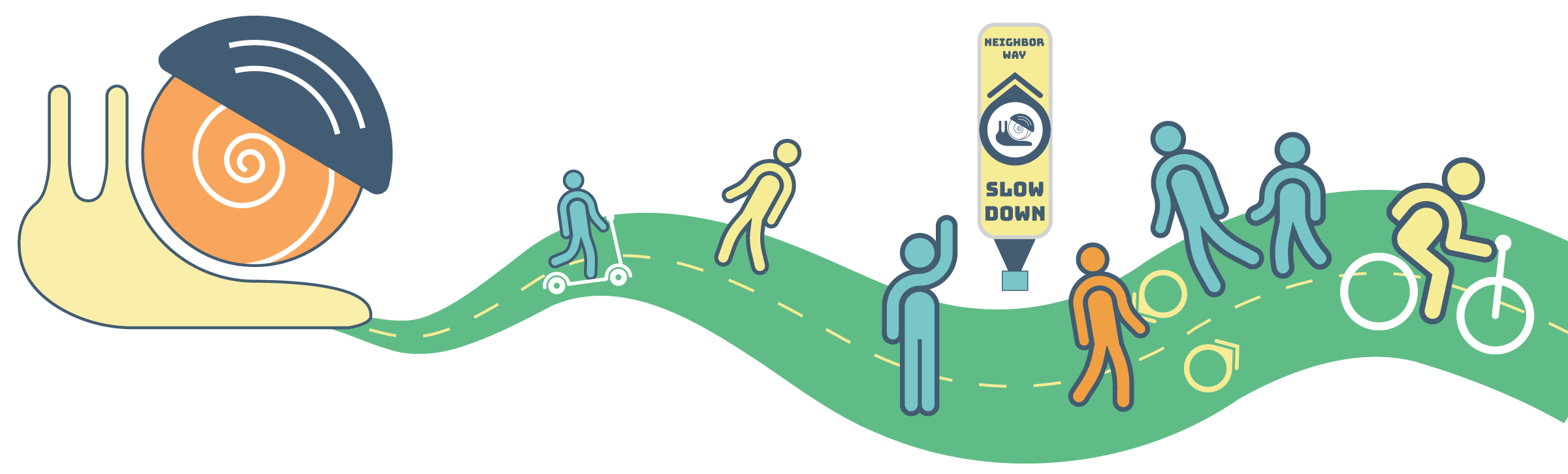
Idea for an icon for NDOT to use for Neighborways across the city. This concept for the neighborway logo was designed by Civic Design Center Design Intern, Brittany (BJ) Baker. The Neighborway’s icon/mascot is a snail, a universal reminder for all road users to slow down.
Below are some examples of how a Neighborway wayfinding program could look.
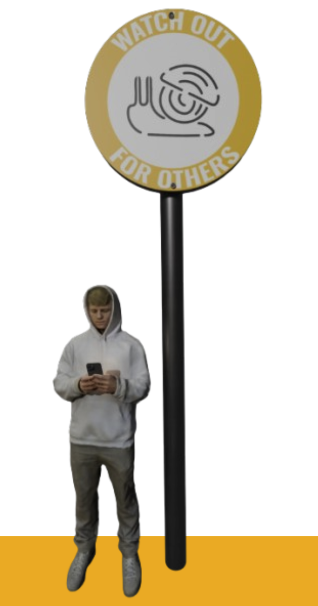
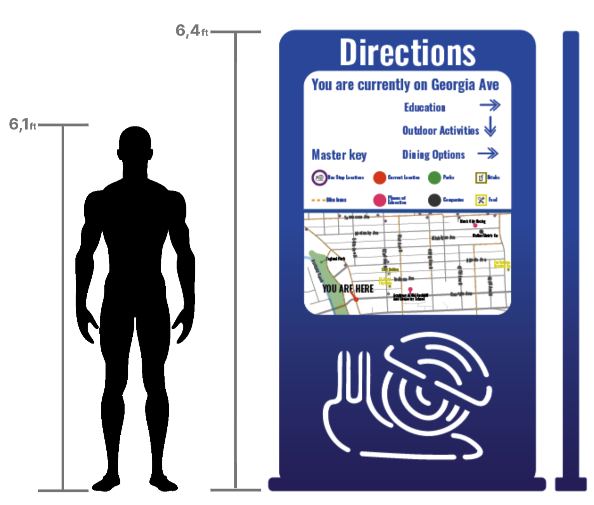
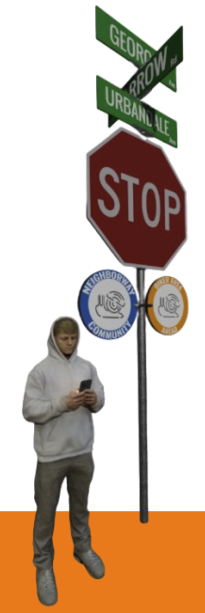
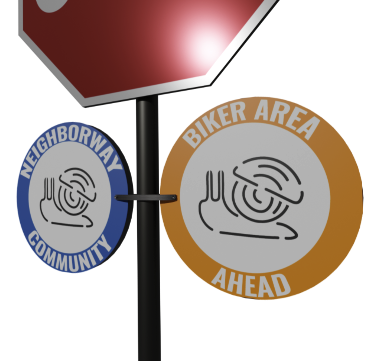
We see neighborways as a strong foundation with room to grow. One key opportunity is expanding the wayfinding and signage components of the program. By enhancing how routes are marked, communicated, and experienced, we can make neighborways more intuitive, visible, and inviting for a wider range of users. Strengthening this toolkit will help ensure that neighborways are not only safe—but also easy to understand and navigate—maximizing their impact across Nashville’s neighborhoods.
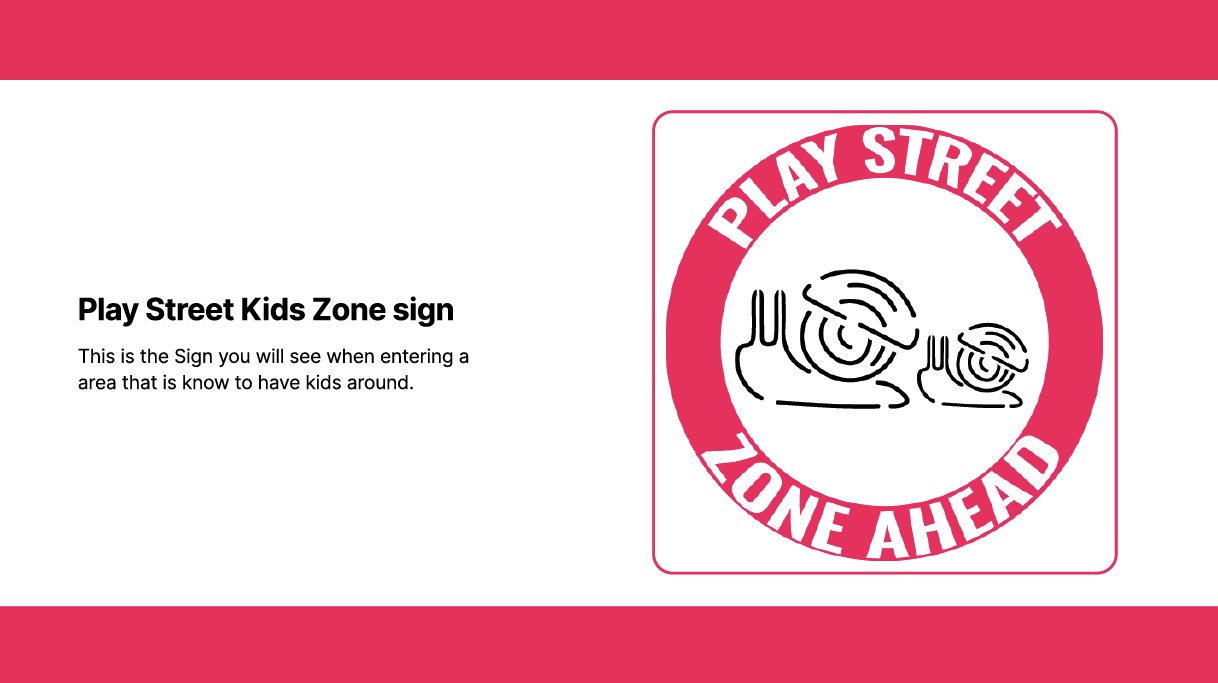
Idea to mark a play street
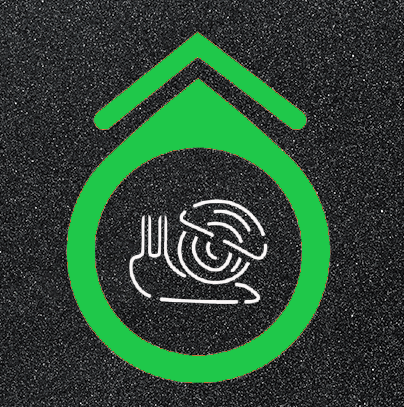
Idea for roadway markings
Neighborways represent a shift in how we think about our streets, from corridors for cars to shared public spaces that serve everyone, especially supporting healthy, active lifestyles. By reimagining the streets we already have, we can build a city where everyone, regardless of age or ability, can move safely and confidently through their community. Building continuous sidewalks everywhere is important, but it can take years or decades due to cost and infrastructure challenges. Neighborways offer a near-term, cost-effective solution that can expand mobility options without waiting for large sidewalk projects.
Idea for Neighborway pedestal sign that could be mounted to a street.
Idea for Neighborway Wayfinding Kiosk