
Guide to Neighborhood Emergency Planning
By Veronica Foster, Community Development Director
3 min read Use this very simple guide to take the steps to prevent feelings of isolation and fear in an emergency situation in your neighborhood.
It’s the calm before the storm in October. The weather is mild, so people are probably sitting on their porches or walking around their neighborhoods more than ever. There are sure to be a number of outdoor festivals celebrating the turn of the season and families are probably going door-to-door or trunk-to-trunk to trick-or-treat. What better time than now to connect with your neighbors? What better time than now to think about your plans in the event of a weather emergency before one arrives?
Nashville has had its fair share of disasters in recent years. Whether the 2020 Tornado completely changed your world or you are still getting worked up when you think about Winter Storm Fern, we cannot sit around and cross our fingers hoping for the best any longer. While you can educate yourself on the general resources, it’s important to consider your neighborhood’s unique context and begin to plan for that. Beyond your own personal preparedness, emergencies bring about our human instincts to be in community. When you already have a well-connected community, you might find yourself in a better position during an emergency. It is a simple chicken-or-the-egg question, except the answer should be easy: do you build community before you are met with an emergency or do you use the next emergency as a catalyst to come together?
Build Community Now
“The hard part about knocking on doors is feeling like you’re doing this alone; it’s intimidating. It helps to have a friend or someone else from the neighborhood that you met to go along with you. That way you’re building friendship or community with at least one person.”
Easier said than done! Nashville’s neighborhoods are infrequently walkable with long driveways that discourages neighbors from even walking into a zone close enough to see their face clearly from across the street. It can be daunting to walk around your block and knock on doors to introduce yourself, especially when you have to walk up one of those long driveways. How do you even work up the courage to connect?
Be ready to share your own personal information. Make a simple flyer with your information on it and if you are willing to collect information of fellow neighbors, offer your services. Here’s a template you can use to bring with you when you knock on your neighbors’ doors. If your neighbors aren’t home, you can leave your flyer behind tucked in the door or under the doormat, but don’t put anything inside mailboxes.
Start an informal communication channel using a shared spreadsheet, but set rules to make sure people feel their information is protected. Don’t share the information with anyone who hasn’t provided their own. Make sure the rules of sharing are clearly stated in the sheet.
Capitalize on the season! If you are taking your family trick-or-treating around the block, bring your flyer along. If your block doesn’t participate in trick-or-treating because of pedestrian safety concerns, bring your flyer to a local trunk-or-treat and strike up conversations with parents.
Let people come to you. If door-knocking is daunting or you don’t have children to take trick-or-treating, set up a table near the sidewalk or at the end of your driveway with packaged treats and introduce yourself to passersby. This could be on Halloween itself, but you might have to commit to doing this a few times or switch up the times you spend outside to make this effective.
Now it’s time to be patient. Your neighbors might be willing to participate in an informal communication channel right away or they may save your information in case of an emergency. Even if you are organized as part of a neighborhood group, it may be worthwhile trying to assemble neighbors on your block specifically to have a more structured system of support. For example, Historic Edgefield Neighborhood has a Block Captain program where there is a specific person that is assigned to spread information and build block-level community.
Creating a Plan
If you live in a neighborhood that is already organized or you have an informal communication system already established on your block, you may be at the stage of trying to plan for an emergency a little more directly. Beyond the tools and resources that Metro Nashville Office of Emergency Management offers so you can make your household’s plan, you can also use those same resources to consider your neighborhood’s plan. One of the first things you can do is assemble your neighborhood for a CERT (Community Emergency Response Team) training, which would better equip neighbors who are able and willing to respond directly.
Assemble a Block Level My Map on Google
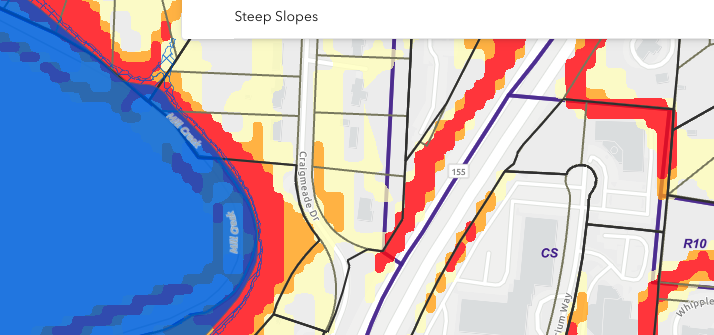
On Parcel Viewer, you can see floodplain and steep slopes
You might already have these things identified in your household’s emergency plan, but now it is time to combine these efforts into a neighborhood resource through Google My Maps that can be accessible from your smartphone. In major emergencies where you may not have access to power or service, familiarize yourself with your map or print it out for your emergency go-bag.
Go to Parcel Viewer and identify all the flood zones and steep slopes. You can use the lines and shapes feature to highlight larger areas.
Mark a neighborhood high ground meeting place on the map. What is the area with the tallest hill to take refuge from flooding? Do you have permission to go there in an emergency?
Mark on the map all walkable community resources. For example, identify churches or places or worship, schools or libraries that might serve as places to shelter. Label with contact information for these places.
With your neighbors’ permission, identify households that may need to be checked on in emergencies, like elderly neighbors or neighbors with disabilities. You can also highlight their information on the informal communication channel.
Ultimately, your priority this pre-storm season should be to get prepared, so you can prevent neighborhood isolation. Don’t let a big checklist make this task feel daunting! When you start by building community, you can share experiences, compare notes and make the concept of disasters just a little bit less spooky.