
Avenue of the Sciences
Reimagining 6th Ave S as a Multimodal Civic Corridor
By Eric Hoke, Design Director
5 min read This blog explores ideas to better connect South Nashville and downtown through multimodal infrastructure and placemaking. This is the first phase in a more holistic plan to activate our gateways to greenways.
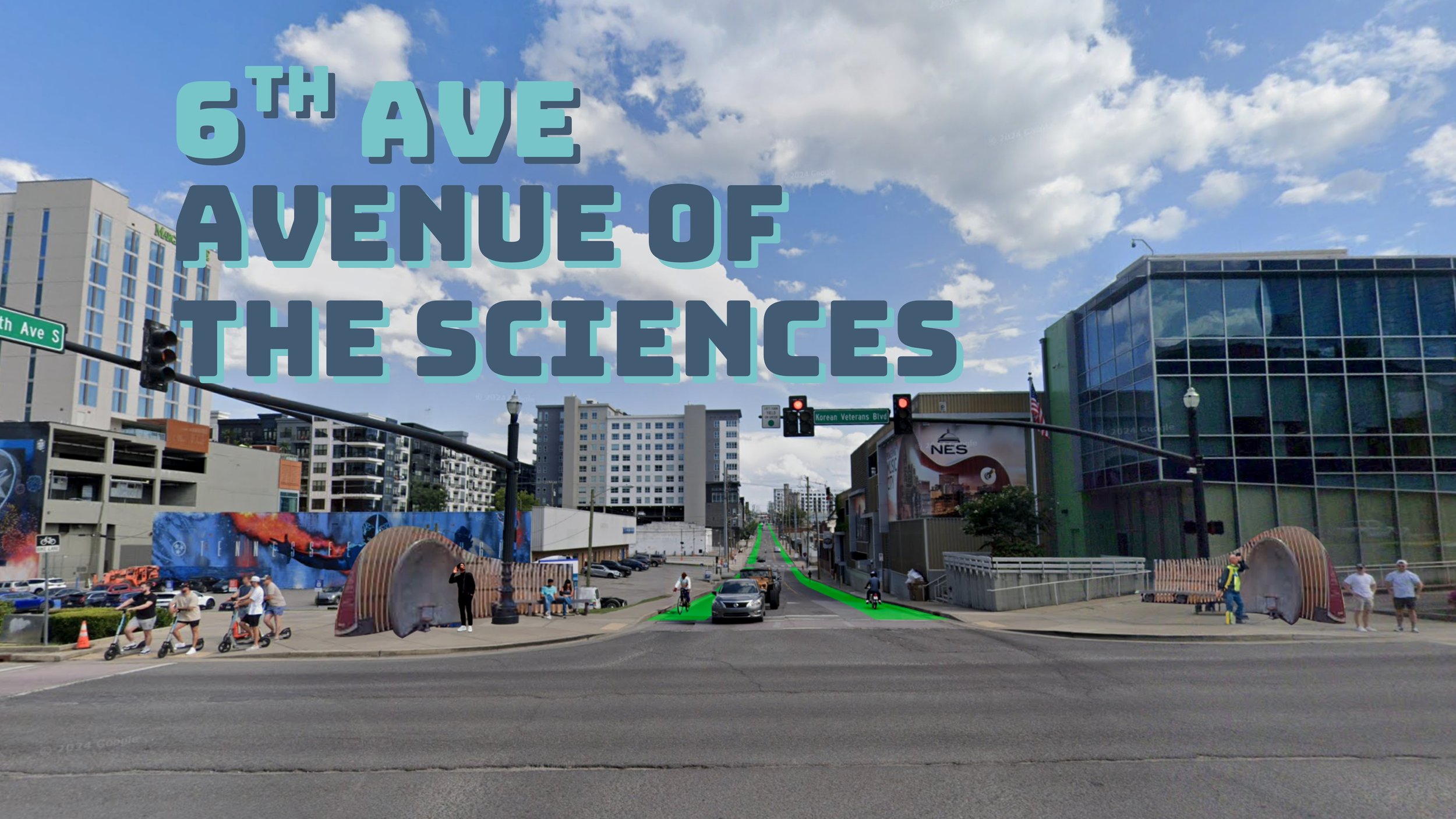
Ideas showing whisper dishes and mobility lanes on each side of 6th Ave S
6th Avenue in downtown Nashville is one of the city’s most important yet overlooked corridors. It serves as a rare north–south connection linking downtown to South Nashville, passing by major destinations such as the convention center, Fort Negley, and the Adventure Science Center. Despite its strategic location, the street today functions largely as a vehicle corridor, with limited space for walking, biking, or public gathering.
The Civic Design Center is working to change that through a placemaking concept called The Avenue of the Sciences. This proposal would transform a small but critical section of 6th Avenue into a multimodal public corridor celebrating science, discovery, and civic life.
This concept builds on more than two decades of planning, advocacy, and civic design work in Nashville.
Holistic Vision Rooted in Exisiting Plans
The Avenue of the Sciences traces its origins to the Civic Design Center’s founding publication, The Plan of Nashville: Avenues to a Great City. This document established guiding principles that continue to shape the organization’s work today.
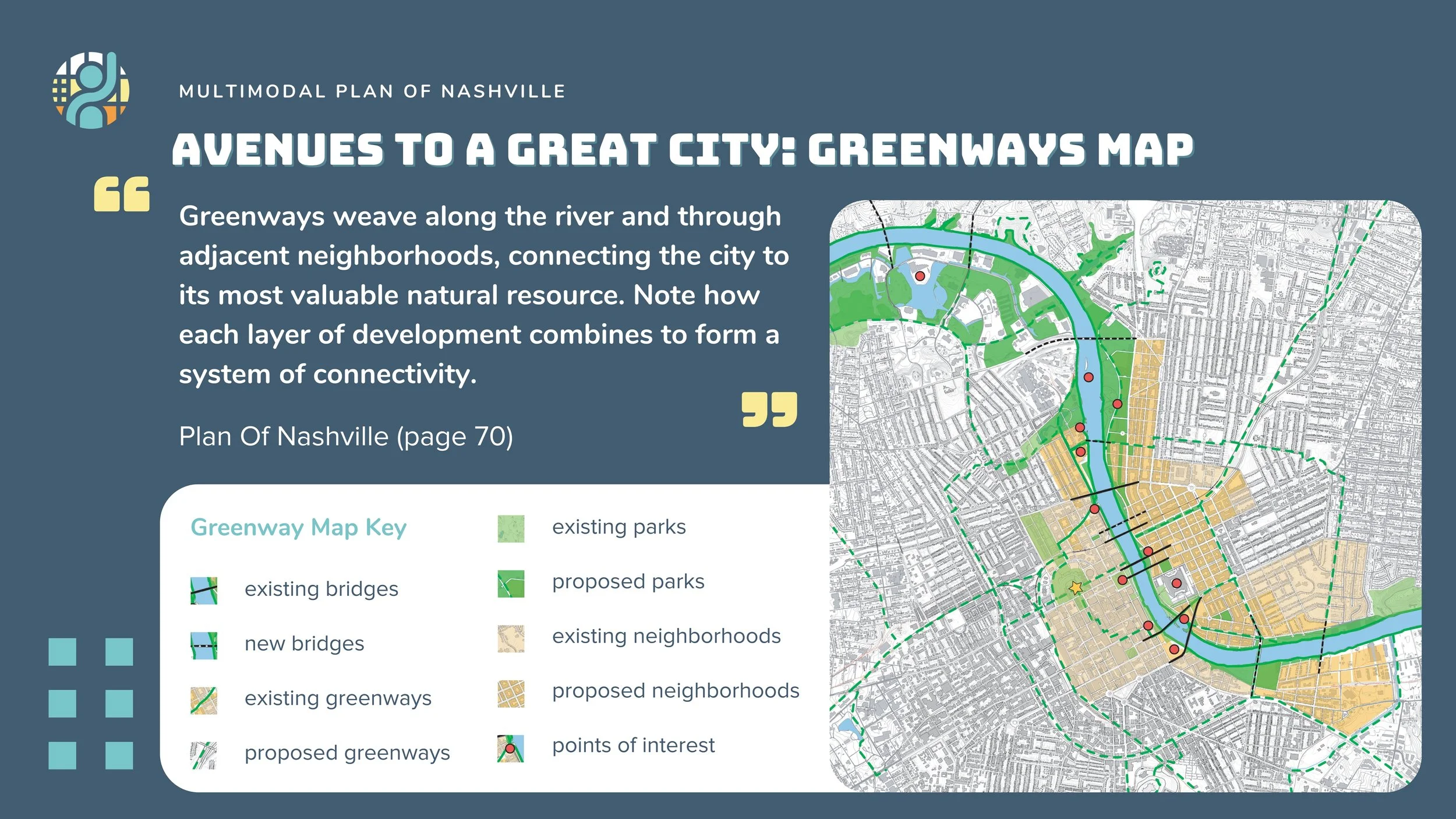
Highlighting multimodal visions in The Plan of Nashville
“the greenways system is also intended to serve as part of our transportation infrastructure, providing non-automotive routes between home and work and other destinations”
One principle focuses specifically on parks and greenways, emphasizing the importance of creating public spaces that are welcoming, accessible, and connected. The goal is to design places where people can walk, bike, and move through the city without relying entirely on a car, while also creating environments that serve residents of all ages.
For the Civic Design Center, greenways and multimodal infrastructure have long been viewed not just as recreational amenities, but as essential components of a city’s transportation network. Connecting these systems to neighborhoods, transit, and civic destinations is key to improving the quality of life across Nashville.
“integrating the trails with mass transit by locating bus stops near greenways... will enhance the connectivity of the transportation system and provide alternatives to travel by car.”
Metro Parks’ Plan to Play initiative highlights the importance of expanding Nashville’s greenway network and strengthening connections between parks and neighborhoods and multimodal transportation. The plan explicitly states that development goals will be to 1) increase connectivity for multimodal transportation, and 2) enhance and expand Metro’s multimodal transportation network by strategically utilizing off-street greenway trail facilities as part of the countywide system. Additionally, Imagine Nashville, a grassroots visioning effort led by local nonprofits, identified better mobility and safer streets as top priorities for residents—greenway connections and mobility lanes could fill this need.
The Nashville Department of Transportation’s Connect Downtown initiative has focused on improving mobility through the downtown core. Within that effort, 6th Avenue has been identified as a key corridor for micromobility and neighborhood connections.
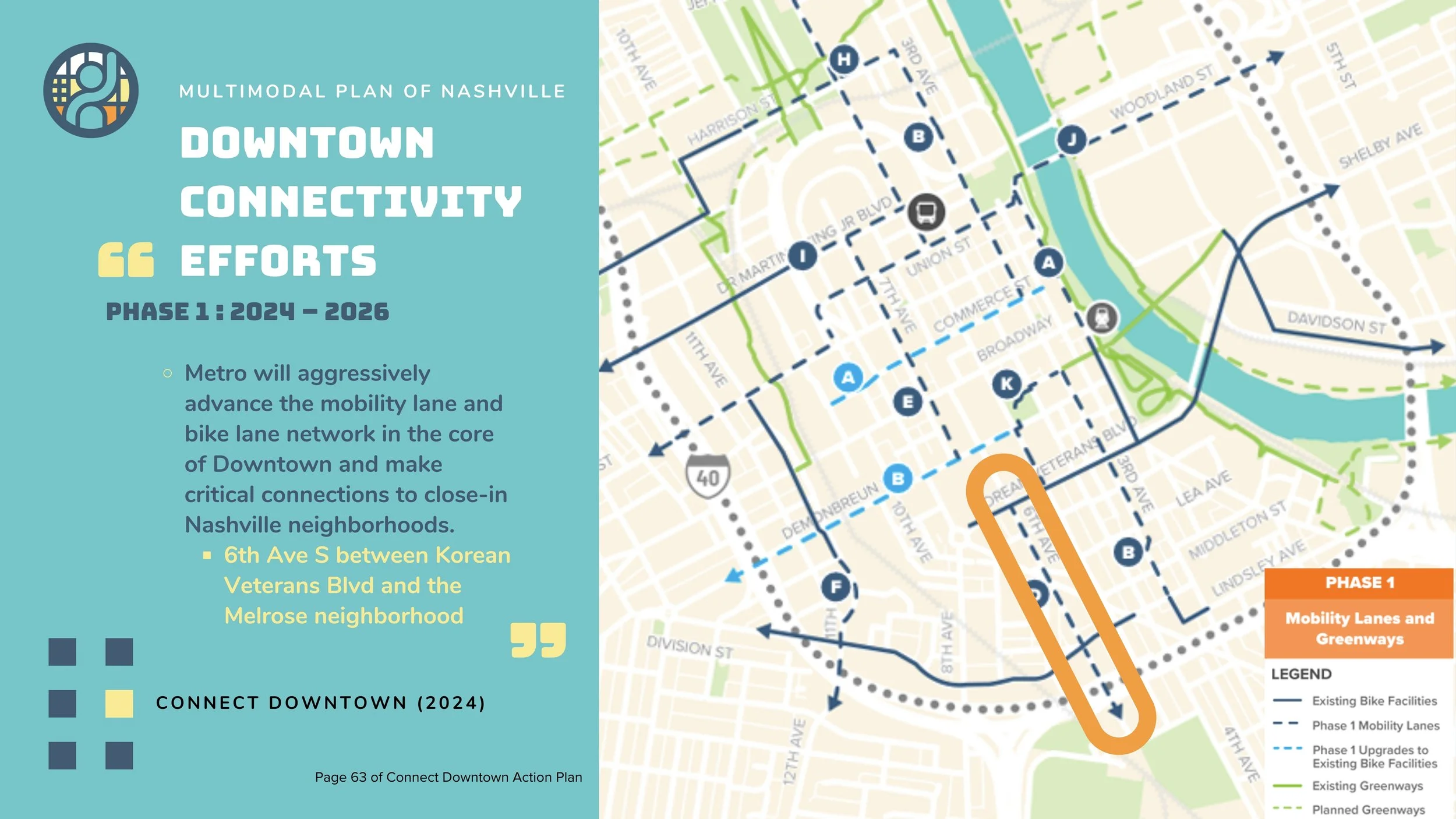
Highlighting the 6th Ave S link in NDOT’s Connect Downtown plan
The Civic Design Center’s broader Multimodal Plan for Nashville builds on these efforts by identifying corridors where improvements can unlock larger connectivity opportunities. 6th Avenue is one of the most promising places to begin.
Why 6th Avenue S Matters
6th Avenue is uniquely positioned within Nashville’s transportation network. It connects downtown to South Nashville and links several important civic and cultural destinations along the way.
These include:
The Music City Center (downtown convention center)
Adventure Science Center, a hub for experiential science learning
Fort Negley, one of Nashville’s most significant historic parks
The Wedgewood-Houston and Chestnut Hill neighborhoods
The Fairgrounds and future greenway connections
GEODIS Park
Despite its importance, much of the corridor currently consists of multiple vehicle lanes with narrow sidewalks and minimal infrastructure for biking or placemaking. The Avenue of the Sciences aims to demonstrate how relatively small design interventions can transform the experience of the street.
Testing the concept: Two-Block Demonstration
The proposed placemaking concept focuses on a short section of 6th Avenue between Korean Veterans Boulevard and Lafayette Street.
Today, this stretch includes three travel lanes and limited pedestrian space. The Civic Design Center proposes a demonstration project that would introduce a variety of improvements, including:
A dedicated mobility lane for bicycles and micromobility
Expanded pedestrian space
Traffic-calming design elements
Public art and lighting installations
Science-themed placemaking features
Scientific placemaking refers to applying scientific ideas, methods, and data to understand and to create valuable places, focusing on how people interact with their built environment. We hope that these types of activations will bring a character to 6th Ave S that promotes walkability between Downtown and South Nashville. One key opportunity for placemaking elements is in closing Lee Avenue between Lafayette and 6th Ave to vehicles. Reimagining this space could allow for the creation of a small public plaza, providing room for installations and pedestrian activity.
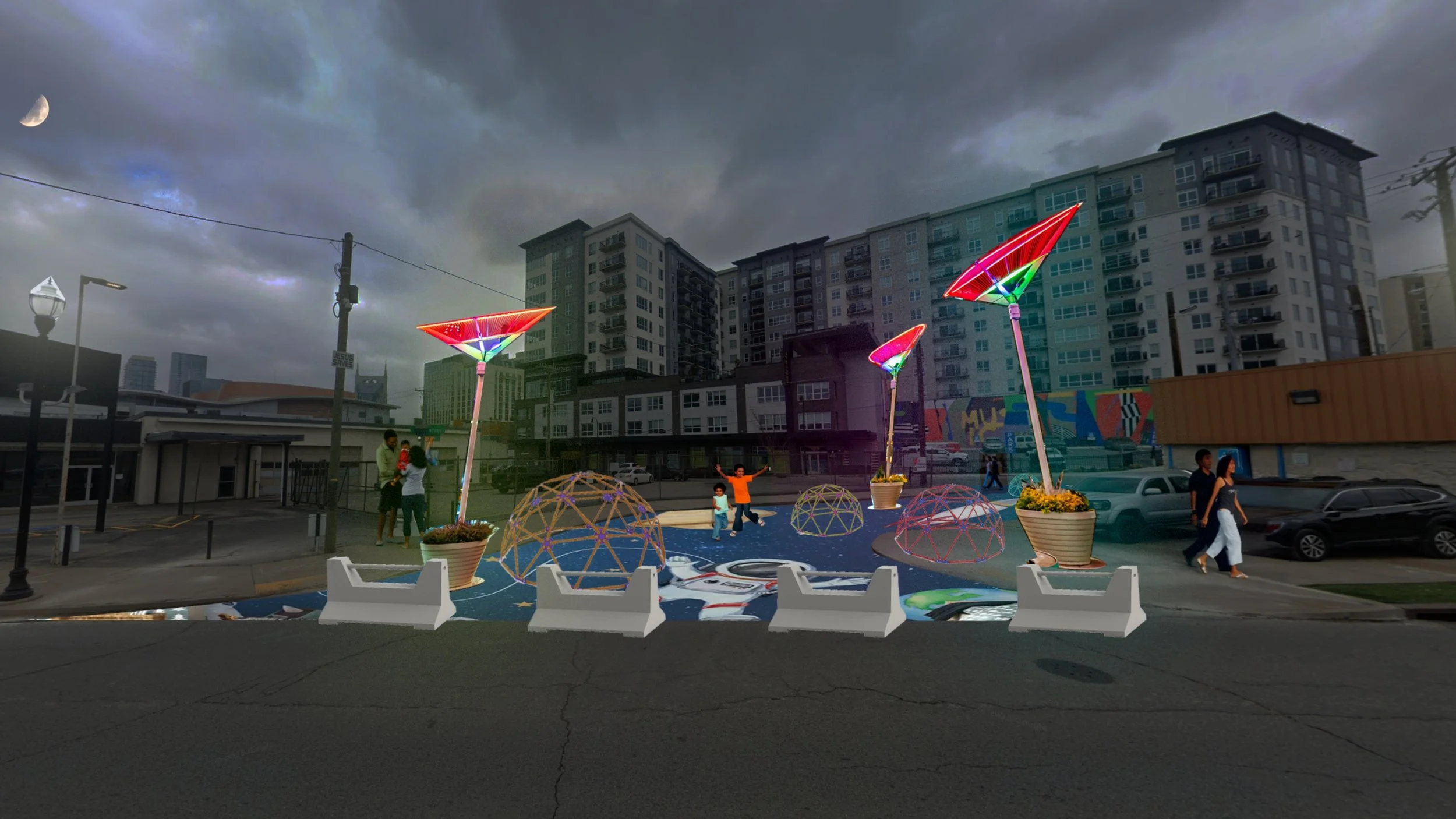
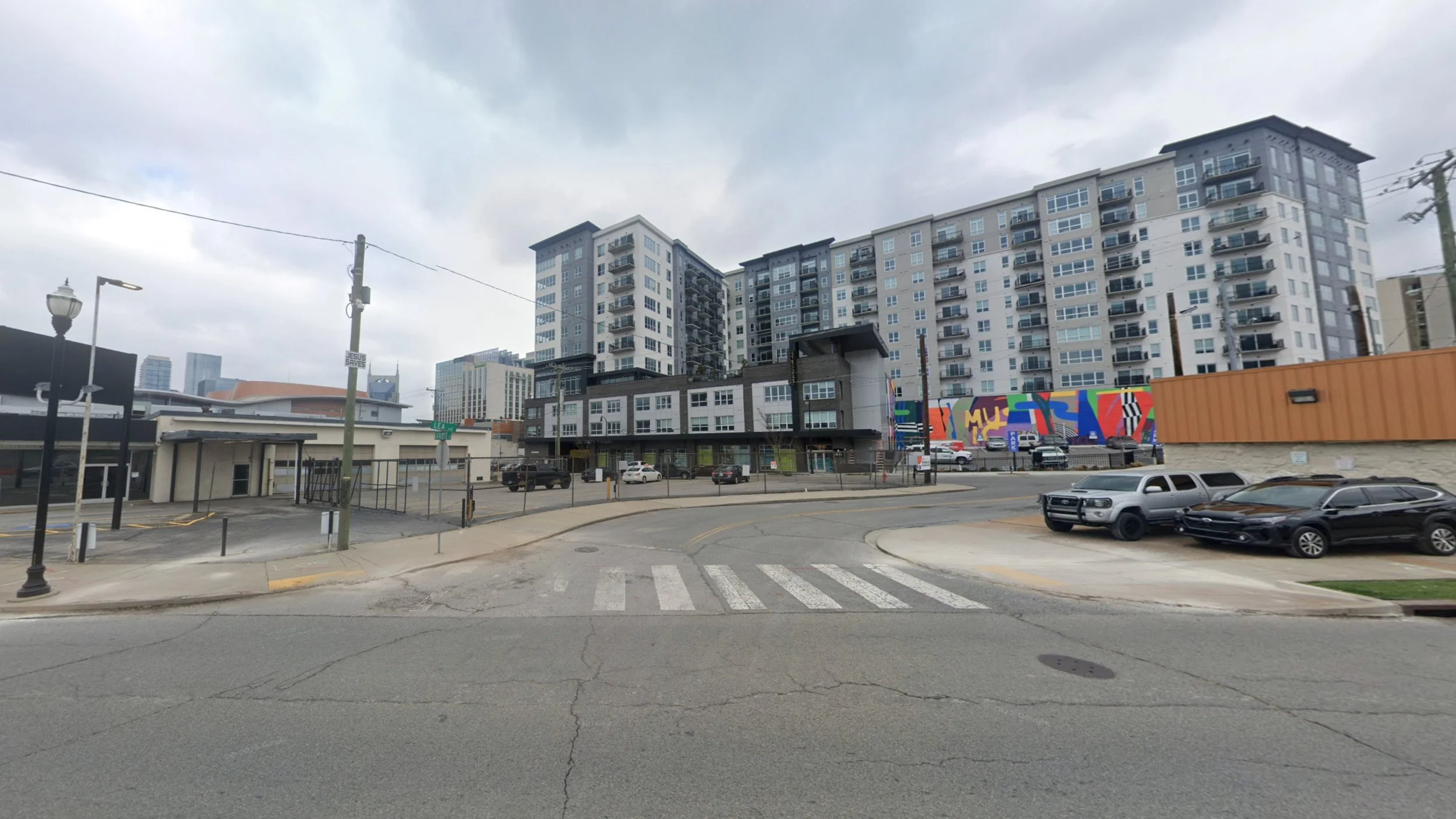
The concept of the Avenue of the Sciences draws inspiration from the nearby Adventure Science Center and the idea that public space can also be a place for learning.
Possible installations along the corridor could include:
Models showing the scale and distance of planets
Interactive sound exhibits reflecting Nashville’s identity as Music City
Murals highlighting geological features or historic waterways beneath the city
Lighting installations that illustrate scientific concepts
Learning about the infrastructure that exists within the street
Together, these elements could transform the street into an outdoor learning environment, blending science, art, and civic design.
Scientific Placemaking Case Studies
Ghost Rivers installation, Remington Ave, Baltimore
Below the streets of Baltimore flow dozens of lost streams. This art activation seeks to highlight and map the stream’s path in the streets as well as educate people on Baltimore’s natural history.
Whisper Dishes, San Francisco, CA
This street activation shows how a parabolic curve can channel sounds across distances to other participants.
Creating gateways to more greenways
While the initial concept focuses on just two blocks, the long-term vision is much larger. The Avenue of the Sciences could eventually connect multiple destinations and greenway systems across the city.
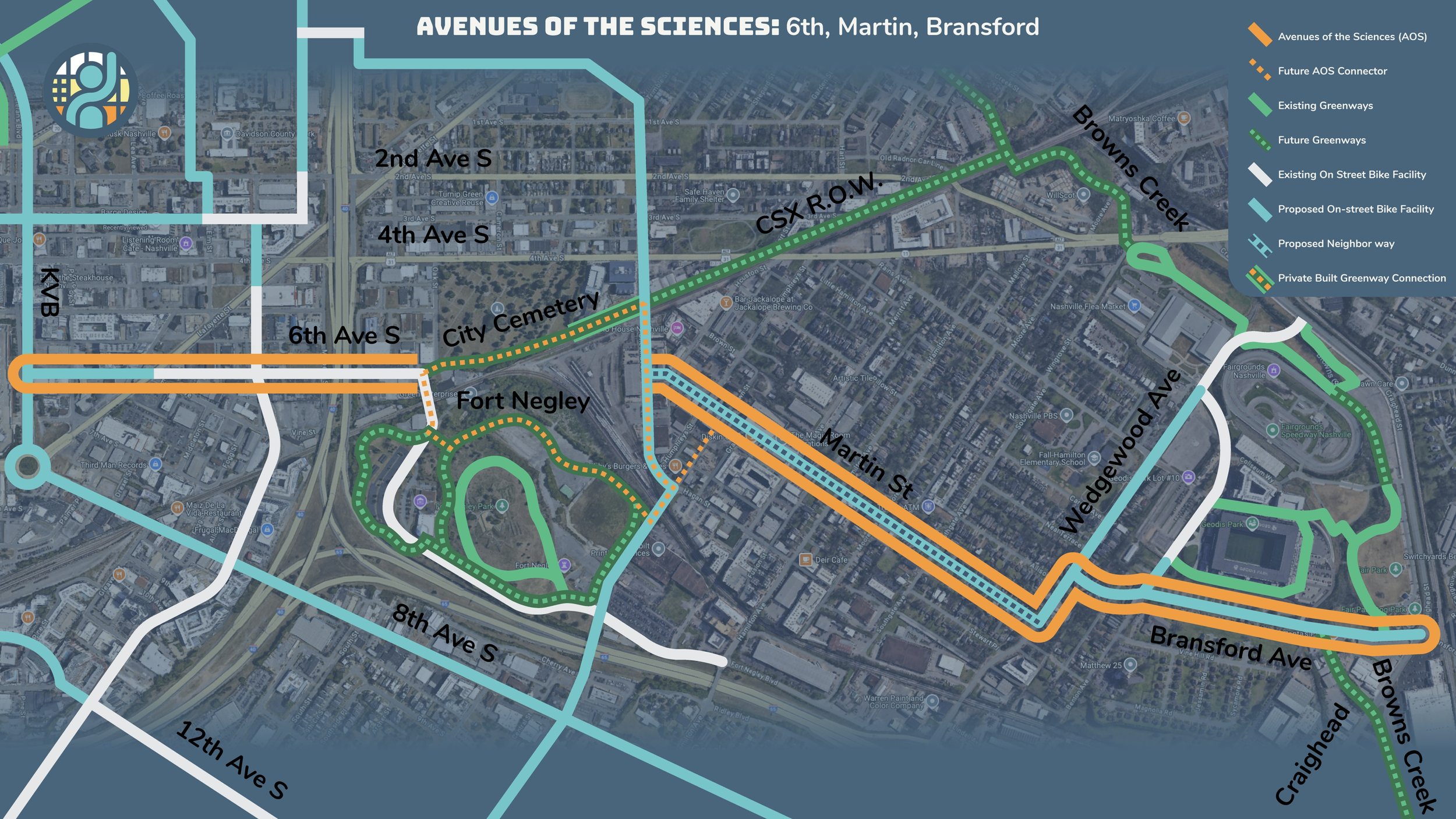
Map showing the connection of the Avenue(s) of the Sciences: 6th Ave S, Martin St, and Bransford Ave from Downtown to the Fairgrounds
Future connections could link:
Fort Negley and the surrounding neighborhoods
Martin Street’s proposed Neighborway improvements are shown in NDOT’s Walk N Bike Plan
The Future Brown’s Creek Greenway
The Nashville Fairgrounds and GEODIS Park
By strengthening these connections, 6th Avenue South could become a critical multimodal spine connecting downtown with South Nashville.
A Demonstration for Better Streets
“The Avenue of the Sciences will integrate science discovery into the everyday activity of walking down a Nashville street, inviting all ages to explore and learn together”
The Civic Design Center views the Avenue of the Sciences as a demonstration of how creative placemaking, mobility improvements, and public partnerships can reshape the way Nashville’s streets function.
With thoughtful design and collaboration, this stretch of 6th Avenue could become a vibrant public space that connects neighborhoods, celebrates science and learning, and illustrates how streets can serve people as well as vehicles.
In doing so, the Avenue of the Sciences would not only reimagine 6th Avenue, but it could help illustrate a broader vision for multimodal connections from transit to streets to greenways.