

Sometimes Disorder is Order
By Veronica Foster, Community Development Director
5 min read This blog shares transportation experiences in India and Turkey, getting to the root that disorder in streets can often improve safety, but sometimes you just want pedestrians to be able to move freely.
I was fortunate enough to visit North India last month and the disorder in the streets fascinated me. The city streets function like shared streets, where all modes have equal priority, painted lines are rarely respected, and pedestrians and motorcyclists just have to have a little more courage in this big game of chicken.
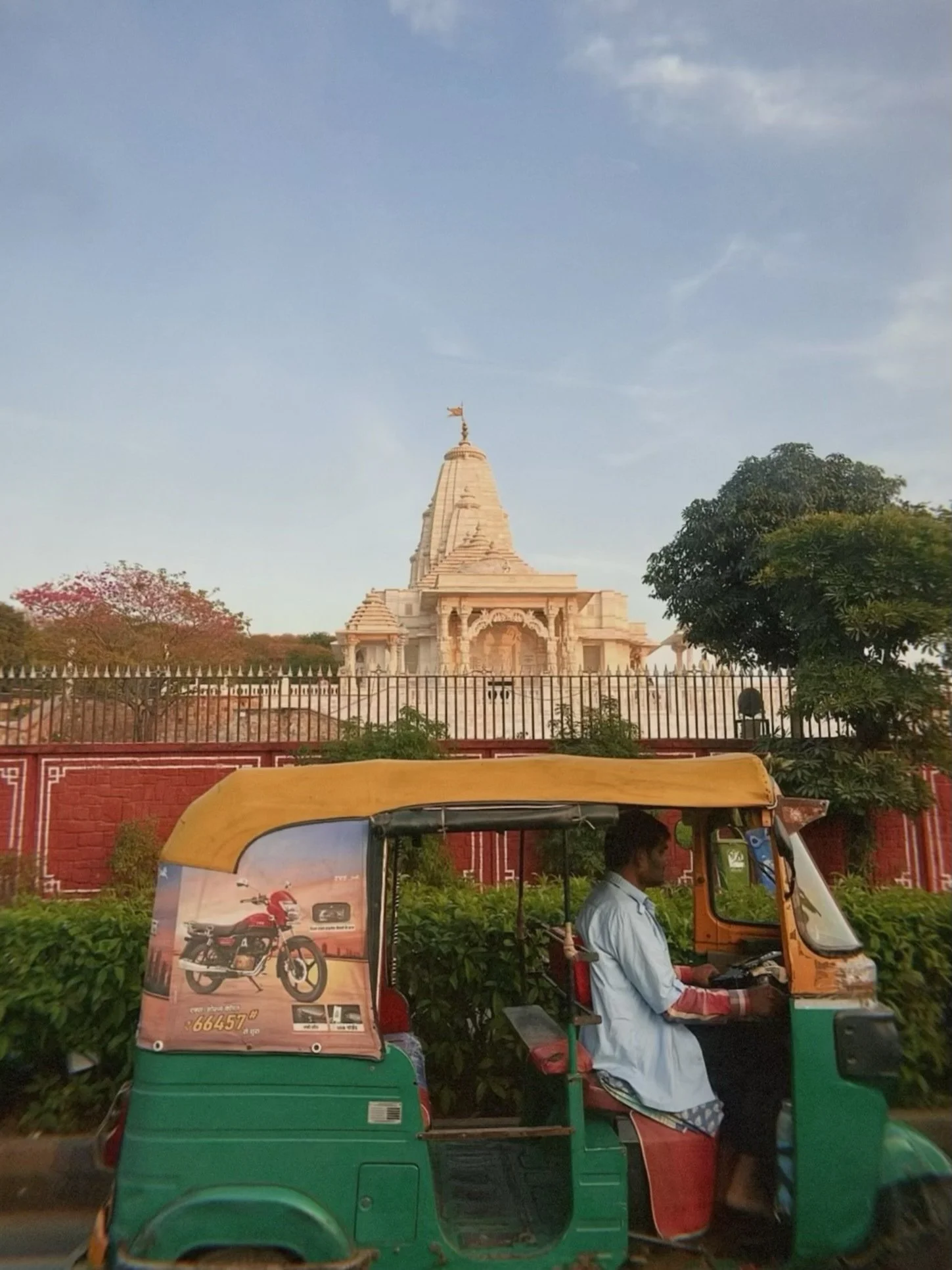
I spoke to every driver and guide we encountered—who also spoke English—about their experiences driving. One person, in particular, shared with me that the disorder is order in his perspective. We noticed some of the order in communication immediately. There are different types of honks: to notify, to assert, and to exclaim (in frustration); pedestrians use their arms to assert their position; motorcyclists nearly always have a foot on the ground when navigating intersections. In adapting to this order, we took more tuk tuks once we realized that they could navigate the snail-paced traffic more efficiently, and we only walked in markets and historic sites where we were confident we wouldn’t be at risk of getting hit. In places that are so different from the one you are visiting from, you need to adapt.
Our cities shape our “normal”
I am always surprised by my American-influenced desire for efficiency. I am the type of person who likes a leisurely morning then rushes out the door when I am inevitably late, much to the chagrin of my husband. However, my lateness threshold is usually 5-10 minutes to a social engagement, and even shorter when it comes to work—every time I take the bus, I’m running. In Jaipur, we were 45 minutes late to a dinner reservation because of terrible traffic and no one batted an eye. I can’t speak to whether lateness is accepted across all types of situations in India, but I can certainly say that the slow traffic makes it feel acceptable.
Being from Chicago originally, I would often plan for 45 minutes to an hour to get anywhere, on the train or in a car. The sheer size of the city meant that you would need to plan to arrive early to even have a hope of arriving on time. Driving in Nashville has made me soft. I expect to get to my destination in 20 minutes and usually on-time if I’m taking city streets. I know Nashvillians complain about parking, but compared to Chicago, trust me, we have it easier here. On the other hand, taking the bus in Nashville means you could be late even if you take an earlier bus, especially on local routes. A culture of efficiency and the worry of being late coupled with the unreliability of public transportation drives us to—well—drive. The cities we live in shape our perception of what is normal—adapting to anything different can be challenging and stressful.
The feeling versus the reality of safety
Our first day in New Delhi with serious jet lag was very stressful. The honking patterns were unending and I seriously felt as though we would be in an accident many times. The first night, our Uber’s car actually broke down on a very busy road where we had to wait for a new car to arrive. While we were getting an idea of the rules, it did not make us braver as pedestrians, especially in the dark. Over the 10 days we were there, it was clear we became much more familiar with the sounds of the streets and the standard motions of travel. I was starting to speculate whether the slow speed of traffic and the constant vigilance of drivers actually makes for a lower fatality rate. Based on some cursory investigations, New Delhi doesn’t top the global fatality lists per capita, but the sheer number of pedestrian and motorcycle fatalities per year makes for some pretty scary numbers: in 2022, there were over 1,500 preventable roadway fatalities in New Delhi. Remember, this is a city of 35 million people, so the rate of fatalities per capita is actually lower than Nashville’s rate of 136 roadway fatalities with a population of under 700,000 in the same year. Those numbers put some things into perspective… If we go off this per capita data, I was right.
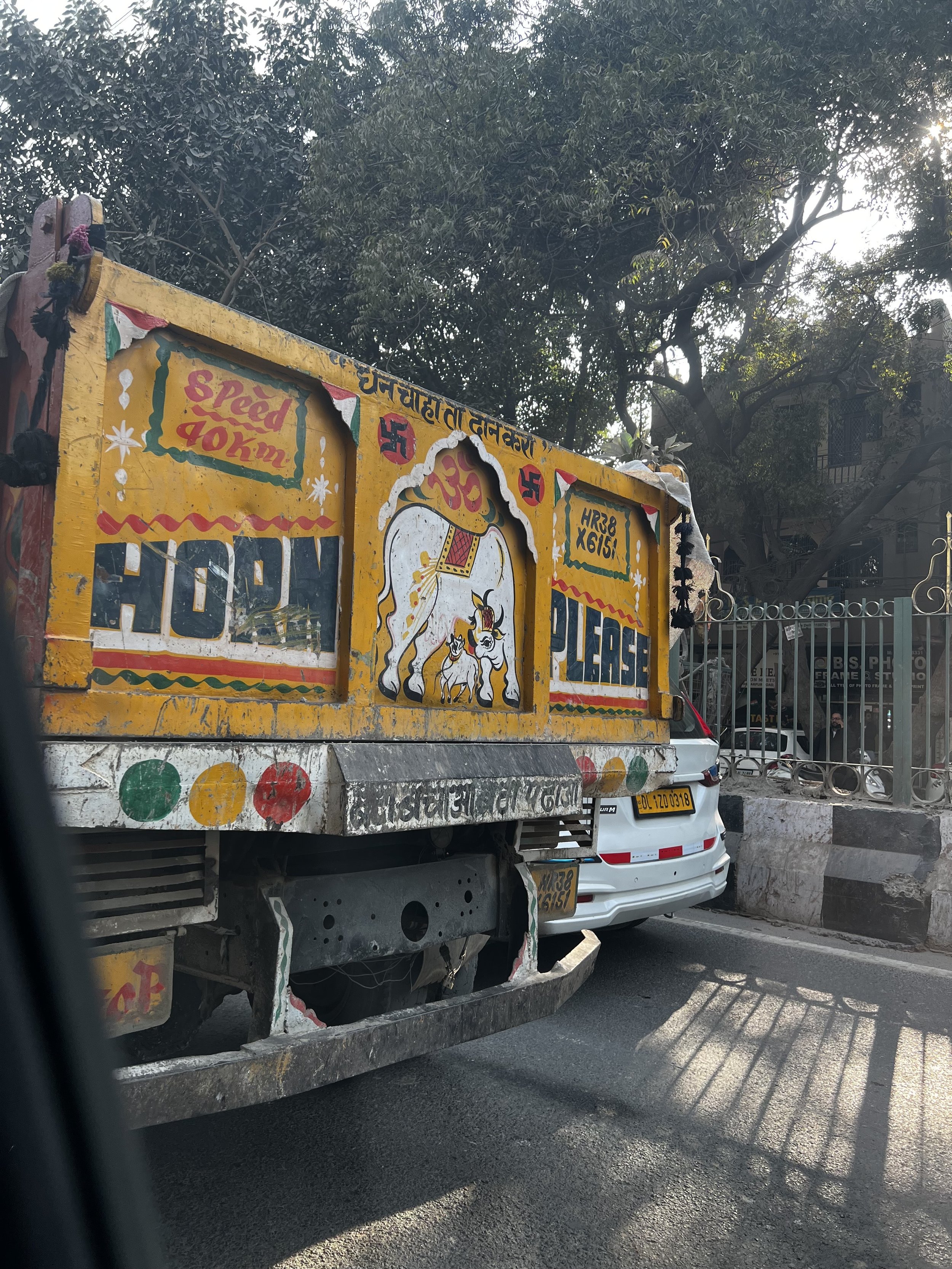
Horn rules, New Delhi
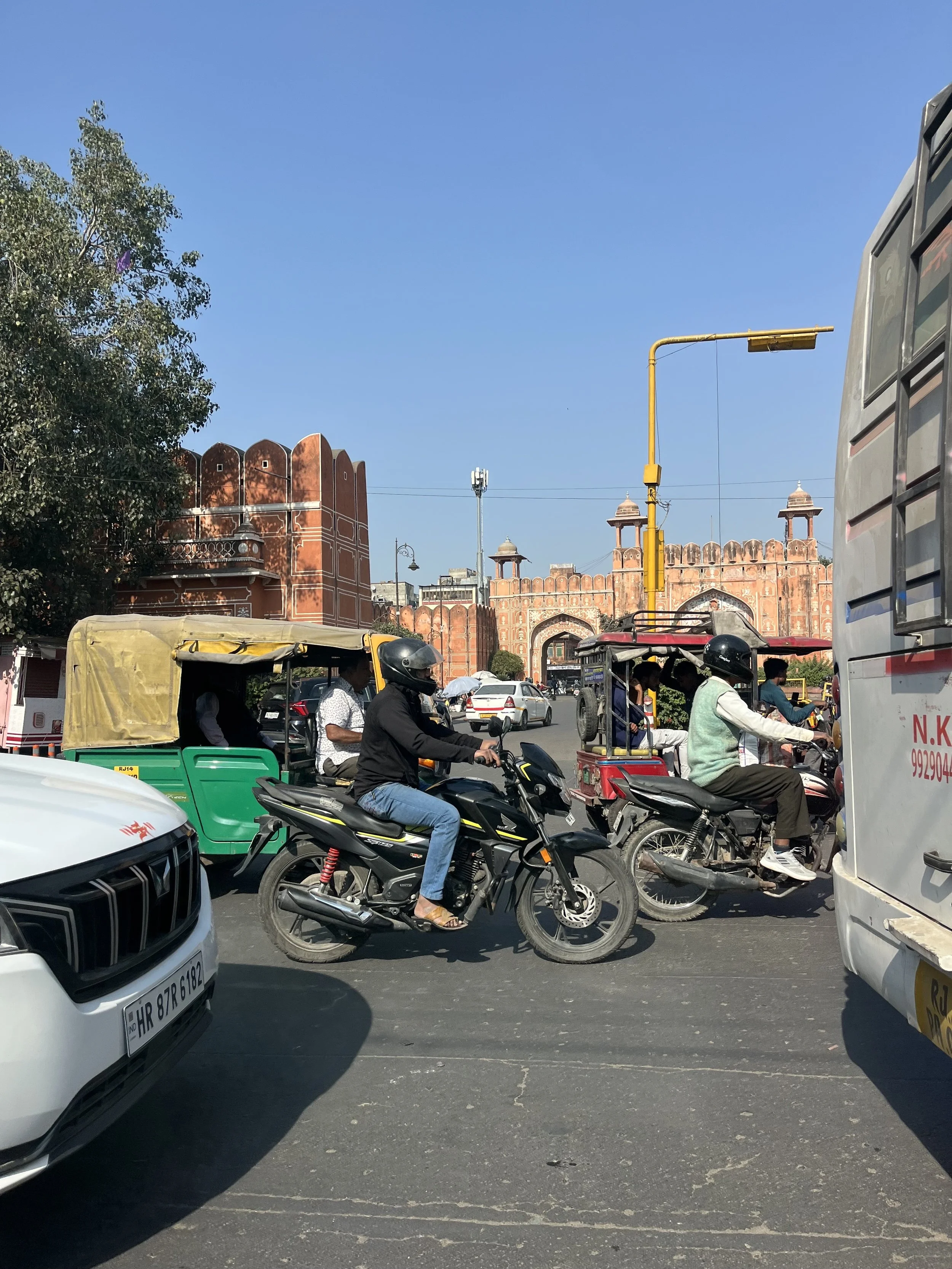
Outside walled Pink City in Jaipur
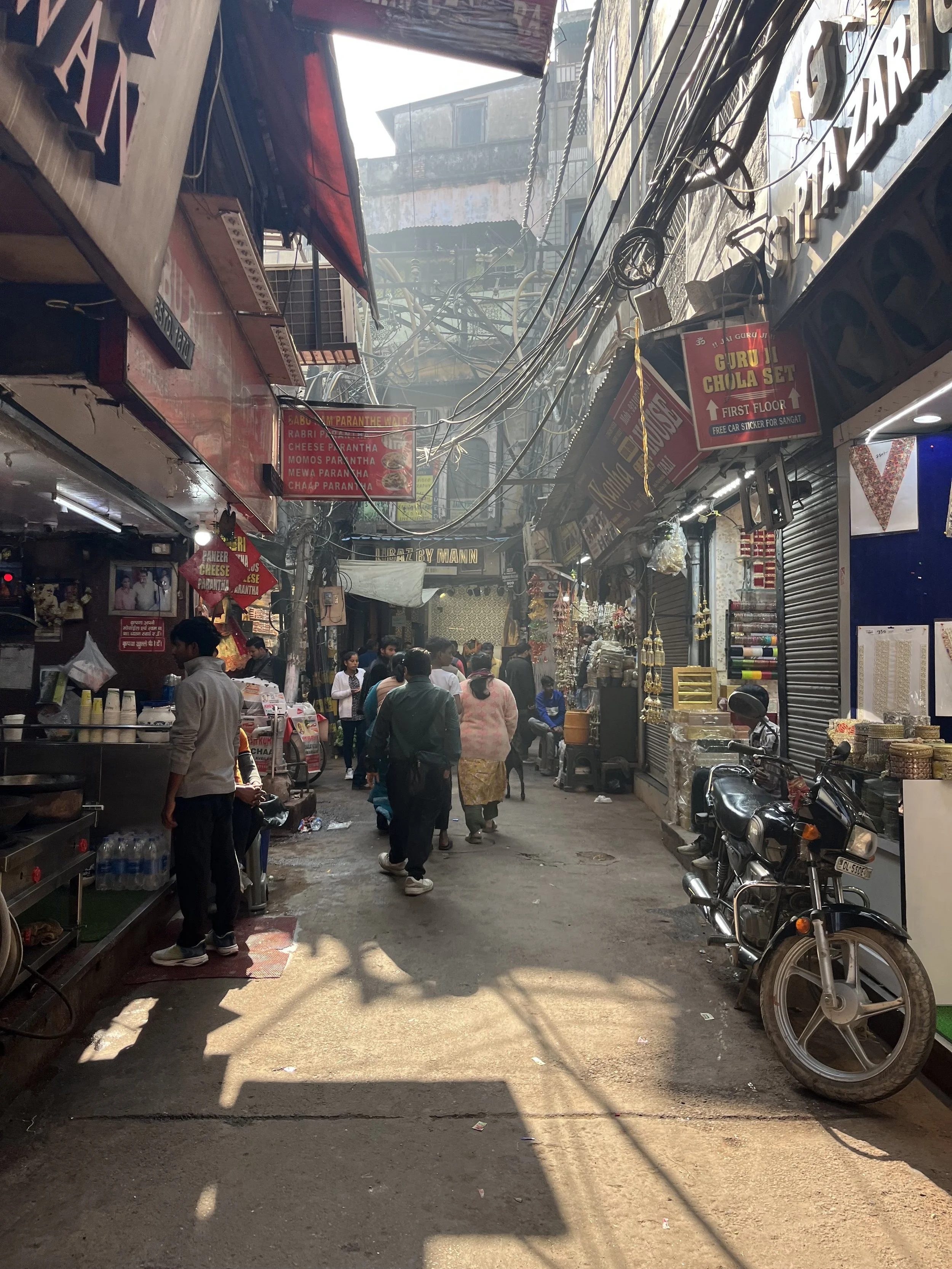
Chandni Chowk, Old Delhi
Regardless, in New Delhi, it felt highly uncomfortable to walk around most places other than Chandni Chowk in Old Delhi and other pedestrian-forward areas, like Khan Market. In Nashville, it’s still highly uncomfortable to walk in many areas of the city except for dense retail and entertainment districts. As a resident of Nashville, I know the “rules” to look out for myself as a pedestrian, and I’m sure residents of New Delhi feel the same. There’s a lot more that aligns Nashville and New Delhi than you would expect. Both cities’ methods of roadway design put the onus on pedestrians to look out for themselves, but the reason why New Delhi is technically “safer per capita” is probably because the drivers are more vigilant for roadway conflicts than your average Nashville driver.
Why is that? Our major streets are designed to minimize conflict and maximize efficiency for cars, with all major streets actually being “stroads.” Community Education Coordinator, Mara Echterling, actually just put out a great informational Reel about stroads—check it out!
Making the case for sharing
It is very important to me to travel to foreign countries to experience the energy of their cities and compare it to my own, and I am lucky to have great privilege to be able to travel. Experiencing contrast reminds us of the myriad possibilities that we have with city and community design, and this can make us more adaptable to change in the places that we actually live. Shared streets are in the transportation planning handbook in the U.S, but they are not the norm. NACTO recommends two types—Residential Shared Streets and Commercial Shared Streets—which, unlike in India, are not main thoroughfares meant to move traffic. I would love to see shared streets pop-up more informally to adapt Nashvillians to more formally designed shared streets.
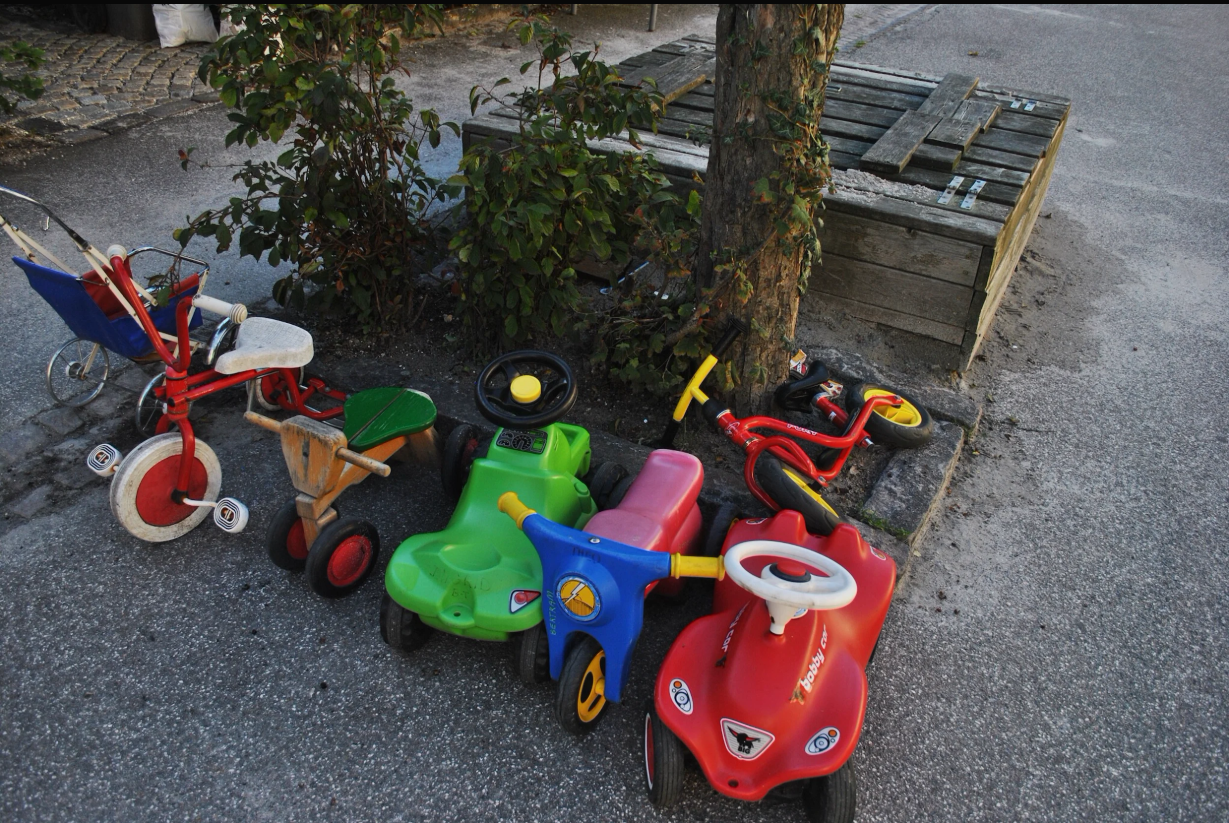
Street in the Potato Rows with mini-mode parking and a sandbox acting as a chicane
Neighborhood streets in Nashville that don’t have sidewalks already function like informal shared streets because you have no choice except to walk in the road, but there are some easy design elements that could further demonstrate to cars that they are not king: 1) rumble strips, 2) speed bumps, 3) chicanes or other pathway interrupters. In Copenhagen, there is a neighborhood called the Potato Rows—designated one of the most livable neighborhoods in the world—and their streets have various elements that act to interrupt vehicle traffic. You might find a picnic table or a playhouse, a planter or a sandbox in the street quietly reminding cars to pay attention.
I would never make a case against sidewalks or bike lanes, but they further divide our transportation modes. Drivers barely have to pay attention when there are minimal conflicts. Roads are built for cars to move efficiently through a space, but if we can’t change this mindset, I hope we could, at minimum, carve out more space for pedestrians to move freely and comfortably.
Pedestrian-First Takes Sharing to the Next Level
On our way back to the States from India, we stopped in Istanbul, Turkey and walked endlessly on Istiklal Cadessi, which is a pedestrian-first street near where we stayed. We were so happy to walk freely—a dramatic difference from our level of comfort in India. Pedestrian-first streets are comfortable and joyful wherever you experience them. All the ones I’ve experienced in the U.S.—including Lower Broadway on weekend nights—countries across Europe and Asia, have brought me a sense of peace in safety alongside a sense of vibrant commercial energy. Plus, I will remind you that major world-renowned pedestrian streets like Istiklal in Istanbul and Strøget in Copenhagen were jammed with vehicle traffic in the midcentury before they converted.
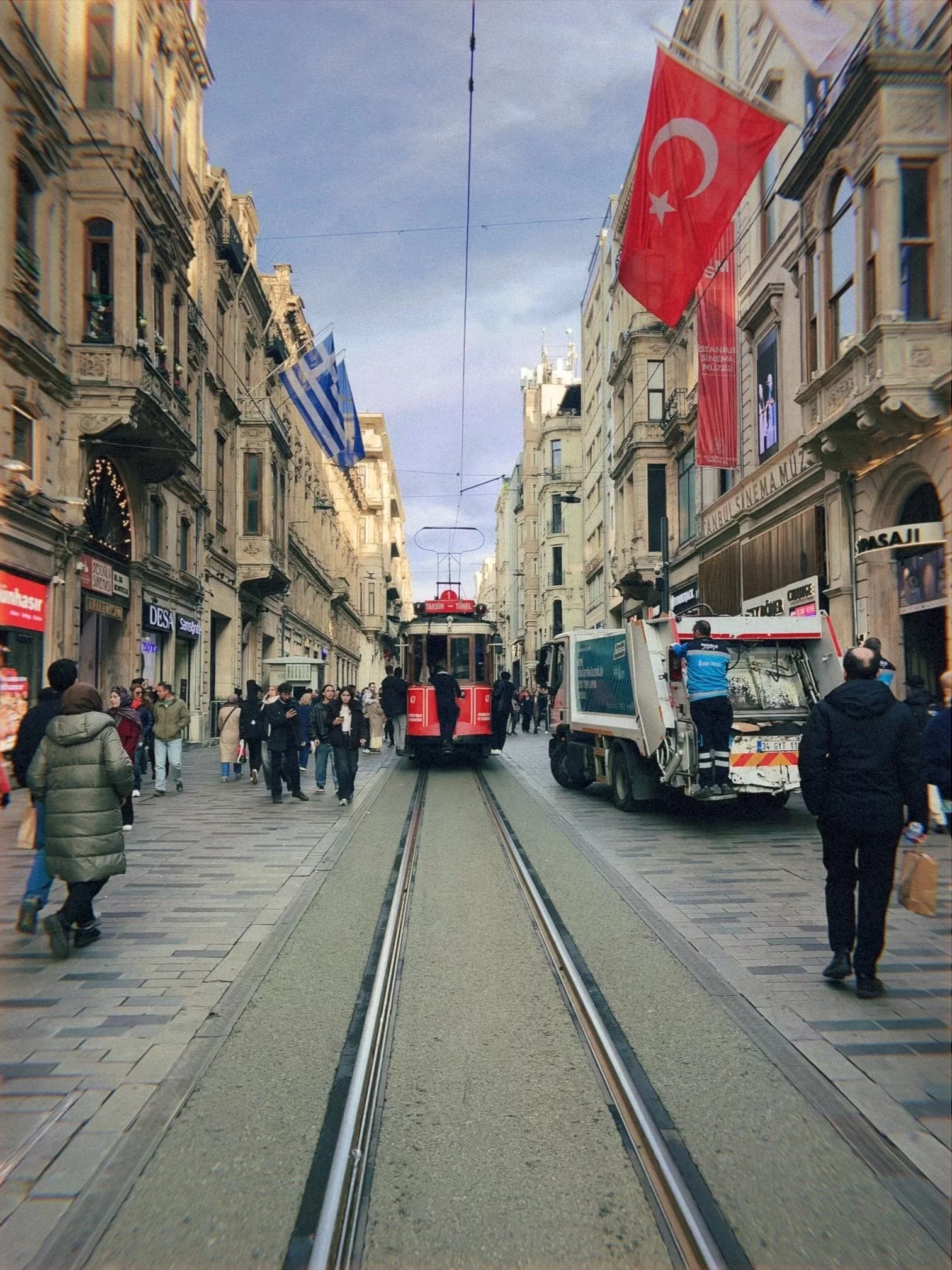
Istiklal Cadessi with trolley and garbage service
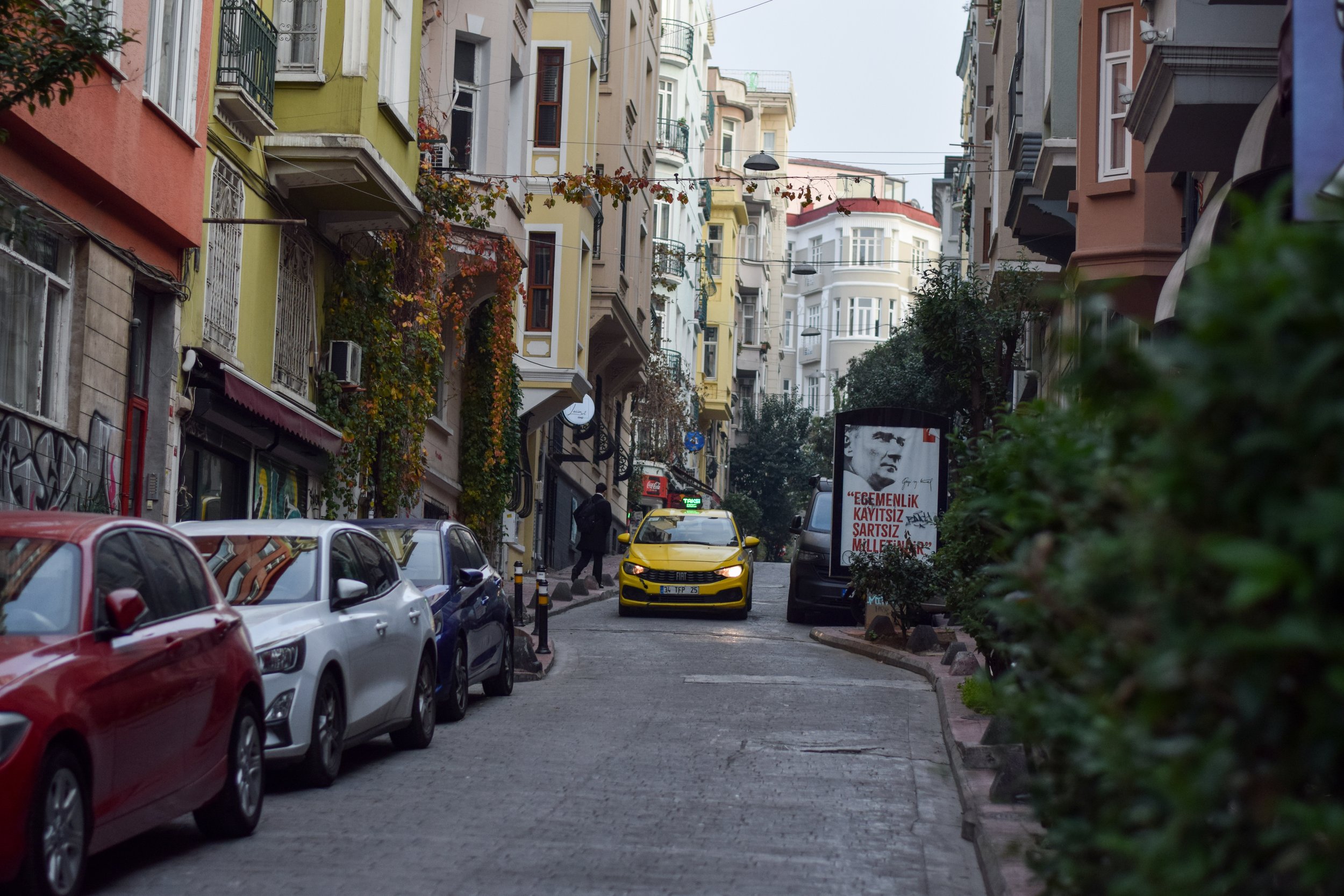
Street in Istanbul with chicanes
However, Istiklal isn’t quite pedestrian only. It has a trolley line right down the middle and some vehicles will slowly drive through intersections if they wait patiently for a break in pedestrian traffic. In this respect, the drivers know the rule that they have to watch out for pedestrians. This demonstrates that pedestrian-first doesn’t mean you can’t bring in delivery vehicles for unloading, but it does mean that their operations might just have to move a little more slowly. I still believe that Lower Broadway could be fully pedestrian-first, even with the coming Queue-Jump lanes for buses on 4th Ave N. Buses would be some of the only vehicles that could pass through a pedestrian-first Broadway. Traffic can barely make it through those intersections as it is! There are so many precedents to prove that more people, not less, would spend time on Broadway if it were converted to pedestrian-first. However, one year after the deadly vehicle attack in New Orleans, I am interested to see the effects of the new retractable bollards that are being implemented on Broadway for crowd safety.
Where have you traveled that has given you inspiration for local change? What are your dreams for Nashville shared streets or a pedestrian-first Broadway? Tell us in the comments below!