By Luke Boudreaux, Research Intern
10 min read The Kurdish community has been steadily growing in our city since the 1970s, making the Nashville Kurdish population the largest in the nation. If you have ever been curious about the deep roots of our Kurdish neighbors, follow along with this narrative introduction that presents the case for a more formal representation of placemaking for the Kurdish community in South Nashville. T/W: The history depicts graphic violence for the Kurdish community globally, so please proceed with caution.
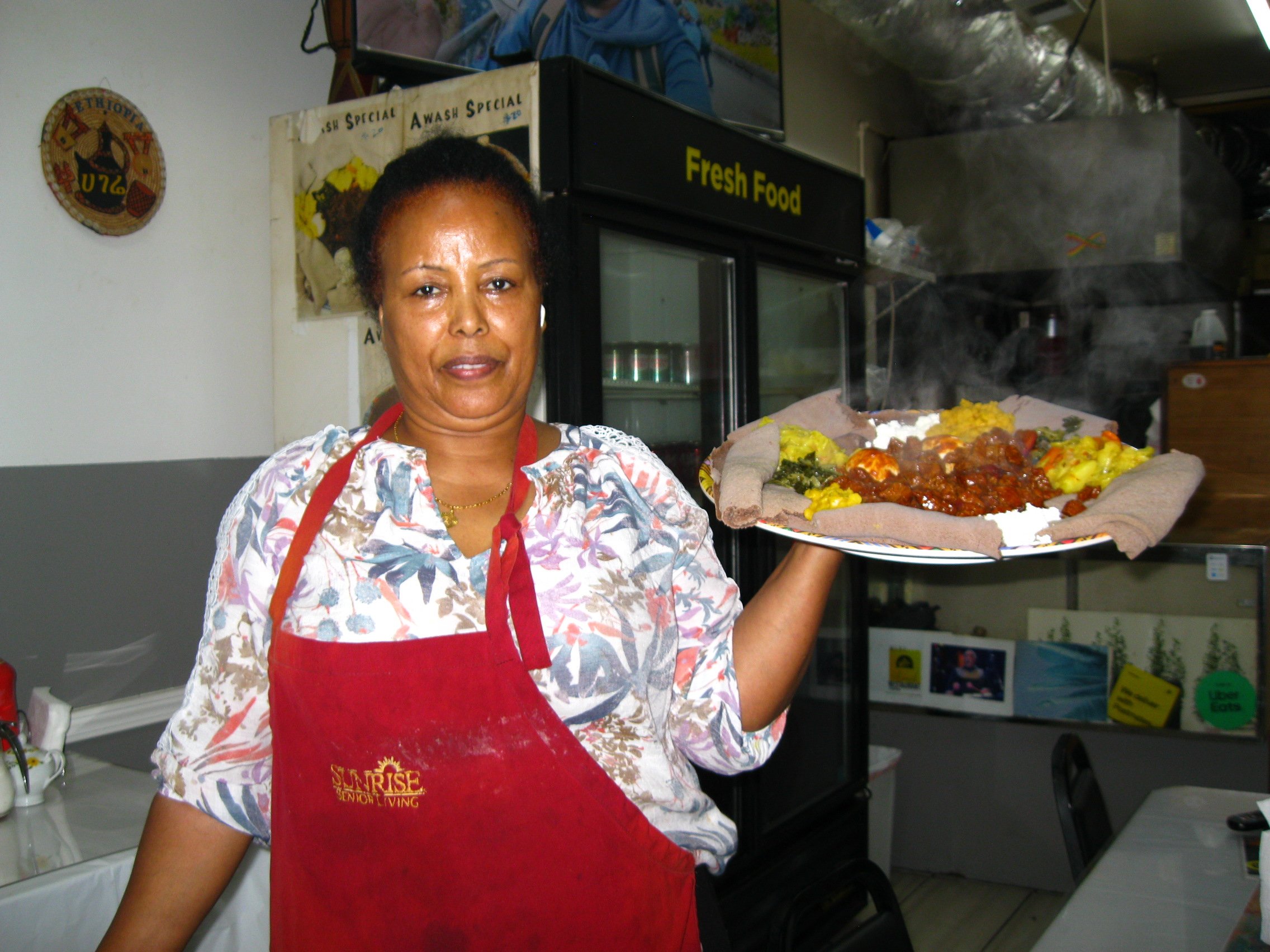
Z and her signature Awash Special, Awash Ethiopian Restaurant (Photo by: Luke Boudreaux)
When the hallmarks of downtown start to lose their Music City charm, South Nashville takes the stage in offering a unique cultural identity infused with a growing global appeal. In five aisle grocers, Hijabi mothers and East African gentlemen buy fresh bread and butchery. Across the street, late night Latin plazas are bordered in by Palestinian gold dealers and pan-Asian markets. Further down the road, an Ethiopian Orthodox Church sprouts amidst a congregation of international auto shops. And just when you think you know Nashville, the world gets in the way. Mesoamerica meets the Middle East. Burma sits a few blocks away from Egypt, India and Somalia. A simple corridor quickly unravels and expands into something much more - a world of differences coming together within the bounds of Metro Nashville.
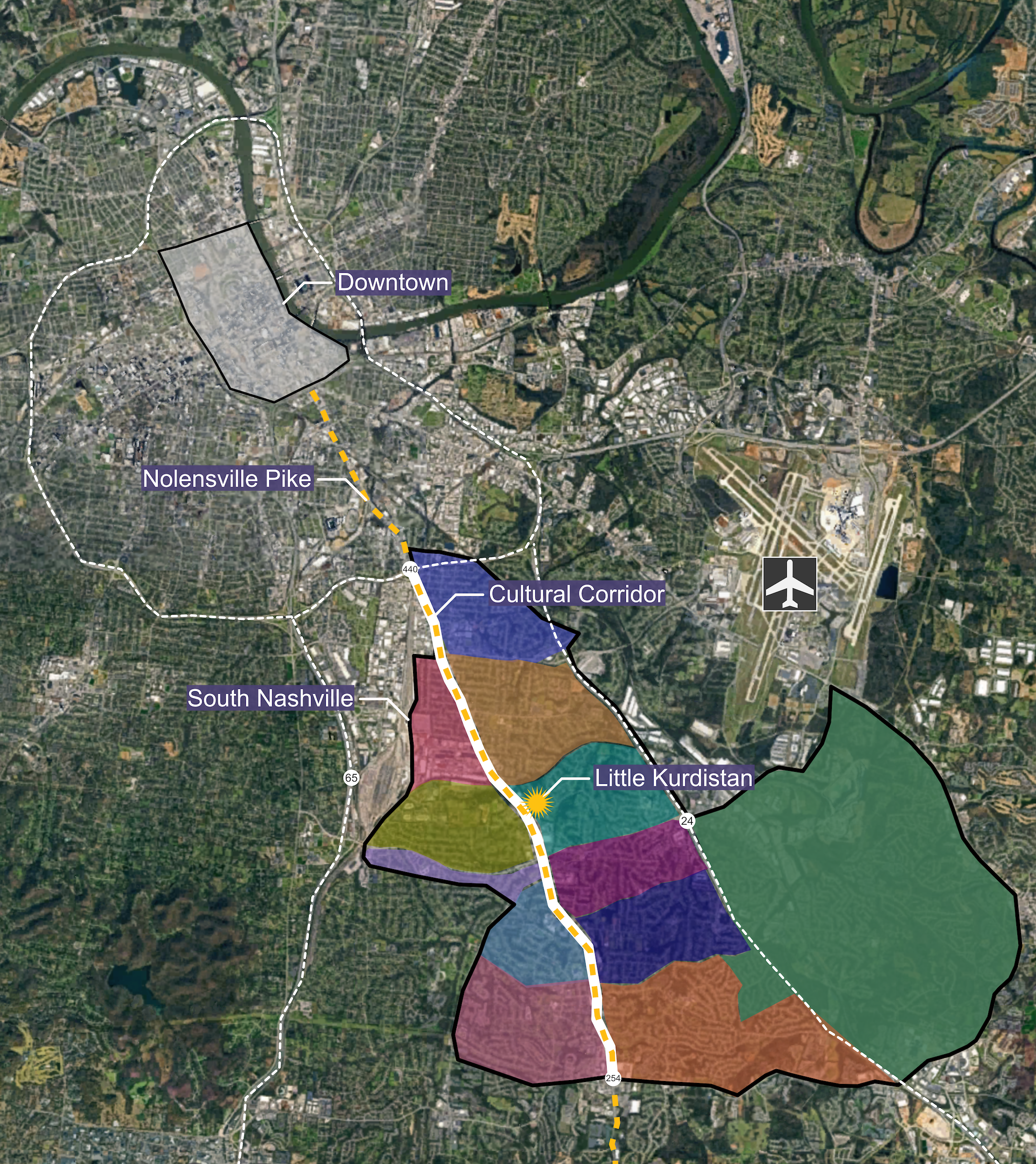
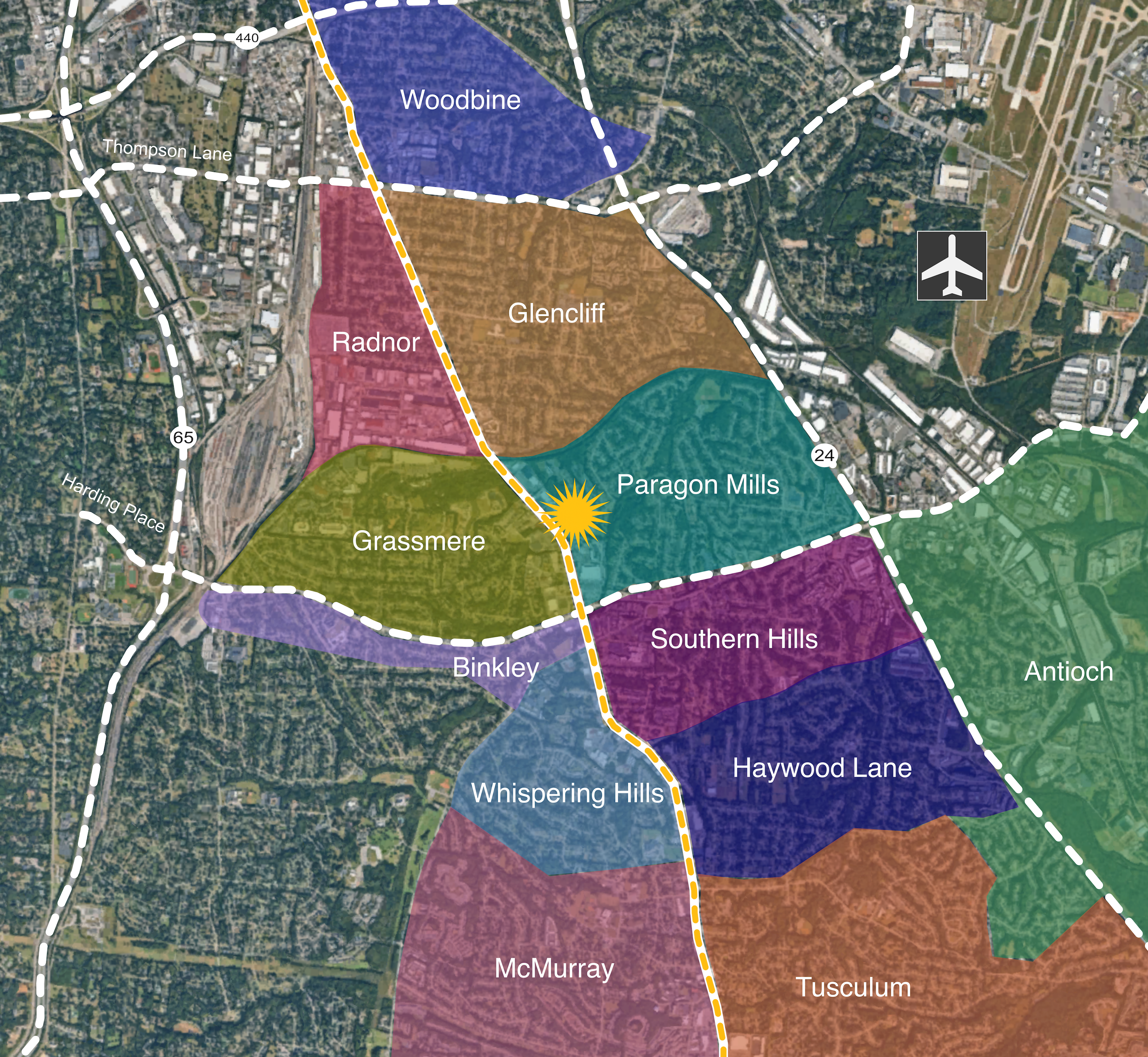
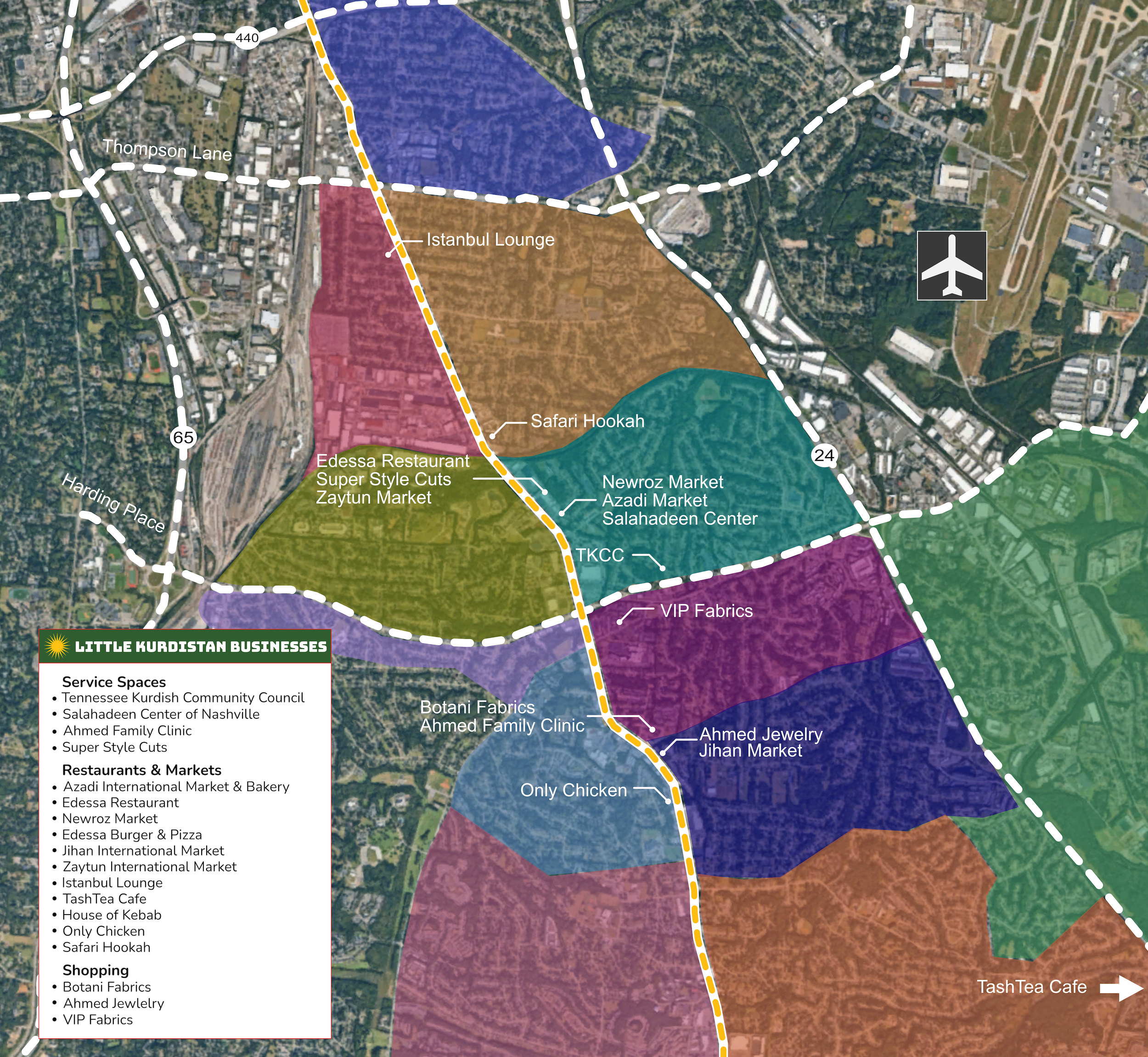
Maps of South Nashville Neighborhoods and Little Kurdistan Above (By: Luke Boudreaux)
Becoming an Unlikely Global Center for Kurdish Culture
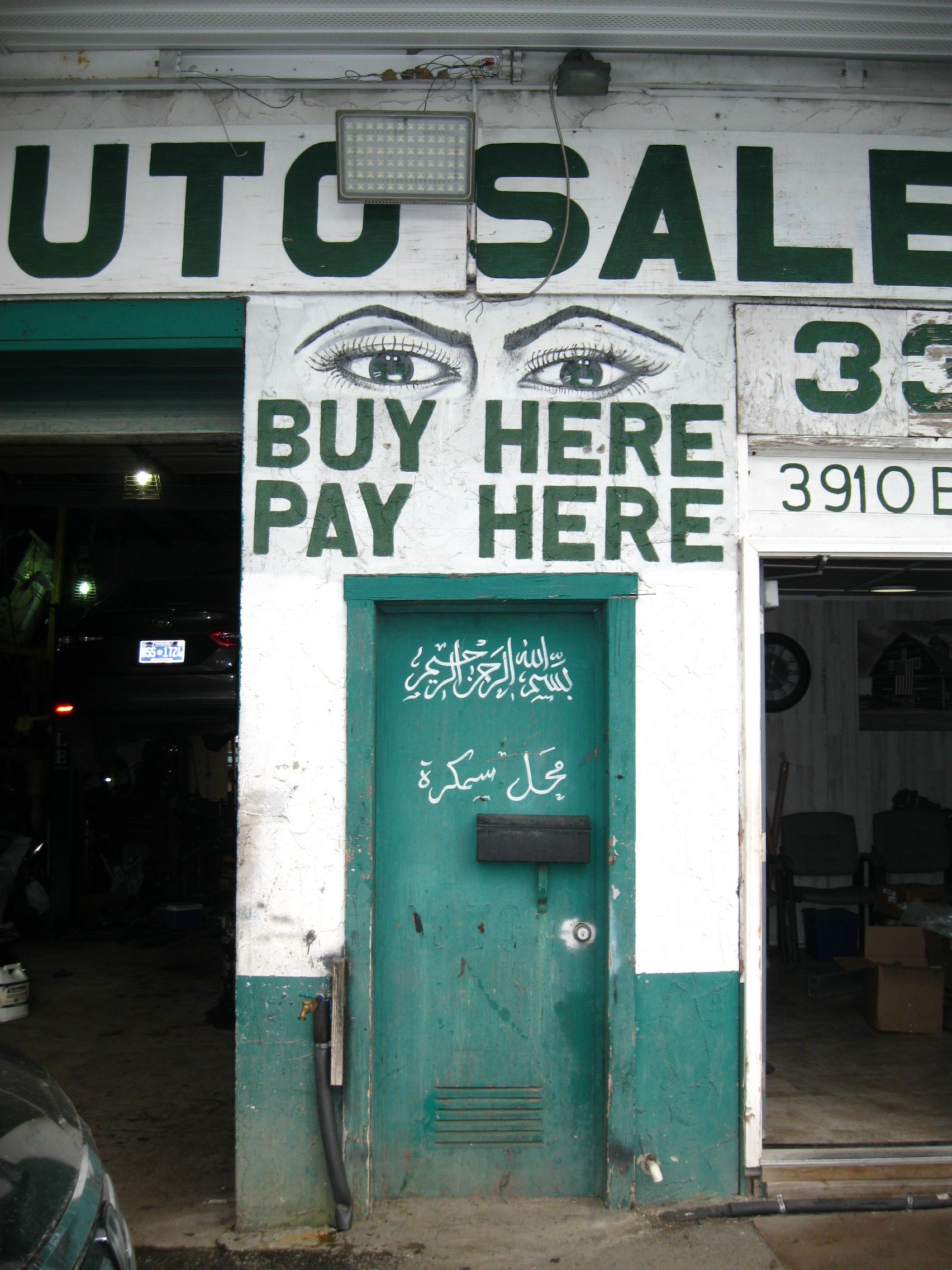
Bismillah, Green Auto Sales (Photo by: Luke Boudreaux)
Stretching six miles across a hundred nations, Nolensville Pike is Nashville’s international thoroughfare. The pike offers a variety of cultural spaces for dining, entertainment, retail, and religion and supports over 100,000 immigrants across the city. From 440 in the north to Old Hickory Boulevard in the south, many of the corridor’s utilitarian structures have been revitalized into a global enclave that draws from all geographies: Latin America, South and Southeast Asia, North and East Africa, and the Middle East. Through adaptive reuse practices, the communities here have become architects of their own environment, crafting a space that accommodates their cultural needs: gutted malls become international markets, outlets are flipped into event centers, and residences are reshaped into restaurants and vital social centers. In the process, South Nashville has thrived as a multicultural haven for entrepreneurs, creatives, and advocates while obtaining a more worldly Nashville identity.
However, where cultural diversity has been able to flourish, the integrity of the pike remains a critical issue. Interstates form physical and cultural borders in every direction around South Nashville. Fast paced highways cut through public spaces and residential neighborhoods, deeming it unsafe for pedestrians and bikers, further complicated with a lack of civic infrastructure. Businesses feature murals, neon lights, and billboards that draw attention away from barred windows, weathered awnings, and deteriorating storefronts all the while a landscape of nondescript architecture bearing the hallmarks of gentrification slowly creeps into the neighborhood. But within the tension of spatial restrictions and cultural flourishing, one community has been influential in reshaping Nashville’s cultural and built environment over the last 50 years: Nashville’s Kurdish Community
Nashville’s Kurdish community, estimated between 20,000-25,000 members, is the largest in the nation and is well represented on the pike for its network of fabric shops, jewelry stores, restaurants, and community organizations. Many may familiarize themselves with popular Kurdish cultural spaces of dim lit hookah lounges and Near East eateries serving sizzling shawarma on saffron colored beds of rice. But Kurdish presence in Nashville is a far more complex study, presenting a testimony of ethnic genocide, armed resilience groups, and a quest for a nation of their own.
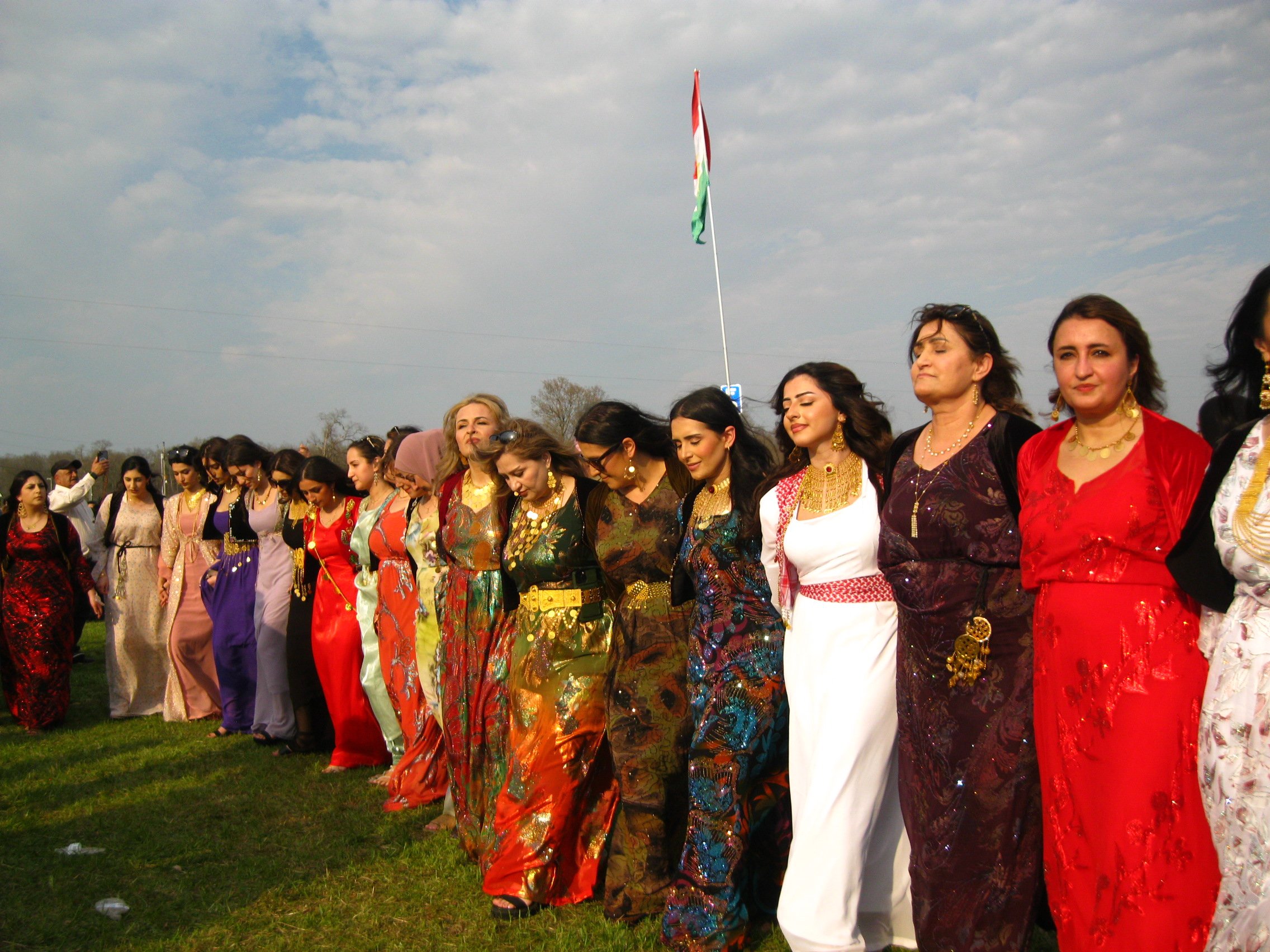
Kurdish Dancing at Newroz 2026 (Photo by: Luke Boudreaux)
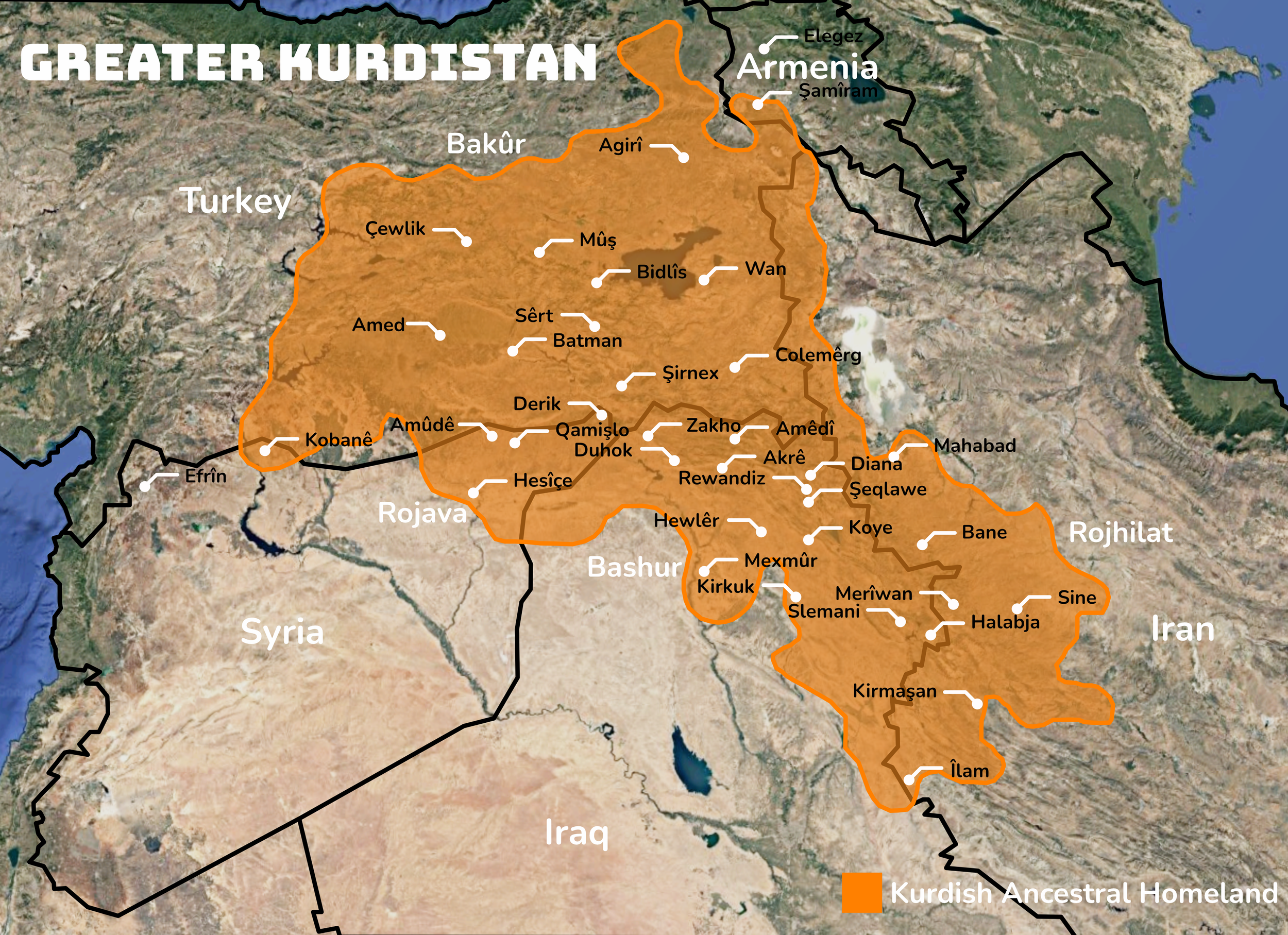
Map of Kurdistan Homeland and Cities (By: Luke Boudreaux)
Broadly, the Kurds here and the 40 million worldwide are a linguistically, culturally, and politically diverse group of people with an ancestral homeland spanning Bashur (northern Iraq), Rojhalat (northwestern Iran), Bakur (southeastern Turkey), Rojava (northeastern Syria) and parts of Armenia. For over a century, they have experienced oppressive political powers in the Middle East, resulting in a semi-autonomous region within northern Iraq and a diaspora of 2 million people spread across Europe, America, and the former USSR. But while the rights to their homeland are still contested abroad, one Kurdish community has spent generations building a foundation of solidarity within Tennessee’s capital city.
The road to Nashville was not so easily endured, as it was paved by tragic political circumstance and constructed from the ruins of entire Kurdish communities. In 1975, the movement for an autonomous Kurdish region in Iraq collapsed, sparking the beginning of the Kurdish exodus to Nashville that would peak in the 1990s. Under Kurdish political leaders, 700 Kurds were selected to go to the United States with goals of receiving an American education, obtaining steady employment, and informing the U.S. of the political oppression occurring in Bashur under the Ba’athist party. Among them was Hikmat Bamarni, one of the first Kurds in Nashville who later became a leader of the community from 1977-1979. Recalling the violence in Kurdistan that motivated his migration, Bamarni explained, “I saw how they were using airplanes to destroy villages, kill innocent people, and attack a university. In ‘77, they killed about 100 students.” The toll was only increasing.
Nashville was not the first city that came to mind for settling down, but by May 1st, 1976, organizations like Catholic charities of Tennessee welcomed 9 Kurds to rebuild in America’s country capital. In 1977, the population increased to approximately 40 people as others began to migrate from different parts of the country, such as New York, North Dakota, California, D.C., and Texas. Again in 1979, another group came from Iran in the wake of a theocratic revolution and the establishment of the Islamic republic, raising the total in Nashville to a near 100 people before the end of the decade. As the first Kurds in Nashville, they faced an uncertain future, unclear of how long they would remain in the United States and how soon they might return home. Their ambivalence reflected a greater turmoil toward the political instability within Bashur, one that would manifest through campaigns of ethnic erasure in the upcoming decades.
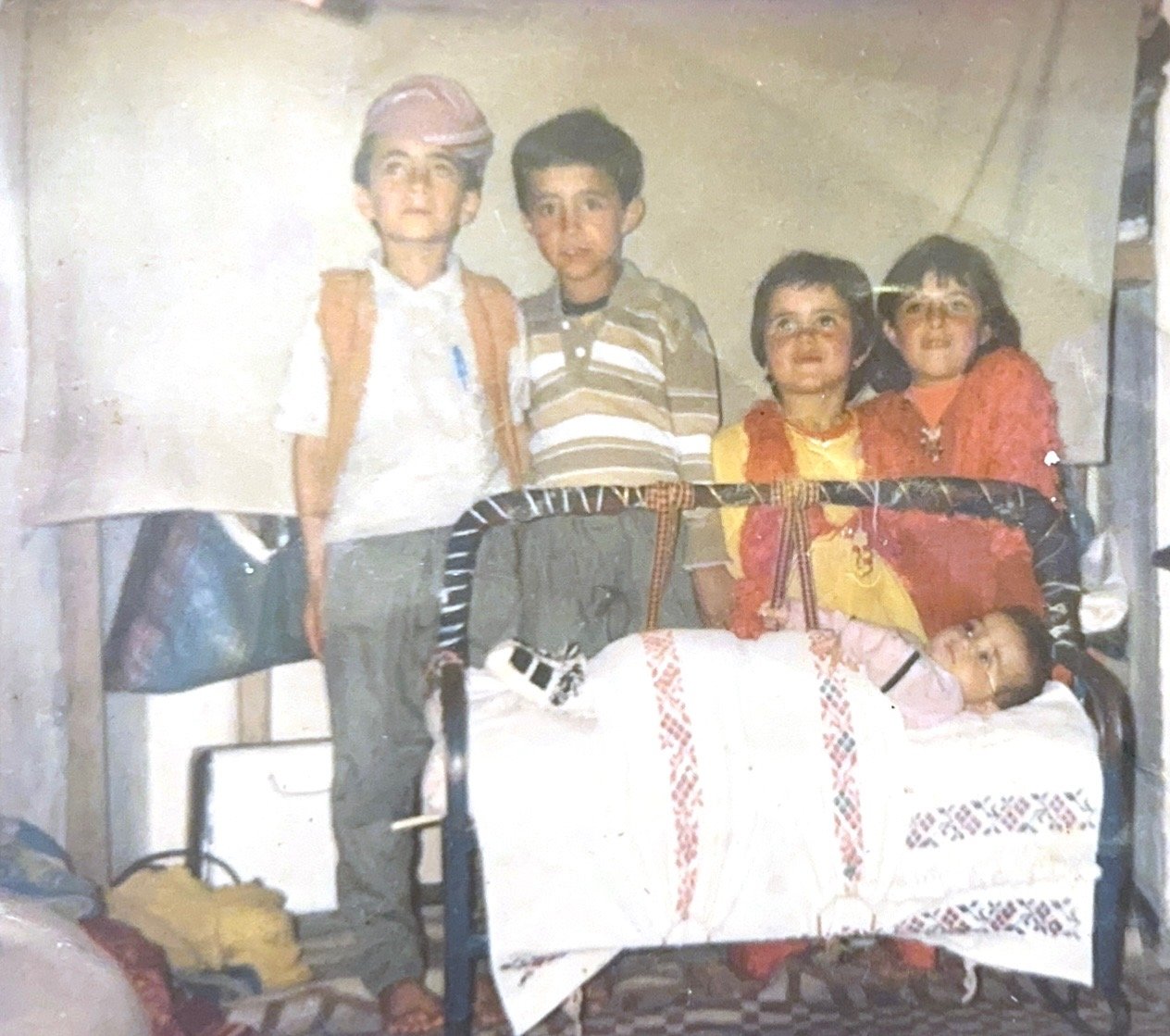
KDC member’s siblings in Diyarbakir refugee camp 1989 (Photo provided by Helen Osman)
On March 16, 1988, an urban center on the border of Bashur and Rojhalat became the site of a grave massacre, foreshadowing many of the tragedies yet to come. Over 5,000 people would die in Halabja after explosives and chemical bombs were dropped on the town, causing symptoms of chemical burns, convulsions, blindness, hemorrhaging, and asphyxiation. Thousands fled for their survival and escaped immediate violence, but to this day still suffer from chronic health complications. The bombing of Halabja was only a precursor of Saddam Hussein’s Al-Anfal campaign, which attempted to “Arabize” northern Iraq and seize oil-rich territories. Through gunfire and gases, Saddam and the Ba’athist party ravaged Kurdistan and destroyed over 90% of the rural Kurdish homeland–roughly equating to 1/3 of the size of Tennessee. 1.5 million people were displaced, a number twice the size of Nashville city-county population, and a near 182,000 people were murdered.
Why “Place” Matters to the Kurdish Community
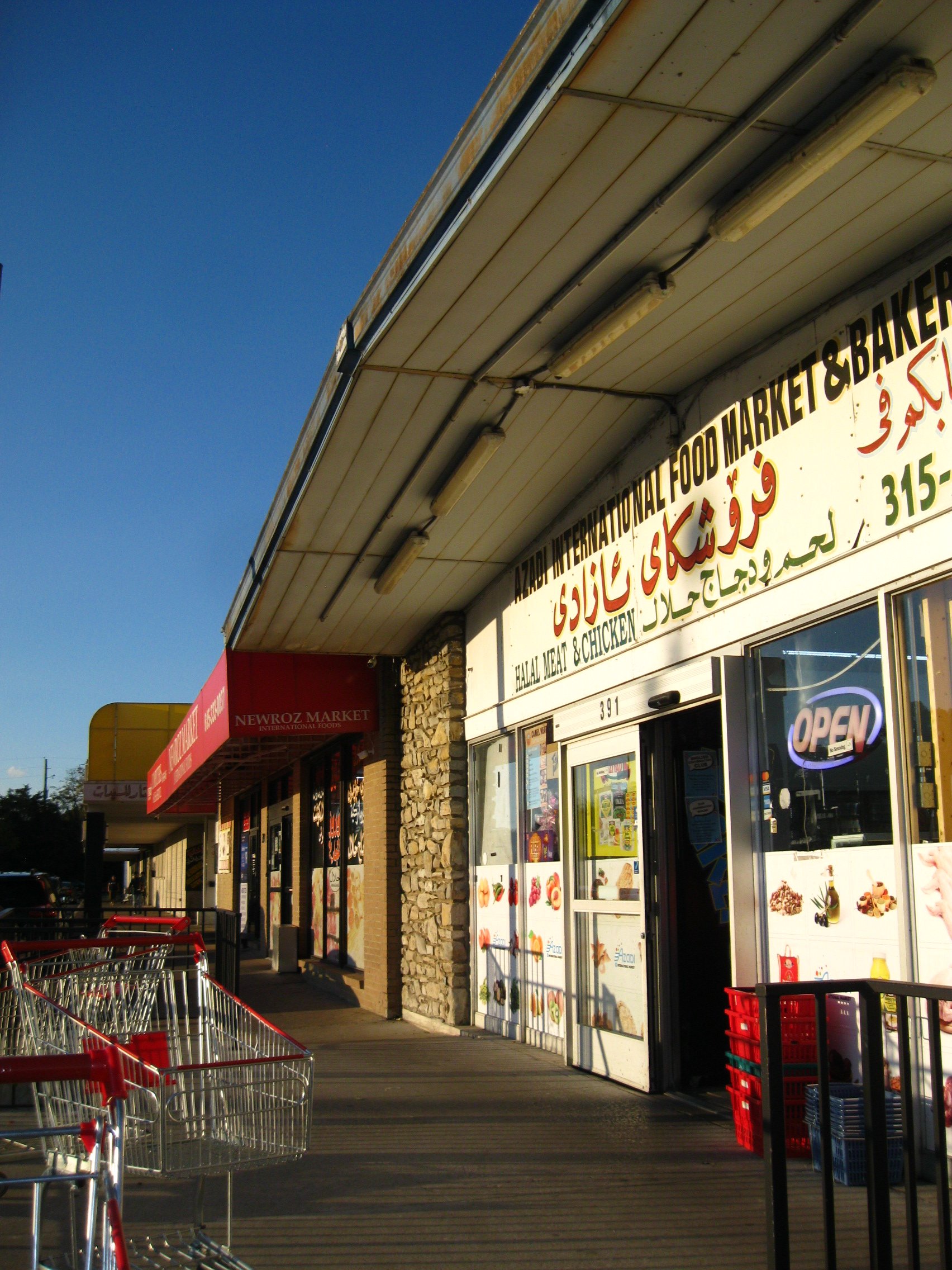
Azadi International Market & Bakery in Little Kurdistan (Photo by: Luke Boudreaux)
The systemic removal of Kurdish space through bombing, bulldozing, and repaving of over 4,000 communities highlights an inseparable connection of Kurdish identity to the built environment. Saddam Hussein’s attempt to erase Kurdish presence from Bashur was not limited to the execution of entire Kurdish communities but also the complete destruction of architecture and urban planning within them. Therefore, reestablishing Kurdish space means more than creating a place to call home, but is an act of cultural resilience, embodying ideas of personhood, solidarity, and identity. Since the establishment of the KRG in Bashur, the regional governorate has made it a priority to rebuild Kurdistan through great architectural endeavors and infrastructural feats—a possible correlation of identity construction through space after sustained attempts of its erasure. However, the rebuilding of Kurdish society to express identity and placemaking is not restricted to the Kurdish homeland but has also expanded to diaspora communities abroad. More specifically within Nashville’s context, Kurds here have engaged in a generational process of establishing themselves in the city after experiencing firsthand the necessity of spatial security.
While destruction rippled throughout Bashur, Nashville was gaining momentum as a golden opportunity for a diasporic reunion. The city was in a progressive state of economic ventures, urban development, and refugee settlement programs, paired with an already established Kurdish community that had lived here for nearly 20 years. From 1992-1993, 4,500 more Kurds came to America, with many joining their loved ones in Nashville. Eventually, another wave of refugees came between 1996-1997 after a full-scale civil war erupted between two rivaling Kurdish parties fighting for political domain over Bashur. 6,500 refugees were evacuated from the conflict by U.S. armed forces during Operation Pacific Haven. Nashville’s Kurdish community continued to grow despite the turmoil back home, yet something was still missing that remained an important part of rebuilding solidarity—establishing Kurdish space in the city.
In 1998, Salahadeen Center was founded as a pivotal part of religious and cultural life for Nashville’s Kurds. It was the first Kurdish mosque in America and to this day remains a pillar within the community, offering Quranic classes, social spaces, and resources for families across Middle Tennessee. Over time, they have hosted photo galleries, professional workshops, and have partnered with local organizations throughout Nashville to further community interconnectedness. Through collective efforts, the mosque also bought land dedicated for a Kurdish cemetery where loved ones who have passed can be with their relatives in peace.
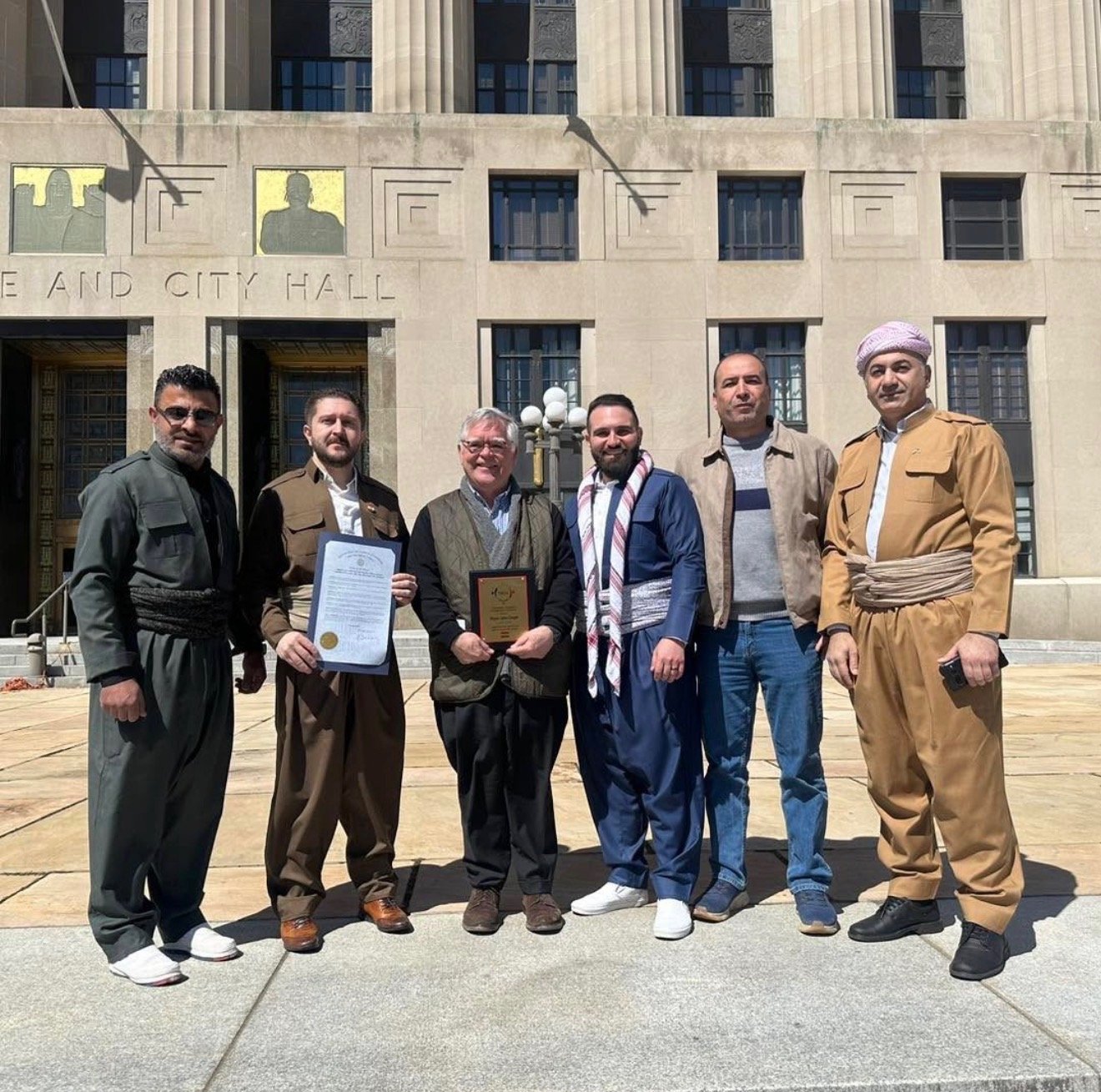
Proclamation with TKCC and Mayor John Cooper declaring Newroz as a Kurdish holiday on March 21st, 2023 (Photo provided by Tabeer Taabur)
In 2006, the Tennessee Kurdish Community Council would complement the center as a secular organization dedicated to supporting the Kurdish community with cultural, educational, professional, and domestic assistance. They are well-known as the organizers of Newroz, a popular new year festival in spring that welcomes thousands of people nationwide for a day of dancing, music, and fun filled festivities. TKCC has made many initiatives in uniting Kurds together within Nashville through lobbying, peace rallies, language courses, community partnerships, networking programs, legal assistance, and beyond. Tabeer Taabur has been the president of the TKCC since 2021 and distinguishes that the organization is not a political group but remains proactive in developing leaders in the community and launching initiatives that unite Nashville’s Kurdish diaspora.
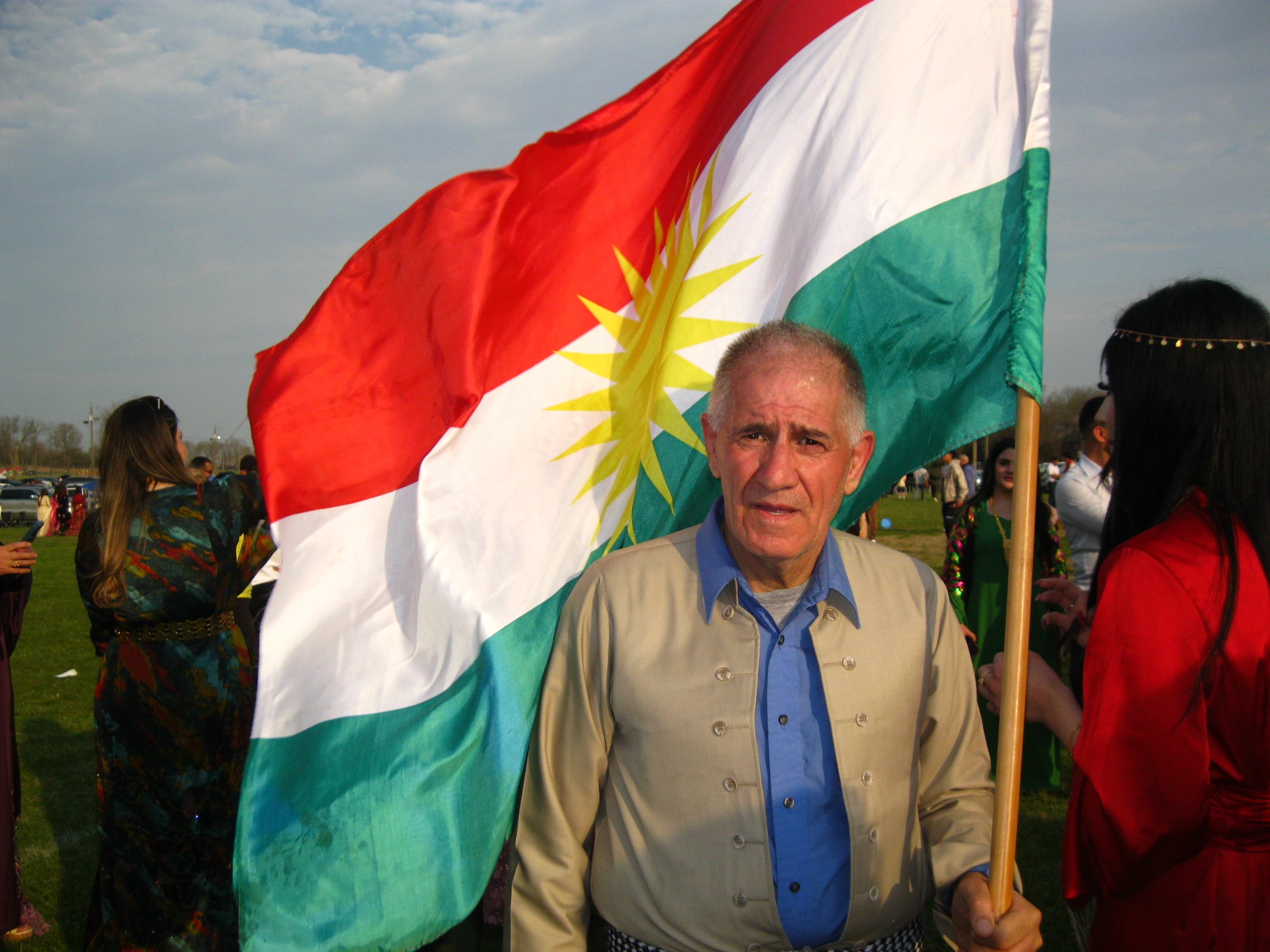
1st Gen, Newroz 2026 (Photo By: Luke Boudreaux)
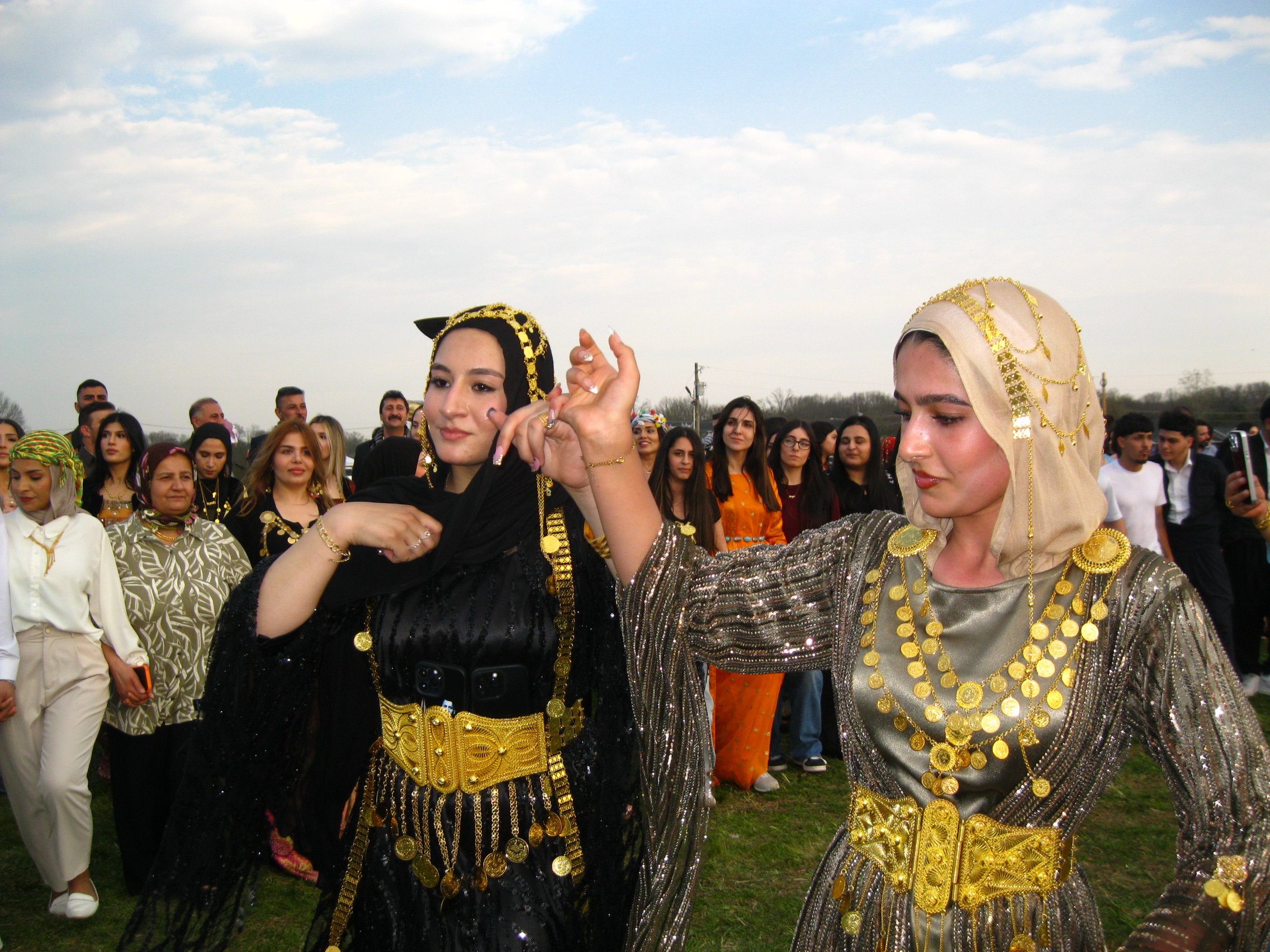
Twofold Gold, Newroz 2026 (Photo By: Luke Boudreaux)
Over time, other Kurdish enterprises have taken root in Nashville in the making of “Little Kurdistan.” Businesses like Edessa restaurant, Azadi Market & Bakery, Newroz Market, Jihan Market and others offer Kurdish brands and flavors as culinary connections to the homeland. Stores such as Ahmed Jewelry, Botani fabrics, and VIP fabrics display the richness of Kurdish styles and fashions through elaborate textiles and ornate goldwork. And there are many other Kurdish owned establishments from clinics to cafes that contribute to Kurdish placemaking in Nashville. In understanding what made the city a hospitable place for the community, Mr. Bamarni explains, “In my opinion Kurds stayed in Nashville because of the generosity of the people and our success as a group. We had opportunities in Nashville.”
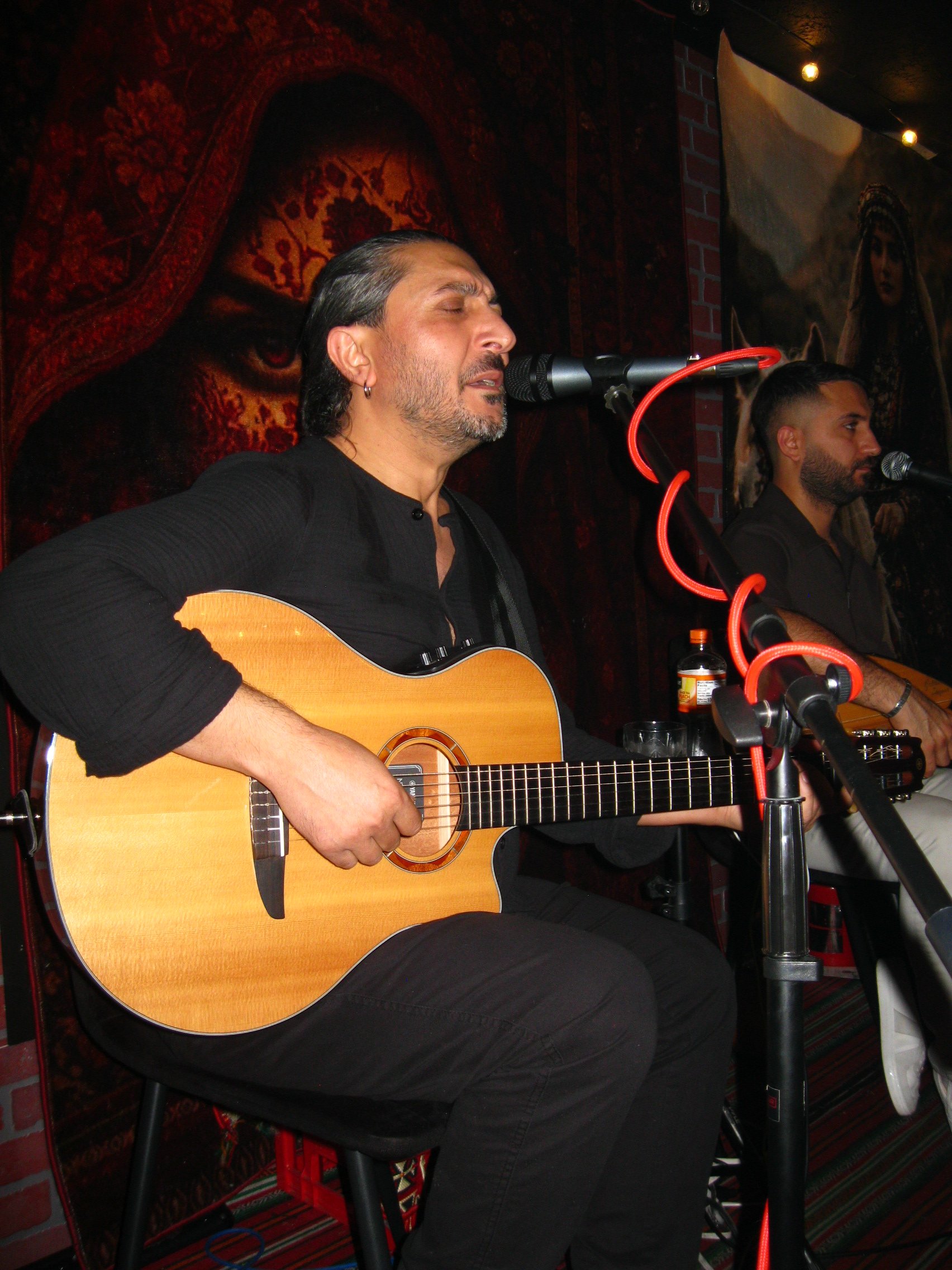
Vaveyla Live at Istanbul Lounge, Mehmet Deler (Photo By: Luke Boudreaux)
In recent years, new waves of Kurdish Bakuri migrants have arrived from Turkey amid continued ethnic marginalization in the Middle East. Through the initiatives of dedicated artists, advocates, educators, and organizations, they have created a noticeable cultural dualism with the long established Bashuri majority composed of Badini and Sorani Kurds. Among them are popular musicians like Vaveyla, featuring the talented baglama player Kadir Gur and seasoned vocalist and guitarist Mehmet Deler. Together, they express the deep roots of Kurdish heritage through traditional instruments and stories while experimenting with modern genres of rock, pop and blues, adding a more global sound to the well-known Music City. Originally, Kadir and Mehmet were members of the Kurdish House, a physical space for Kurdish culture and music education and social life. Unfortunately, this center no longer exists within Nashville.
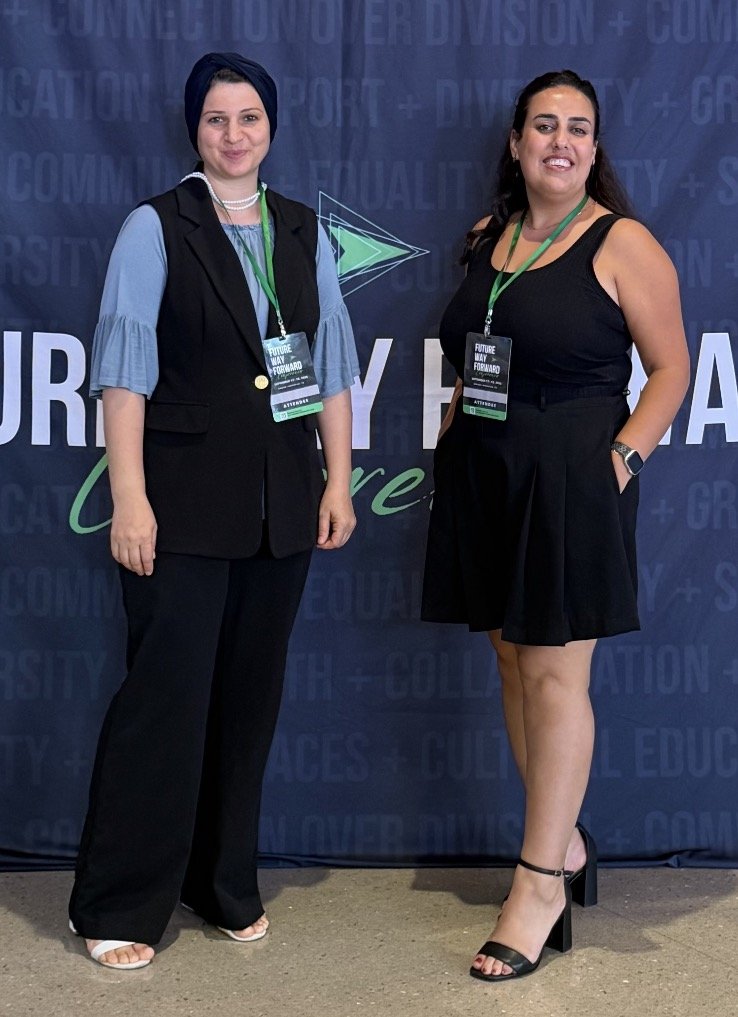
KCMA Vice President Nesrin Şimşek (left) and President Asiye Taşkin (right)
Among some of the greatest contributions, Kurdish women have made substantial progress as leaders, artists, and educators within the community and beyond. Asiye Taşkin and Nesrin Şimşek, the president and vice president of Kurdish Culture and Music Association, have established a foundation of Kurdish space for cultural arts, linguistic education, youth mentoring and women’s empowerment. Their most well-known achievements include a collaboration with the Nashville Symphony for their 3rd year anniversary, a partnership with the Nashville Film festival and the founding of the first ever Kurdish radio show in Nashville with WXNA. KCMA remains dedicated through volunteer service in establishing the next generation of artists who can carry Kurdish traditions forward while contributing to Nashville’s identity as Music City. Their programs include but are not limited to Kurdish dance and halay, theater, daf instruction, music and rhythm education, drumming and percussion, and English and Kurdish language classes. It is important to note that KCMA acts an existing space for Kurdish culture in Nashville and authentically models what future Kurdish spaces in the city can build upon.
Other leaders include Ipek Ismael who serves as the vice president alongside president Nazar Sharanshi of the Kurdistani Diaspora Center. Through their initiatives and the collaboration of KDC’s board, the Kurdish community has a greater political voice, educational and employment opportunities, and events that build essential relationships for generations to come.
Overcoming Barriers in Little Kurdistan
With the persistent dedication of many individuals and organizations, there remains several prominent barriers that inhibit the development of Kurdish progress in Nashville. For instance, considering that most of Nashville’s older Kurdish generation comes from war-torn societies, facing experiences of genocide, mass expulsion, sexual assault, torture, and imprisonment, many individuals suffer from high rates of PTSD, anxiety, depression, suicidal ideation and other mental health related issues. Left untreated, this has allowed for many older Kurds to feel isolated without a space to socialize, share their culture, and recover from past traumas. Research has also shown that the poor mental health status of first-generation Kurdish refugees can also impact younger generations who do not understand the causes of these observed symptoms. This in turn adds stress to an already perplexing state of identity dualism—a state many immigrant youths experience of not feeling fully attached to their homeland nor their host society.
This leaves spaces of education for language, arts, and cultural practice to be primary institutions for cultural enrichment and preservation among diasporic communities. However, within Nashville’s context, Kurdish language classes are yet to be fully funded as a school curriculum—leaving the initiative entirely in the hands of volunteer-run community organizations already limited in funding and space. Furthermore, the absence of an established Kurdish center is apparent through various other means. Kurdish events are held in public parks and rented out of Hispanic cultural centers. Classes are taught virtually or in the lower levels of private residences. Many women feel isolated, bereft of spaces to build relationships and cultivate their interests. People feel a disconnect with one another, politically, religiously, and culturally and lack the necessary space to come together in an environment that is authentically Kurdish.
With a Kurdish community center design initiative, there lies an opportunity to use architecture as tool for cultural preservation, identity formation, and communal solidarity. Social spaces such as chaykhanas, courtyards, and storytelling centers can treat mental health symptoms for all generations, eliminating feelings of isolation, depression, and anxiety through cross-generational interaction. Youth programs can foster artistic creativity, provide networking opportunities, and enhance cultural education of future Kurdish generations. Educational spaces such as museums, classrooms, and libraries can do more than enlighten the community but become spaces for building communal bonds and alleviating pressures of overworked families. Employment opportunities and intercultural exchange can increase through grand social facilities, inviting visitors to wander through the lanes of a labyrinthine bazaar, enjoy performances in event halls, and partake in the numerous other experiences of Kurdish culture. Furthermore, an infrastructural project such as this can also help diversify Nashville’s built environment, demonstrating how intentional cultural spaces foster belonging and strengthen connections across communities.
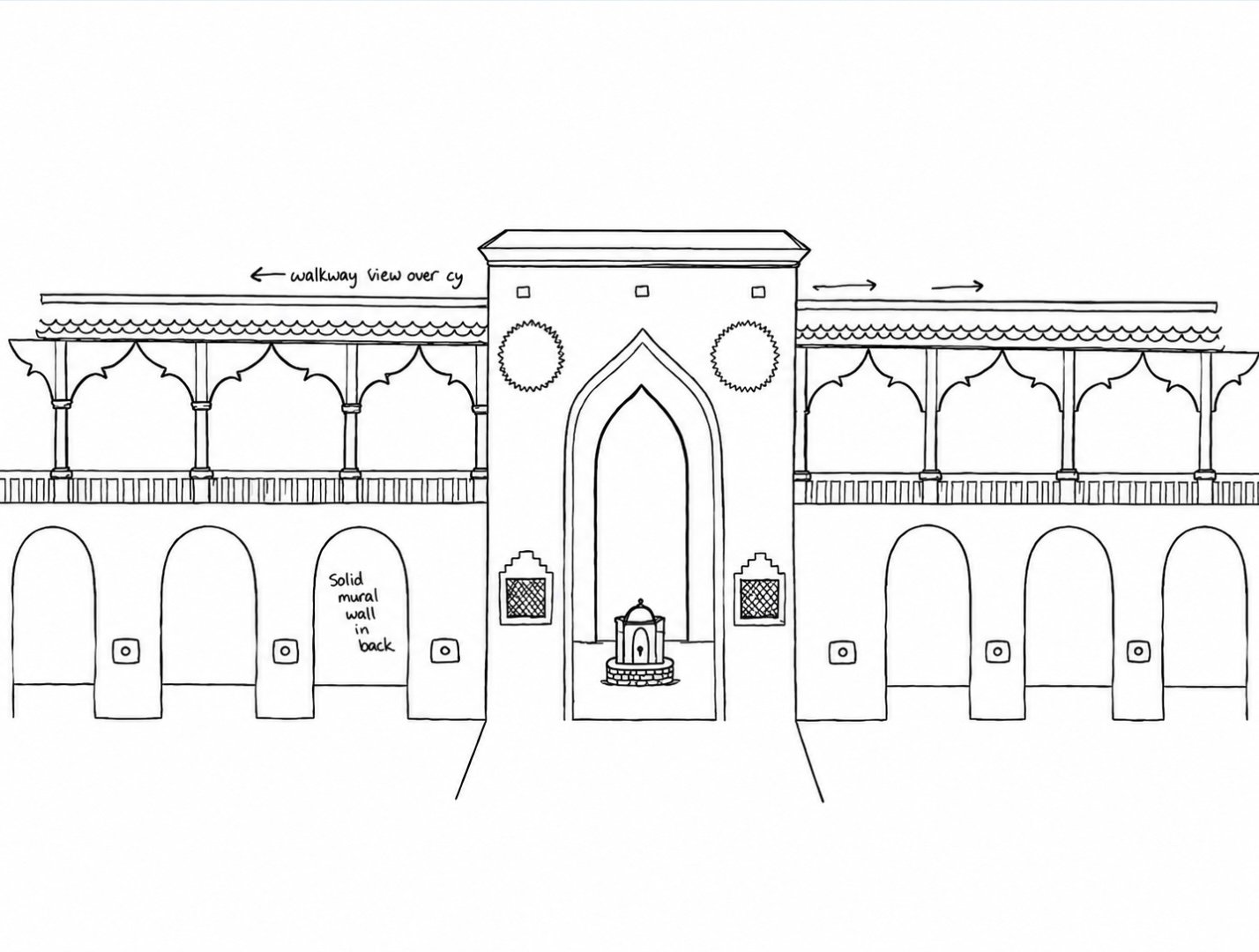
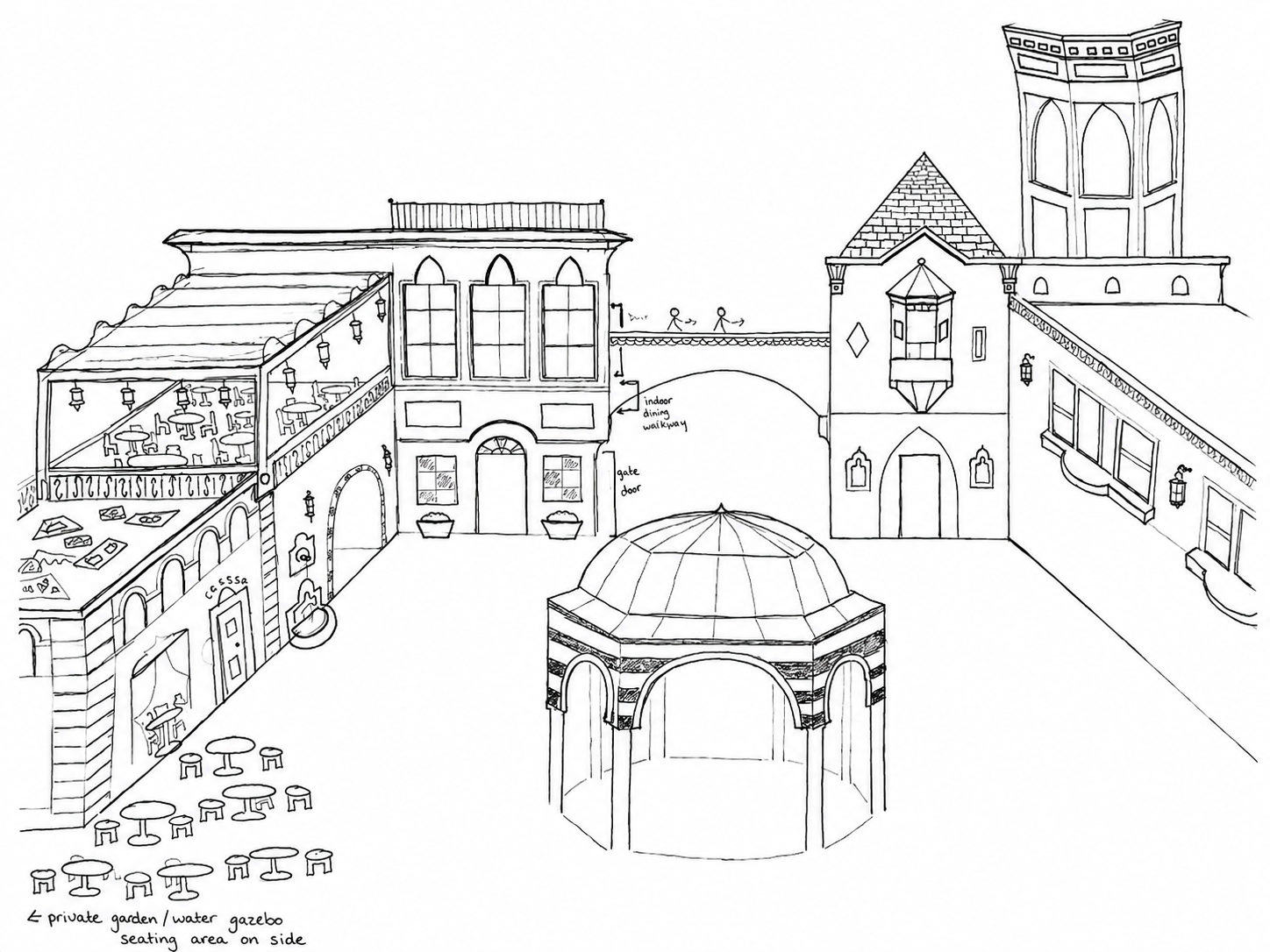
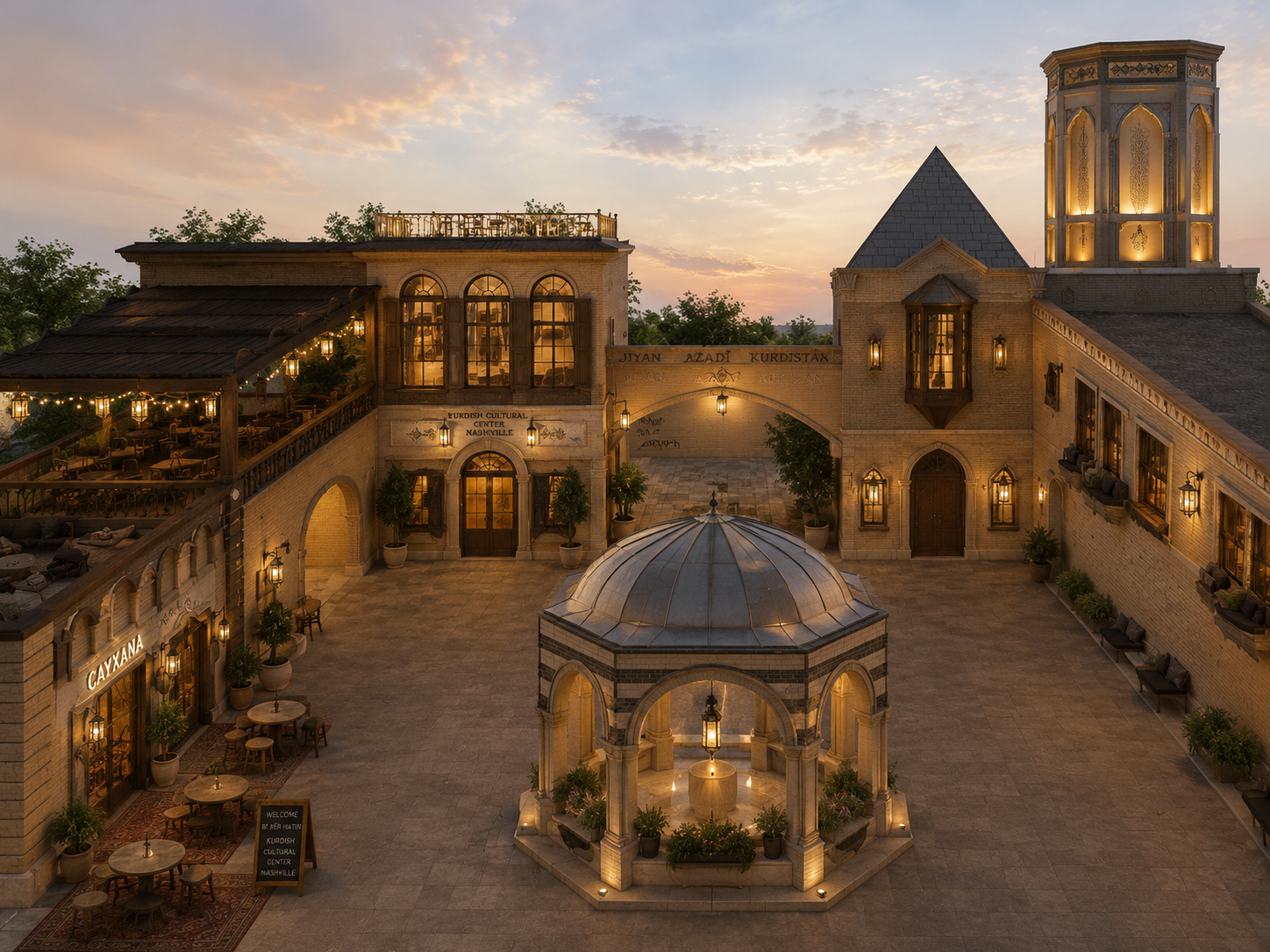
Kurdish Community Center concept sketches by Luke Boudreaux converted to AI render
To initiate this project, I have conducted a 16-month study in collaboration with various Kurdish organizations, businesses, and community members. The interviews and surveys collected in this research provide a platform for individuals and organizations to share the challenges they face in a contemporary community report. This study also encourages a participatory design approach that is grounded in collaborative cultural solutions from different identities within the community that direct the design of the center. First and foremost, this project aims to communally develop cultural space for under resourced immigrant groups while presenting a replicable case study to support diaspora communities across the world. My collaboration with the Civic Design Center also aims to encourage outside communities to reflect upon the notion of what it means to build an equitably diverse future for our beloved Nashville.
-
i Daniel B. Cornfield et al., Final Report of the Immigrant Community Assessment (Nashville, TN: Vanderbilt University, August 15, 2003), 13 & 186.
ii Vera Institute of Justice. Nashville–Davidson County Immigrant Population Profile. New York: Vera Institute of Justice, March 2025.
iii Metropolitan Government of Nashville and Davidson County, Planning Department, Nolensville Pike Market Analysis (Nashville, TN: Metropolitan Government of Nashville and Davidson County, 2024), 9; Daniel B. Cornfield et al., Final Report of the Immigrant Community Assessment (Nashville, TN: Vanderbilt University, August 15, 2003), 20.
iv Nashville Department of Transportation and Multimodal Infrastructure, Nolensville Pike Study: Vision Zero—Safe Streets in Nashville (Nashville, TN: Metropolitan Government of Nashville and Davidson County, 2022), 8-9; Sarah Hays Coomer, “Transportation Justice in Music City,” John Hopkins Bloomberg School of Public Heath: Global Health Now,” October 3, 2024, para. 3. link.
v Alexis Marshall, "How Nashville's Wild Housing Market Is Causing a 'Second Displacement' for Some Immigrants," WPLN News, May 3, 2022, para. 7-9. link; Mikhail Samarin, "Excessively High Rents Are a Major Burden for Immigrants in US Cities," The Conversation, March 25, 2024, para. 16. link.
vi "Kurds Mark 50 Years of Migration in Nashville, Reflecting on Community and Achievements," Kurdistan24, March 23, 2026, para. 1, link.
vii “Experience Kurdish Culture in Nashville,” VisitMusicCity, n.d., link; Marah Yankey, "Language Excellence at IU Supports Large Kurdish Community in Nashville, Tennessee," IU News, Indiana University, February 16, 2024, para. 4, link; “Nashville’s Growing Community of Kurdish Americans” The Kurdish Project, n.d., para. 5, link.
viii Lauren Kent, “Who are the Kurds?,” CNN, March 5, 2026, para. 2, link.
ix Lawrence, Quil. Invisible Nation : How the Kurds’ Quest for Statehood Is Shaping Iraq and the Middle East / Quil Lawrence. 1st U.S. ed. New York: Walker & Company, 2008, 3; Veysi Dag, “The Growing Political Role of Prominent Individuals in the Kurdish Diaspora of Europe,” The Jerusalem Strategic Tribune, January 2022, para. 1, link; Hagit Ariav & Mariel Ferragamo, “The Time of the Kurds,” Council on Foreign Relations, November 17, 2022, para. 3, link; Institut kurde de Paris, "The Kurdish Diaspora: Historical Background, Current Situation and Prospects," last modified October 10, 2023, Table 1, link.
x Nashville PBS (NPR), “Little Kurdistan, USA,” 2008, 26m 44s, https://www.pbs.org/video/next-door-neighborslittle-kurdistan-usa/
xi Hikmat Bamarni, interview by author, telephone, October 19, 2026.
xii Hikmat Bamarni, interview by author, telephone, October 19, 2026.
xiii Hikmat Bamarni, interview by author, telephone, October 19, 2026.
xiv Lawrence, Quil. Invisible Nation : How the Kurds’ Quest for Statehood Is Shaping Iraq and the Middle East / Quil Lawrence. 1st U.S. ed. New York: Walker & Company, 2008, 39.
xv Muhammad, Belal A., Salih A. Hama, Karzan A.M Hawrami, Salar H. Karim, Gasha S. Ahmed, and Hawbash M. Rahim. 2024. “Long Term Health Complications of Chemical Weapon Exposure: A Study on Halabja Chemical Attack Survivors (Iraqi Kurds).” Inhalation Toxicology 36 (1): 26-30.
xvi Lawrence, Quil. Invisible Nation : How the Kurds’ Quest for Statehood Is Shaping Iraq and the Middle East / Quil Lawrence. 1st U.S. ed. New York: Walker & Company, 2008, 39-41; David McDowall, A Modern History of the Kurds, 3rd rev. and updated ed. (London; New York: I.B. Tauris, 2007), 360; Alex Bagdade, “Iraqi Kurdistan, 1987-98,” World Without Genocide, updated June 2026. link.
xvii Halima Othman, “Architectural Identity Shaped by the Political System, Kurdistan Region Since 1991 as a Case Study,” Journal of Architectural Engineering Technology 7 (2018), 9.
xviii “Little Kurdistan, USA | Nashville's Kurdish Refugee Community | Next Door Neighbors | NPT” Nashville PBS, May 28, 2008, 1:00, link.
xix Hikmat Bamarni, interview by author, telephone, October 19, 2026.
xx “A mosque should be more than a prayer space – it should be a home for the community,” Salahadeen Center of Nashville, n.d. “Our Story,” link; Alexis Marshall, “Curious Nashville: How the city became a destination for Kurdish families, and how the community is evolving,” wpln news, September 9, 2022, para. 16, link.
xxi Hikmat Bamarni, interview by author, telephone, October 19, 2026; Nawzad Shawrami, interview by author, Salahadeen Center, Nashville, TN, July 3, 2026.
xxii Tabeer Taabur, interview by author, TKCC Office, Nashville, TN, October 2, 2026.
xxiii Steven Hale, “Middle Tennesseans Gather to Celebrate Kurdish Culture and Resilience on Newroz,” Nashville Banner, March 23, 2026, para. 4, link.
xxiv Tabeer Taabur, interview by author, TKCC Office, Nashville, TN, October 2, 2026.
xxv Hikmat Bamarni, interview by author, telephone, October 19, 2026.
xxvi Kadir Gur, Mehmet Deler, Steve Wininger, interview by author, Only Chicken, Nashville, TN, January 11, 2026.
xxvii Asiye Taşkin, Nesrin Şimşek, KCMA Board, interview by author, KCMA Studio, Nashville, TN, July 1, 2026.
xxviii Nazar Sharanshi & Ipek Ismael, KDC President and Vice President, interview by author, various locations, Nashville, TN, July 2, 2026, October 23, 2026.
xxix HASHIM TAHA P, MOHAMED HASSAN ABDURRAHMAN S. TRAUMATIC EVENTS AND POSTTRAUMATIC STRESS AMONG IRAQI KURDISH “ANFAL” SURVIVORS. Duhok Medical Journal [Internet]. 15Aug.2020 [cited 20Mar.2026];14(1): 80, 84; Mahmood, H.N., Ibrahim, H., Goessmann, K. et al. Posttraumatic stress disorder and depression among Syrian refugees residing in the Kurdistan region of Iraq. Confl Health 13, 51 (2019).
xxx Cummings, Sherry & Sull, Linnet & Davis, Cindy & Worley, Natalie. (2011). Correlates of Depression among Older Kurdish Refugees. Social work. 56. 159-68. 10.1093/sw/56.2.159
xxxi Zaid Brifkani, interview by author, telephone, July 6, 2026.
xxxii Zaid Brifkani, interview by author, telephone, July 6, 2026;
xxxiii Alexa Bussmann; Content Development Director. Nashville Public Schools Seek Approval to Offer Kurdish Courses. University Wire. Carlsbad: Uloop, Inc, 2019.