
Branding and Wayfinding at the William Edmondson Homesite
5 min read: Inspired by William Edmondson's artwork and legacy, a new branding and wayfinding concept by Delaney Kelly helps bring a distinctive identity to one of Nashville's most meaningful neighborhood parks.
A great public space should be easy to find, welcoming to explore, and memorable long after a visit. At the William Edmondson Homesite Park & Gardens in Nashville's Edgehill neighborhood, a thoughtful approach to branding and wayfinding offers an opportunity to accomplish all three while celebrating the extraordinary artist whose legacy gives the park its name.
William Edmondson (1874–1951) was a self-taught sculptor whose limestone carvings earned national recognition. His work, often depicting animals, people, and religious figures, was celebrated for its expressive forms and distinctive character. The homesite is where Edmondson lived and created much of his work, making the park an important cultural and historical landmark.
Building on the Civic Design Center's ongoing work with the Friends of the William Edmondson Homesite Park & Gardens, designer Delaney Kelly developed a branding and wayfinding concept that brings Edmondson's artistic influence into the park's visual identity. Prepared for the Friends and the Civic Design Center, the March 2026 branding proposal explores how a cohesive system of logos, illustrations, colors, signage, and promotional materials can help make the homesite more recognizable and engaging.
Inspired by the Artist's Own Hand
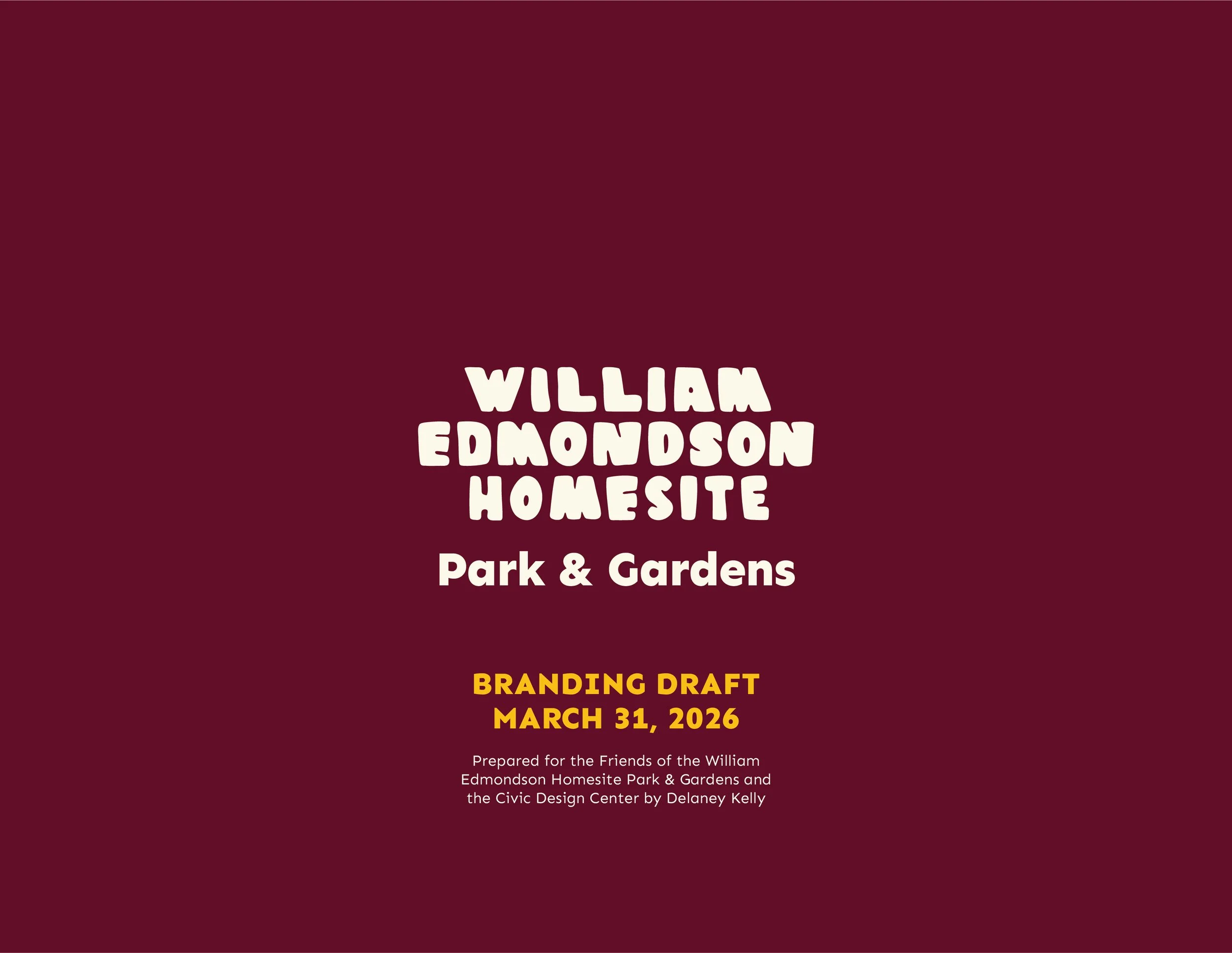
At the heart of the branding is a custom logo traced from William Edmondson's lettering on tombstones. The distinctive letterforms create a direct connection to his artistic practice, making the park's identity feel authentic to the person and place it represents.
The branding system includes several logo variations designed for different applications. A primary logo and full-name lockup provide the main identity, while a simplified "WEH" monogram offers a recognizable mark for smaller applications or places where the park's full name is already established. Secondary text-based logos provide additional flexibility for situations where readability and a more formal presentation are important.
Beyond the primary logos, Kelly introduces illustrated variations and decorative symbols inspired by the homesite's history. These elements are intended to complement the main identity rather than replace it, adding personality and visual interest across signage, merchandise, and community materials.
The result is a flexible visual language that feels rooted in Edmondson's work while giving the park a contemporary identity of its own.
Bringing Edmondson's Artwork Into Everyday Experiences
One of the most compelling parts of the branding concept is its use of illustrations drawn from Edmondson's extensive body of work.
Rather than relying solely on photographs or historical text, the proposal incorporates simplified illustrations of his sculptures, including familiar subjects such as animals, people, and religious figures. These illustrations can be used individually or together, ideally with accompanying text labels, to introduce visitors to the breadth of Edmondson's work.
This approach creates opportunities for interpretation and education throughout the park. A visitor might encounter an illustration on a sign, discover the sculpture that inspired it, or learn more about Edmondson through an accompanying description.
The illustrations also provide a foundation for creative community engagement. Kelly imagines their use on tote bags, art prints, buttons, and other merchandise that could be distributed or sold at William Edmondson-related events, including WE Fest. These items make the artist's work more accessible while creating opportunities to share his story beyond the boundaries of the park.
A Color Palette That Stands Out
The proposed color palette draws inspiration from the natural and built environment, pairing a deep burgundy with limestone, dandelion yellow, grass green, sky blue, and clover green.
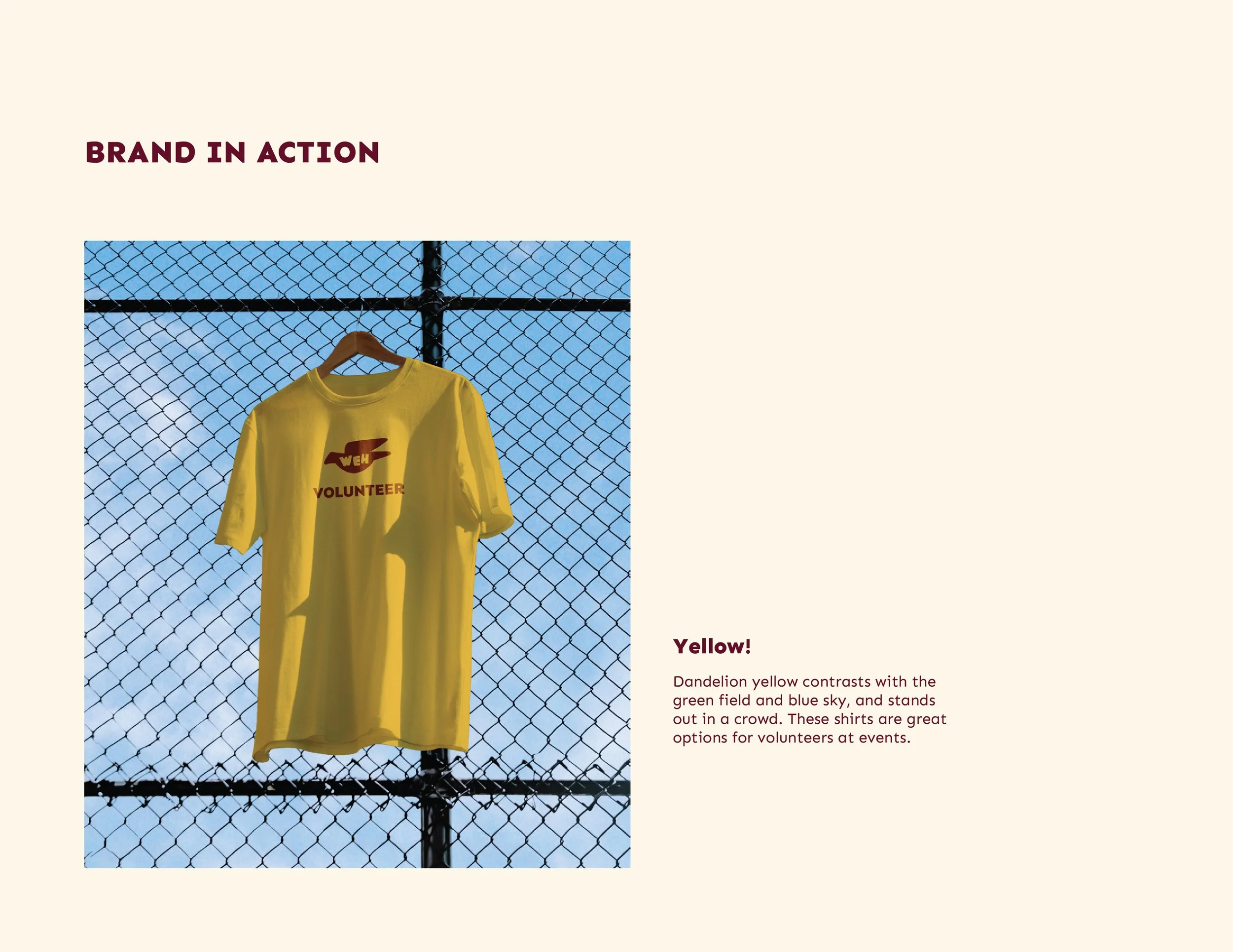
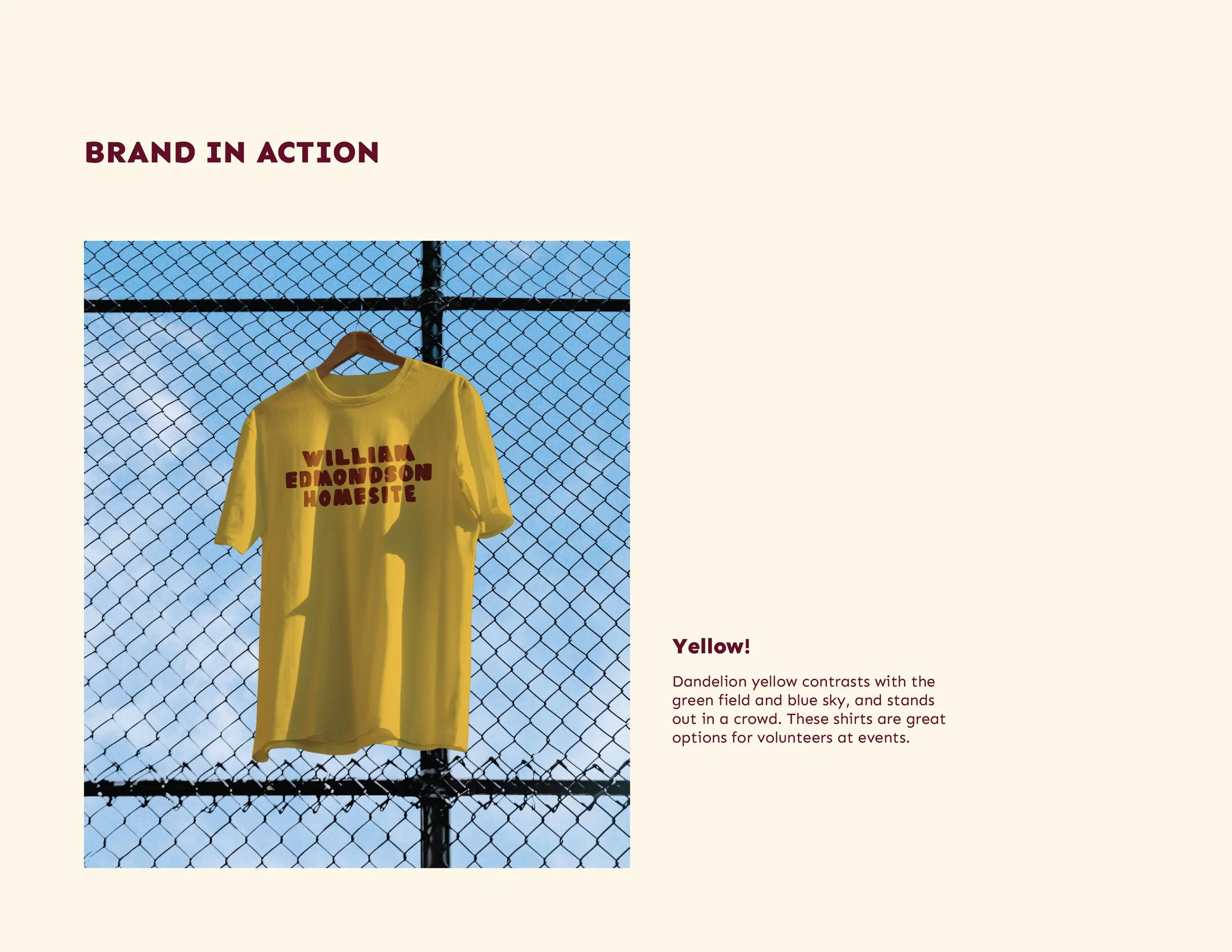
The combination creates a recognizable identity that can be applied consistently across a wide range of materials. Dandelion yellow is especially prominent in the examples, providing a bold contrast against the park's green landscape and blue skies.
The proposal explores how these colors can bring energy and visibility to everything from volunteer T-shirts and buttons to park signage and promotional materials. Bright yellow shirts, for example, offer a practical way to make volunteers easy to identify during community events while reinforcing the park's emerging identity.
The branding is designed to be simple, clear, and memorable—not overly complicated or dependent on elaborate graphics. A few consistent elements can go a long way toward establishing a recognizable landmark.
Making the Park Easier to Navigate
A strong visual identity also creates a foundation for better wayfinding. For a neighborhood park with multiple entrances, paths, amenities, and points of interest, clear signage helps visitors understand where they are and how to explore the space.
Kelly's proposal explores two approaches to park signage: fence-mounted panels and standalone aluminum panels.
Fence-mounted panels could be constructed from painted recycled plastic or aluminum and attached using fence fasteners or metal loops. This approach offers a relatively flexible way to introduce signage at existing park entrances and along the perimeter.
Standalone aluminum panels, either painted or printed, could be installed in concrete bases at strategic locations throughout the park. These signs offer another opportunity to establish a consistent visual presence while helping visitors orient themselves.
Both approaches provide opportunities to incorporate the new branding and introduce visitors to the history of the homesite. Signage can do more than point people toward a playground or walking path; it can help explain why this particular place matters.
A Brand That Extends Beyond the Park
The branding concept also considers how the homesite can build recognition throughout Nashville and beyond.
In addition to physical signage, Kelly explores applications for the park's website, apparel, promotional materials, and educational resources. A simplified website experience, for example, could prioritize historical information while making it easier for visitors to find ways to engage with the park.
Printed art, illustrated merchandise, and colorful buttons offer additional opportunities to share Edmondson's legacy at community events and with new audiences. These materials can become small but meaningful reminders of the homesite and its significance.
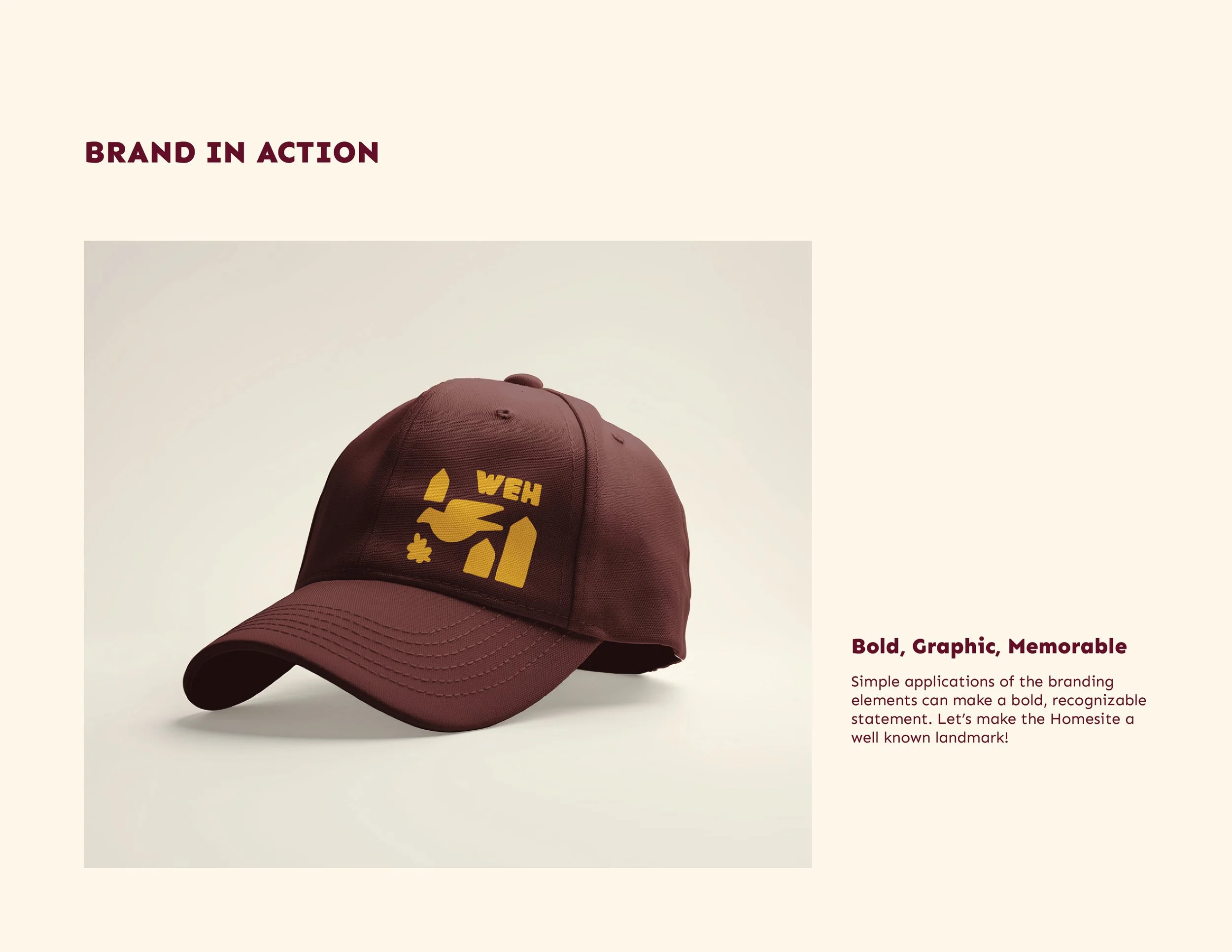
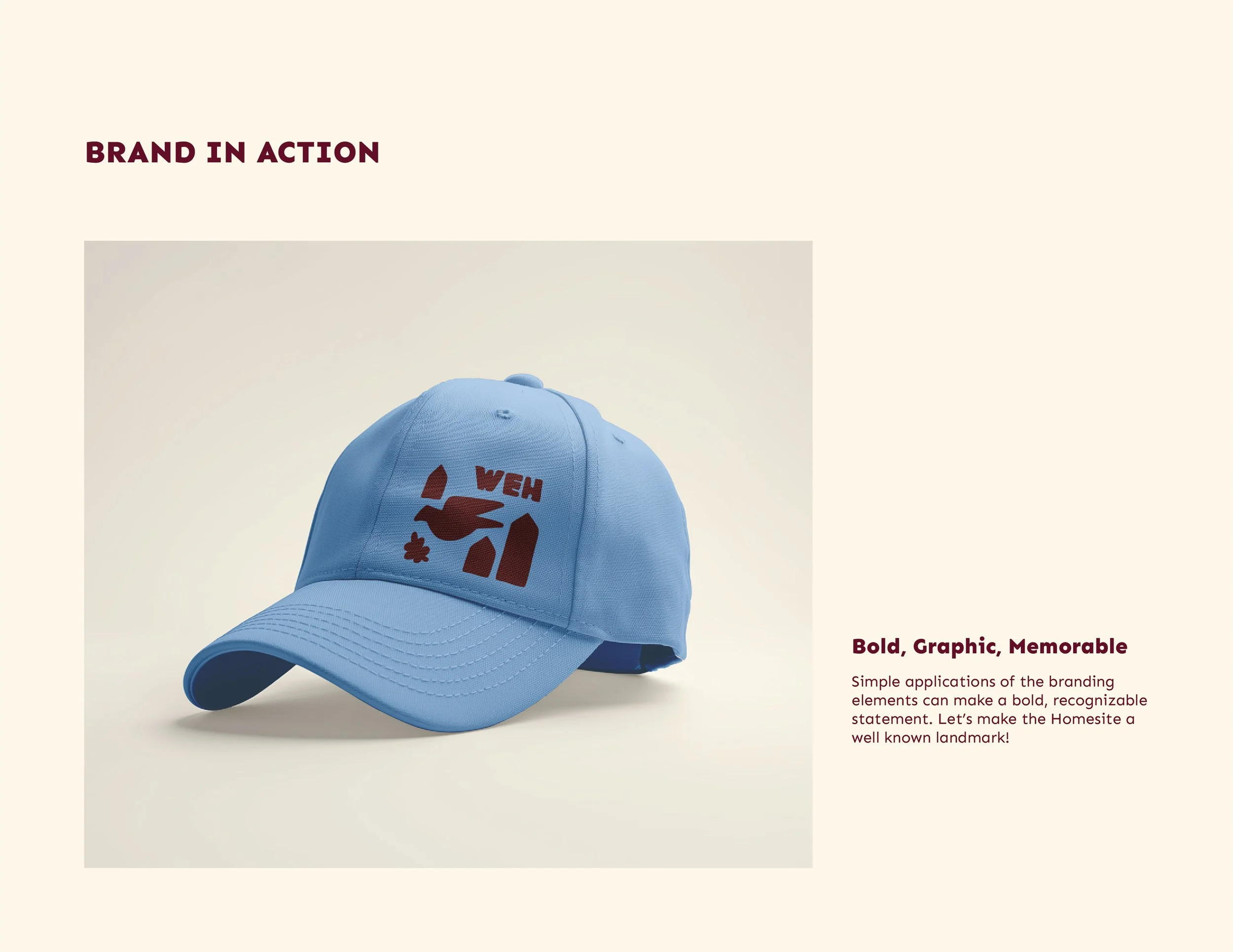
Together, these applications create a consistent identity that connects the park's physical environment with its digital presence and community programming.
Telling the Story of a Place Through Design
The William Edmondson Homesite is an important part of Nashville's cultural history, but its significance is not always immediately apparent to someone passing by or visiting for the first time. A thoughtful branding and wayfinding system can help change that.
By drawing from Edmondson's own lettering, incorporating illustrations of his sculptures, and creating a bold and flexible visual identity, Delaney Kelly's proposal offers a way to make the artist's legacy more visible in everyday experiences at the park.
The work also reinforces an important principle of civic design: the identity of a public space should reflect the people, history, and community that make it special.
As the Friends of the William Edmondson Homesite Park & Gardens continue their stewardship, a recognizable identity and clear wayfinding system can help welcome new visitors, support community events, and strengthen the park's role as a cultural destination.
The goal is for people to recognize the homesite, understand its significance, and feel invited to explore it. Through thoughtful design, the story of William Edmondson can become an unmistakable part of the park experience—and a visible part of Nashville's landscape.
Delaney interned at the Civic Design Center to help generate these concepts you can contact her at delaneyekelly@gmail.com or delaneykellydesign.com