

By Robin Lovett-Owen, Community Leader
6 min read When a stroad serves as a central artery for community activities and resources, it’s hard not to see the potential that it has to become a great place to spend time. Edmonson Pike demonstrates how making practical changes to the street section could better serve pedestrian and multimodal activity. Neighbor and community leader, Robin Lovett-Owen shared her ideas, and our Design Studio turned them into simple visuals that could be used to advocate for change.
Edmonson Pike serves as the central heartbeat of the Nippers Corner neighborhood. On one end sits a hospital; on the other, a library and grocery stores. In between are single- and multi-family homes, a preschool, churches, soccer fields, a greenway, parks, and the campus of the Ellington Agricultural Center, with its well-loved trails. This is a road that holds together the daily life of a community.
It’s where children learn to ride their bikes and play on sports teams, where families take evening walks or wade into Seven Mile Creek, and how many neighbors access Farmin’ in the Hall, the beloved Crieve Hall farmers market.
Unsurprisingly, Edmonson Pike is also one of the most heavily used pedestrian and cycling corridors in South Nashville. On any given day, the single sidewalk along the south side is full: parents pushing strollers, runners heading toward the greenway, neighbors carrying groceries home.
And yet, despite the role it plays in community life, Edmonson Pike is designed almost entirely for speed. Two long, wide lanes in either direction, red lights spaced far from each other, and the straight design of the road all make drivers feel as if they can drive at interstate speeds - and they do. This mismatch makes the road less safe for all users.
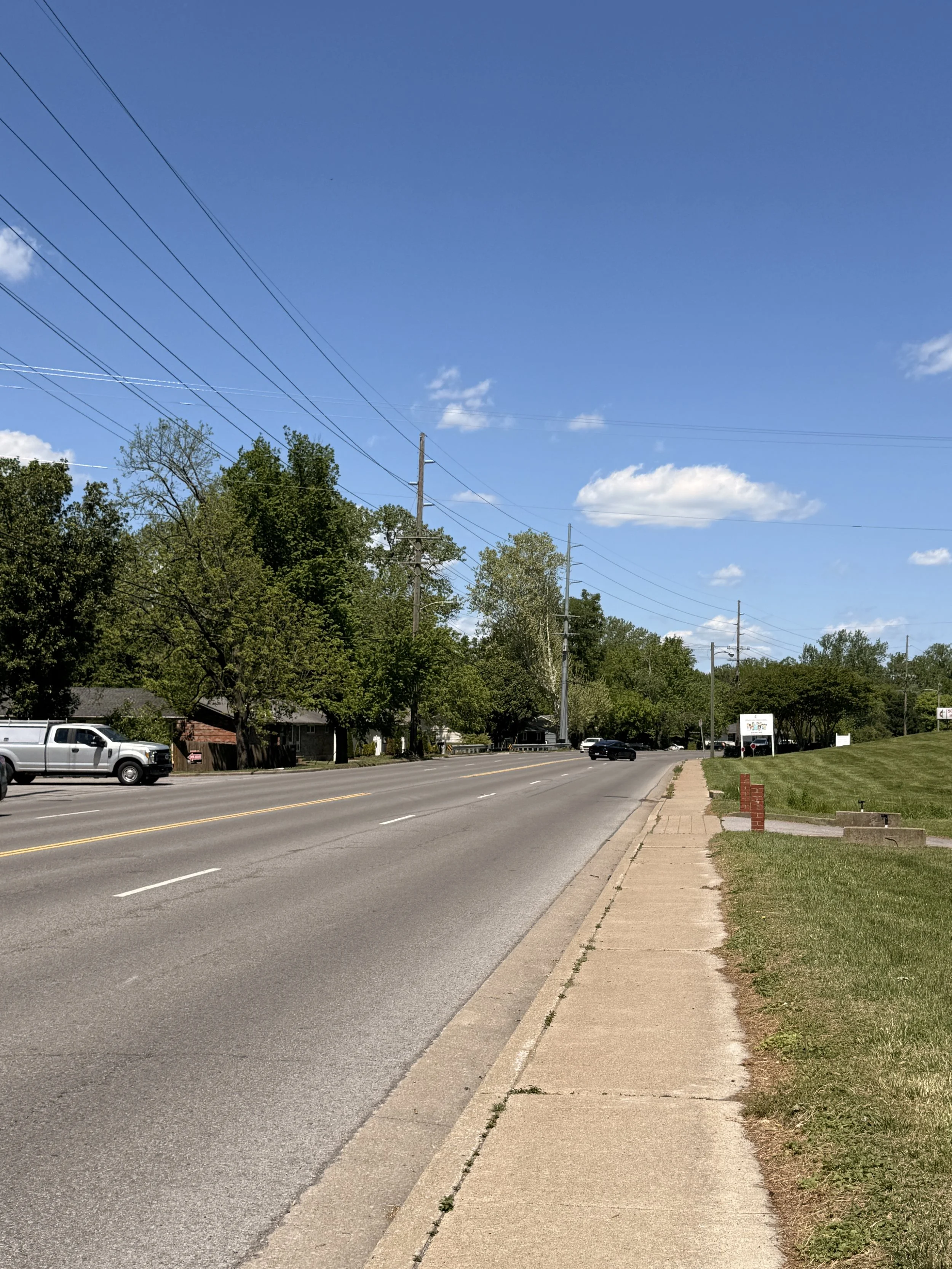
Existing Conditions
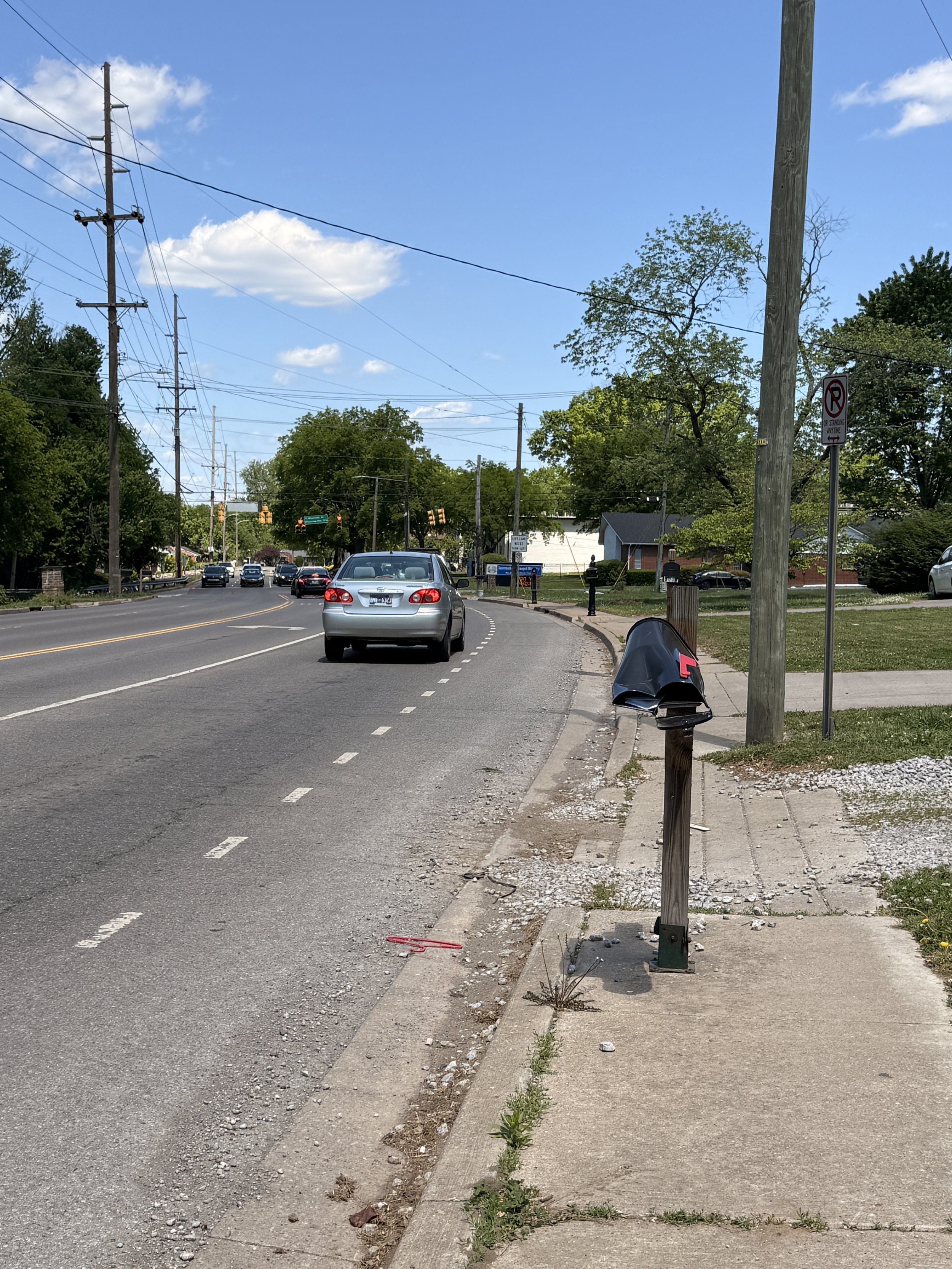
Existing Conditions
In a recent analysis by NDOT, corridor speeds regularly exceed 50 mph in some segments - far above what feels safe for a road with this level of pedestrian activity. NDOT’s study acknowledged the danger but concluded that meaningful changes would come at the cost of increased travel times, framing the issue as a tradeoff between safety and mobility.
But that framing misses something essential: Edmonson Pike is not just a commuter corridor. It is a neighborhood street, a park connector, and a front door to daily life for thousands of residents. Treating safety as optional misunderstands the road and our community itself. Most of us who use Edmonson Pike use it for more than one reason. We need solutions for Edmonson Pike that reflect that this road is already used as a multimodal corridor, not ones that just minimize traffic.
“Edmonson Pike is really dangerous because the road’s design encourages high speeds, even though the speed limit is 25 mph. This design flaw prevents so many young people from using the library just because they can’t safely get there.”
Edmonson isn’t dangerous today because it lacks the space for sufficient safety infrastructure. Instead, Edmonson has sufficient space for all road users, but this space is used inconsistently and dominated by car users only. Lane widths vary along the corridor, creating an uneven driving experience that encourages speeding in some segments and hesitation in others.
One of the clearest examples is the intersection of Edmonson Pike and Whispering Hills Drive. Today, this intersection is a source of regular congestion and confusion, with turning movements that feel haphazard and improvised. The extra small turning lanes reveal the heart of the issue here: the road is trying to handle complex movements with a layout that doesn’t match how people actually drive.
Roundabout Concept
A single-lane roundabout at this intersection could resolve many of these issues at once. Roundabouts are proven to keep traffic moving while significantly reducing the risk of severe crashes. Instead of long waits and unpredictable turning behavior, vehicles move continuously at slower, more controlled speeds. Just as importantly, pedestrians benefit from shorter crossing distances and fewer conflict points.
Beyond individual intersections, the corridor itself invites a more consistent and intentional layout. By standardizing and slightly narrowing travel lanes, the city could reclaim enough space to introduce a dedicated multimodal lane along the north side of the road.
This would be a natural complement to the existing sidewalk on the south side—creating, for the first time, a corridor that acknowledges movement on both sides of the street. Positioned alongside the parks, greenway access points, and the Ellington Agricultural Center, a protected or delineated lane on the north side would directly serve the people already walking and biking here every day.
Finally, Edmonson lacks safe crossing points to connect the residential area on the south side of the road, and the parks and public spaces on the north side. Signalized crosswalks at McMurray and Oakley Drive are common sense changes that reflect the current use of the street. Furthermore, the crossings that do exist are often inadequate and dangerous. The crossing in front of the Edmondson Pike Library, for example, is a mid-block crossing in the widest, highest speed part of Edmondson. Its current treatment is inadequate for crossing families, and should be replaced with a pedestrian hybrid beacon or raised crosswalk - alerting drivers to the presence of people making their way to the library.
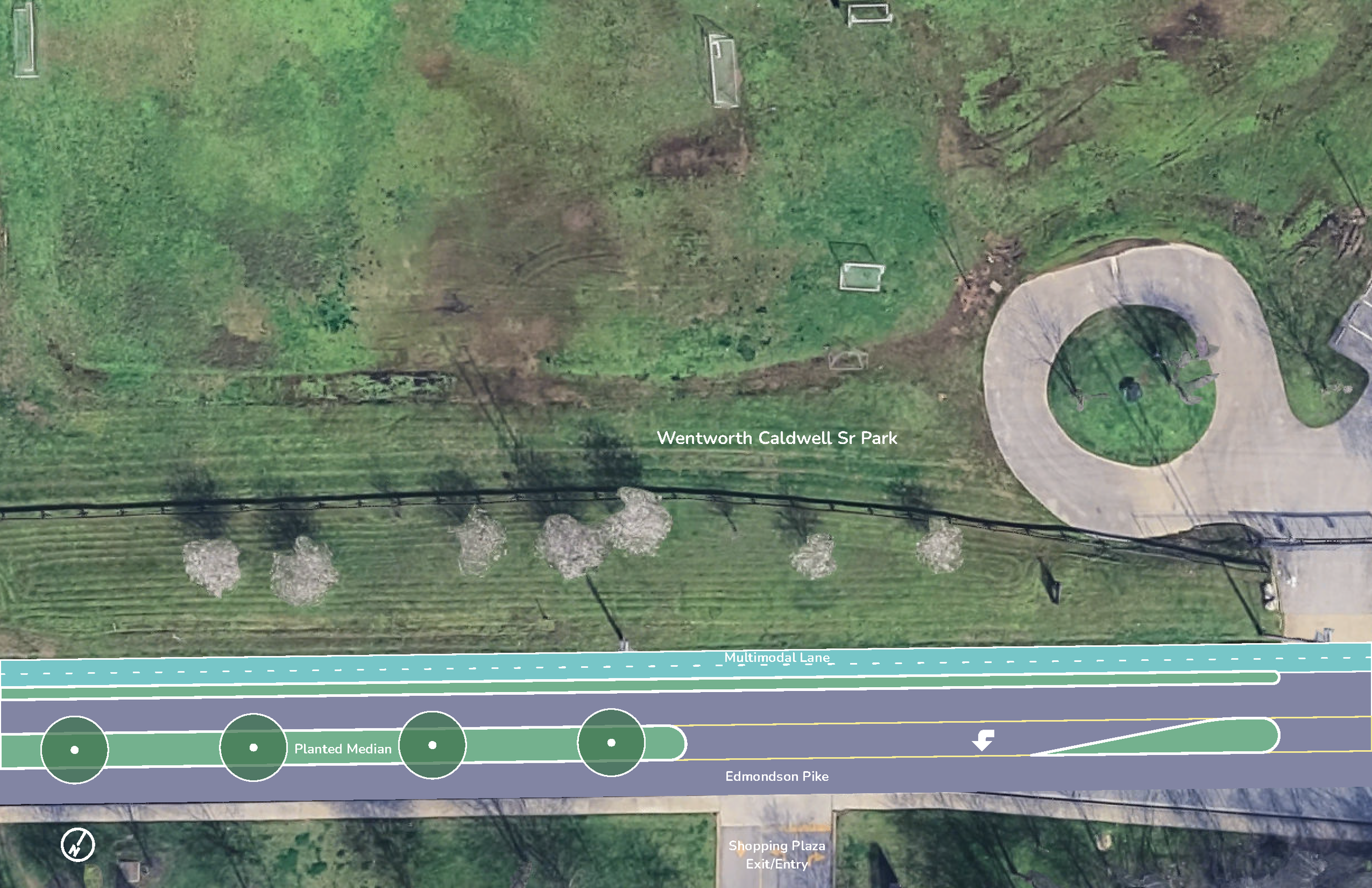
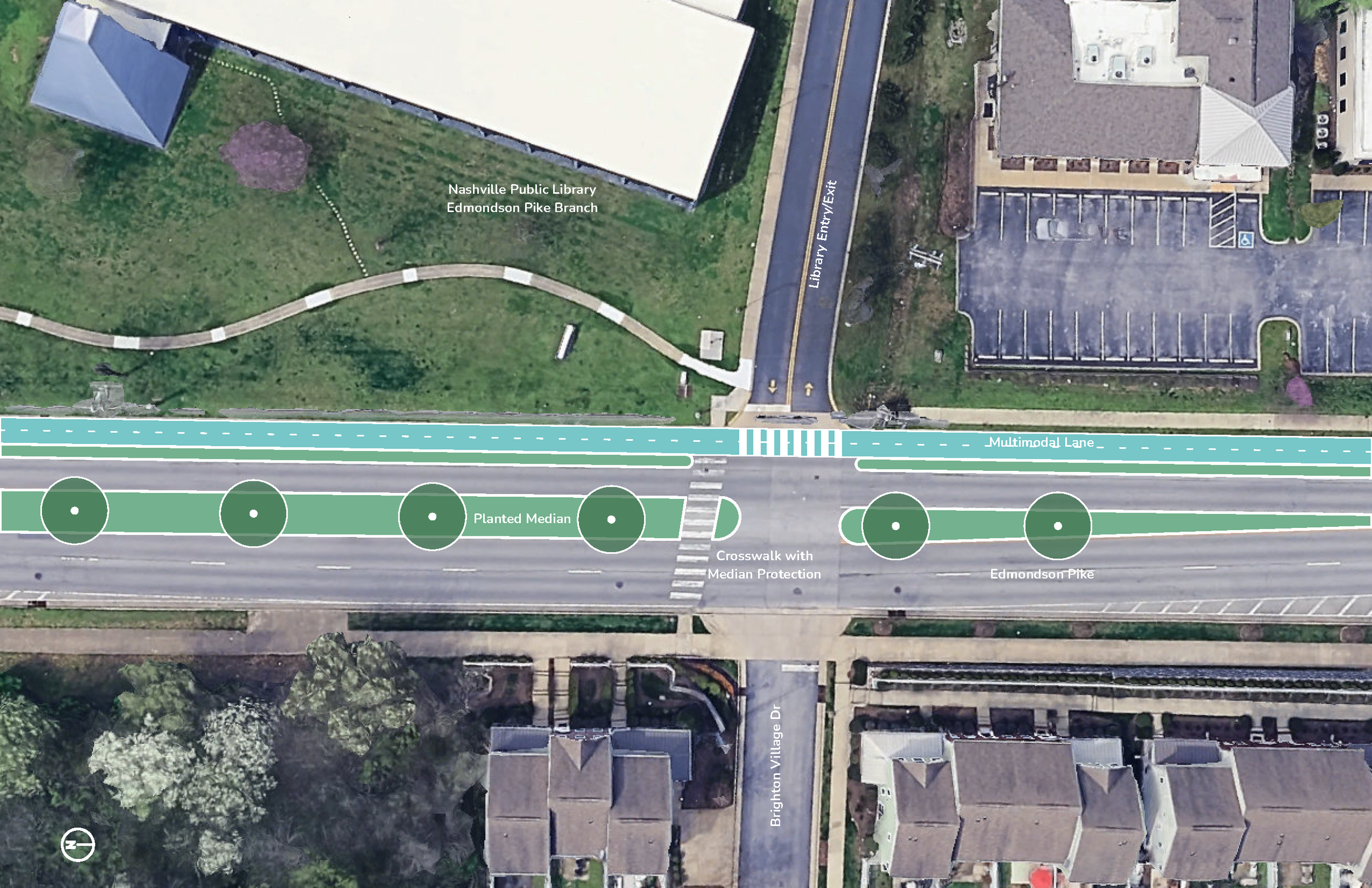
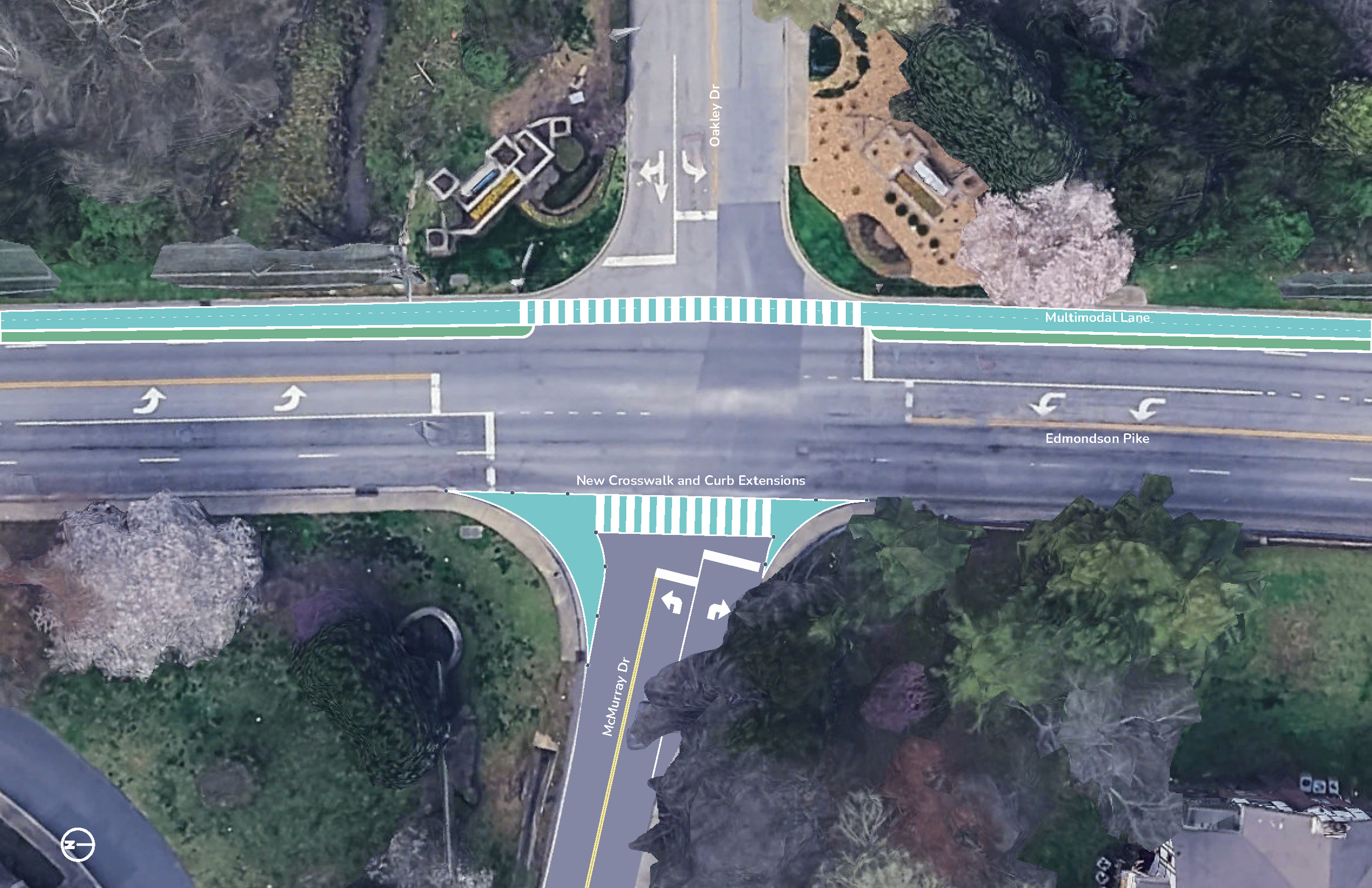
None of these solutions require rebuilding Edmonson Pike. With the exception of new crosswalk signals, each could be implemented quickly using paint and flexible delineators. These are not expensive or aspirational ideas; they are practical adjustments that bring the design of the road into alignment with its reality as a multimodal corridor.
What these changes require most is not funding, but leadership. Leadership from NDOT, from Metro Council, and from Parks to prioritize safety, respond to how residents actually use this corridor, and act with urgency.