
How Nashville can stay livable by expanding housing options
There is a path to bringing more affordable housing to the city without sacrificing the uniquecharacter of its neighborhoods.
By Gary Gaston, CEO, written as an op-ed for the Tennesseean published on Nov. 30, 2025
5 min read: Nashville is experiencing a housing shortage, leading to high costs and increased traffic congestion. Proposed zoning bills would allow for more diverse housing options, such as duplexes and accessory dwelling units. Expanding housing choices could help more people live near work and allow residents to age in place.
Nashville is consistently cited as one of the most attractive cities to live in across the country, but there is simply not enough housing.
This lack of supply leads to skyrocketing housing costs, rents, and increased traffic congestion, as people are forced to move farther away to find something affordable.
We cannot and should not prevent new generations of residents from calling Nashville home. A recent report by the National Association of Realtors found that the median age of first-time homebuyers is now 40. The decline in housing affordability is affecting emerging professionals and their future plans.
Making Nashville more livable without sacrificing neighborhood character
No great city is built on stagnation; healthy, urban neighborhoods are defined by their ability to adapt to growth. The Unified Housing Strategy identified this year that 90,000 housing units are needed in the next 10 years to meet demand.
For Nashville to maintain its reputation as a livable city across all incomes and age groups, allowing infill housing that respects existing neighborhood character bylaw is one of the clearest tools we have to make that possible.
No one benefits by freezing our neighborhoods in time or relying on prescriptive rules that pretend we can anticipate every future scenario. Our civic leaders must uphold the principles that allow communities to evolve in ways that remain vibrant, welcoming, and economically resilient.
Many Nashvillians support accessible and affordable housing
Nashvillians have already articulated these principles. They were captured in the Civic Design Center’s “Guiding Principles,” created through The Plan of Nashville process, which called for a city with housing options for diverse incomes and lifestyles that complement our neighborhoods.
And they were reaffirmed recently through Imagine Nashville. In this city-wide community research project, residents overwhelmingly expressed a desire for a city grounded in belonging, inclusivity, and a deep love for the unique character of our neighborhoods. Achieving that shared vision requires us to open the door—not close it—to more of our neighbors.
Diverse housing means more access to life-changing opportunities
Allowing modest, well-designed homes and DADUs (detached accessory dwelling units) in opportunity-rich neighborhoods ensures more people can live near work, schools, transit, parks, and the daily amenities that make life easier and more connected. A broader palette of housing options will provide more opportunities for new families and essential workers in healthcare, public safety, and education, as well as those in the service sector.
Providing more variety of living options within existing neighborhoods is also an investment in the health of our residents. It gives Nashvillians the ability to age in place as they grow older, thereby maintaining healthy social connections with friends, family, and neighbors.
Why the Metro Council zoning bills are a critical first step
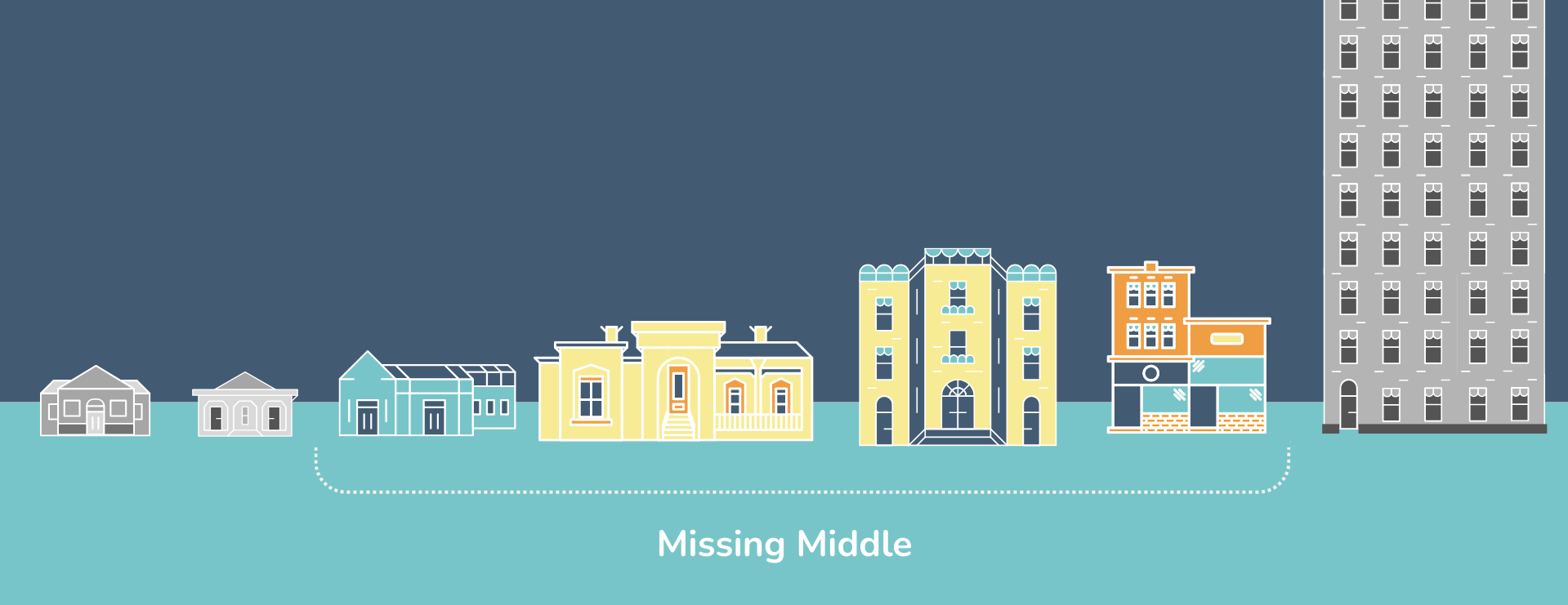
We are at a moment that calls for courage and clarity. The zoning bills before our Metro Council introduce thoughtful updates to our zoning policies that expand our missing middle housing options—duplexes, cottage courts, and small multi-unit homes that fit comfortably within existing neighborhood patterns. They are a critical first step in allowing Nashville to better control our growth by building more housing infrastructure where it is needed.
Supporting these measures strengthens our neighborhoods by welcoming more people into them.